
- Jeff Sessions announces more prosecutors for crackdown on opioid providers (fiercehealthcare.com)
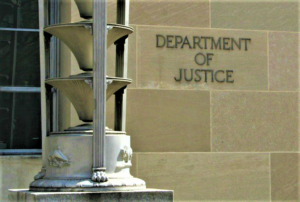
A day after President Trump signed a massive piece of legislation responding to the opioid crisis into law, the Department of Justice announced it's pouring even more resources into its crackdown on prescribers...Attorney General Jeff Sessions said his agency was creating a new Appalachian Regional Prescription Opioid Strike Force to focus on communities "hit especially hard by addiction and opioid fraud."...a dozen prosecutors and data analysts will operate out of hubs in Cincinnati/Northern Kentucky and Nashville, Tennessee, monitoring the Appalachian region for fraudulent opioid prescriptions by physicians...
- Medicaid enrollment declines for the first time in more than a decade as strong US economy boosts income for poor Americans (cnbc.com)50-State Survey Finds Flat Medicaid Enrollment Tied to a Stronger Economy and New Eligibility Systems (kff.org)
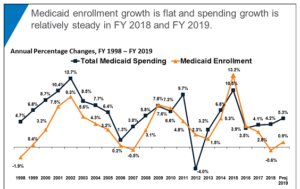
Medicaid enrollment fell for the first time since 2007, declining by about 0.6 percent in fiscal year 2018, according to a new report from the Kaiser Family Foundation...States are budgeting for a "minimal" increase in enrollment of 0.9 percent in 2019, the report says..."States largely attribute the enrollment slowdown to a strengthening economy, resulting in fewer new low-income people qualifying for Medicaid," Kaiser says...Federal and state Medicaid spending still grew despite the drop in enrollment. Combined federal and state spending rose by 4.2 percent in fiscal 2018...The report also listed other factors that contributed to the rise in spending, including more expensive prescription drugs and states spending more money to treat substance abuse and mental health...
- As elections near, PhRMA’s lobbying spend on track for potential record-breaking year (fiercepharma.com)

Pharma has found itself an easy political target in Washington, and as a critical election nears, the industry's lobbying spend shows drugmakers are taking the threat of pricing reform seriously—and shelling out big-time to avoid it...Through the third quarter, pharma's top trade group PhRMA has spent $21.5 million lobbying lawmakers, a 10% increase over the same period last year...The figure puts PhRMA on track to beat last year’s spending of $25.43 million...
- Advancing Toward the Goal of Global Approval for Generic Drugs: FDA Proposes Critical First Steps to Harmonize the Global Scientific and Technical Standards for Generic Drugs (fda.gov)

Scott Gottlieb, M.D., Commissioner of Food and Drugs
...FDA launched a Drug Competition Action Plan that focuses on three key areas designed to facilitate more generic competition, promote patient access, and improve the economics of developing generic medicines...While we’ve made substantial progress in fostering more competition by resolving obstacles that can make it difficult to win approval of generic versions of certain complex drugs, increasing the speed of generic approvals, and closing down ways that branded companies game the system to prolong drug monopolies, there’s still more work to be done...So we’re opening up some new policy fronts when it comes to our Drug Competition Action Plan. And we’re re-launching that plan for 2019 with some additional initiatives. Chief among them is a new effort that FDA has proposed to the International Council for Harmonization of Technical Requirements for Pharmaceuticals for Human Use (ICH), a key international body comprised of other regulatory authorities and the pharmaceutical industry: The pursuit of common global development standards for generic drugs...The ultimate goal of this global harmonization of scientific and technical requirements would be the attainment of a single global generic drug development program that can support simultaneous regulatory filings across multiple markets. Harmonization of these requirements is foundational to achieving a future goal of enabling global approval for high quality generic drugs.
- This Week in Managed Care: October 26, 2018 (ajmc.com)

Laura Joszt, Managing Editor at The American Journal of Managed Care. Welcome to This Week in Managed Care from the Managed Markets News Network...
- U.S. Health Chief Says Overdose Deaths Leveling Off (ktvn.com)
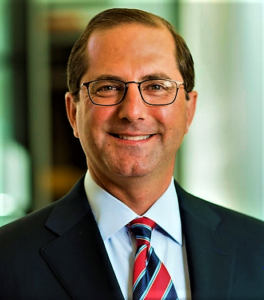
...health secretary Alex Azar says the number of drug overdose deaths has begun to level off after years of relentless increases driven by the opioid epidemic...Azar cautioned...it's too early to declare victory...However, he said that toward the end of last year and through the beginning of this year, the number of deaths "has begun to plateau."...provisional counts posted online by CDC show a slight leveling began toward the end of 2017.
- How Mergers Will Affect Pharmacists (drugtopics.com)

Frederick S. Mayer, RPh, MPH, FACA, and CEO of Pharmacists Planning Services Inc
The Cigna-Express Scripts merger has gotten a go-ahead from the Department of Justice, but DOJ has not ruled on the CVS-Aetna merger at press time...Both deals have shareholder backing... I think it’s part of an overall trend...Effects on Pharmacists...Frederick S. Mayer...CEO of Pharmacists Planning Services Inc...fears that they could result in loss of pharmacy jobs due to closures of independent pharmacies that can no longer compete. Chain pharmacists could also have less job security as locations may close. Mayer also says consolidation could lead to higher prices, lower quality, and less choice for consumers...Pharmacists...trained eight years for their PharmD, and now they are counting, pouring, and typing due to mergers,” says Mayer, who adds that pharmacists in larger settings don’t have adequate time for patient counseling...Over the past 10 years, mergers have resulted in poorer choices of medication for consumers and patients...Chains that are in one of these vertically integrated systems have guaranteed volume without competition on price...Perry Cohen, CEO of The Pharmacy Group...Companies responding to the need for new care models for healthcare services. The marketplace needs new care models and wants to embrace these companies that get ahead of the curve...More Mergers Coming... more vertical mergers and acquisitions...The horizontal is being driven a lot by the reimbursement pressure...The vertical is much more strategic around the control of the overall person’s healthcare...
- October 26 Pharmacy Week in Review: FDA Addressing Accessibility of Naloxone, Therapy Shows Potential for Treating Pancreatic Cancer (pharmacytimes.com)

Nicole Grassano, PTNN, Pharmacy Week in Review, this weekly video program provides our readers with an in-depth review of the latest news, product approvals, FDA rulings and more.
- CMS eyes Part D catastrophic coverage reforms that would shift risk to insurers (fiercehealthcare.com)
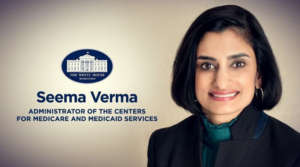
The Trump administration is looking for ways to change the Medicare Part D drug program that would shift more risk to plan sponsors when members reach the final catastrophic coverage stage...The catastrophic coverage tier of Part D kicks in when a member reaches $5,000 in out-of-pocket costs. At that point, patients pay a flat fee or 5% of the negotiated retail drug cost, and the federal government picks up 80% of the remaining costs and plan sponsors pay 15%...That could change. Catastrophic coverage under Part D was initially developed to encourage private insurers to participate, Centers for Medicare & Medicaid Services Administrator Seema Verma said...A lot has changed since then, and now it’s “one example where Part D could be updated or modernized.”...We’re at the point now where it would be better for Part D plans to manage that portion of the benefit,” she said. “That way we could bring competition and negation to that piece as well.”
- APhA looks to alleviate increasing pressures of the profession (drugstorenews.com)

Michael Hogue, president-elect of the American Pharmacists Association
What I’m(Michael Hogue, president-elect of the American Pharmacists Association) hearing from these recent graduates, as well as from seasoned pharmacists, is:
- Public and private payers are looking to pay the lowest price for prescription drugs;
- The community pharmacy business model no longer supports sufficient staffing, leaving little time for patient care, and in some cases jeopardizing patient safety;
- Pharmacists, now largely employed by a corporate entity rather than through private practice, feel they have little control over their practice environment and professional judgment;
- The number of pharmacists in many markets is leading to fear among some of losing their jobs or experiencing lower wages if they do not meet productivity metrics as more technical tasks are delegated to technicians;
- Full-time employment is sometimes hard to come by as a pharmacist; and
- Young pharmacists have tremendous personal debt from college.
The American Pharmacists Association...adopted a policy on the pharmacist workplace environment and patient safety. The policies serve not only as guiding statements and principles for the profession, but are frequently referenced when key policy and legal decisions are at play. In addition...APhA board of trustees has incorporated pharmacist well-being initiatives as core to our strategic plan. Among other efforts, we are building tangible resources to assist individual pharmacists with practice challenges, professional satisfaction, recognition and personal well-being...APhA is working with other professional organizations and employers to seek legislative changes at the state and national levels that will result in recognition of pharmacists as providers of care. Coupled with changes that remove unnecessary barriers to the use of technologies and technicians, this will lead to new opportunities for the patient care we are capable of providing, allowing the business model to shift.