
- Ohio regulator orders insurers, benefit managers to give lowest drug price (reuters.com)
The Ohio Department of Insurance said...that pharmacy benefit managers and insurers would have to disclose the lowest price for a prescription drug for Ohio consumers, part of a move to prevent insured consumers potentially paying more than those without insurance...Two of the largest pharmacy benefit managers, Express Scripts Holding Co. and CVS Health Inc said their contracts include clauses by which members receive the lowest cost automatically...The agency said it would ban the practice in which some insurers and pharmacy benefit managers use contractual provisions to prevent pharmacists from discussing with consumers if low-cost options are available for prescriptions, effective immediately...It would also prohibit them from charging customers a higher amount for prescription drugs than what it would otherwise cost without insurance coverage
- Drug Supply Chain Security: OIG Finds Pharmacies Received Most Tracing Information (raps.org)

A new report from the Department of Health and Human Services’ Office of Inspector General found that among a sample of 40 pharmacies, all received at least some of the required drug product tracing information from their supply chain partners, though many said they are not reviewing the information...Under the Drug Supply Chain Security Act, dispensers, including independent, chain and hospital pharmacies, are required to receive complete tracing information before accepting ownership of a drug shipped from a manufacturer or wholesaler...“Although dispensers are generally implementing the requirements for drug product tracing, missing information and a lack of awareness of DSCSA requirements raise concerns that a complete tracing record for a drug product may not always be available to support investigations of suspect and illegitimate drug products in the supply chain,” OIG said...OIG recommends (and FDA concurred) that FDA offer educational outreach to dispensers of drugs to ensure they understand their responsibilities in receiving complete tracing information from supply chain partners before accepting ownership of such pharmaceuticals...
- Washoe County releases chronic disease report card (kolotv.com)2018 Washoe County Chronic Disease Report Card A Summary Report of Chronic Health Conditions and Primary Risk Factors (washoecounty.us)

The Washoe County Health District has released the “2018 Washoe County Chronic Disease Report Card,” the most current and available information about chronic disease and their risk factors for Washoe County...“The intent of this report is to provide a summary of chronic diseases and their risk factors in Washoe County and to serve as a source of currently-available chronic disease data. It is also intended to provide local health care providers, chronic disease practitioners, and other interested persons and programs with data they may use in their work to improve the health of Washoe County,” says District Health Officer Kevin Dick...
- Nevada State Board of Pharmacy – April Newsletter (bop.nv.gov)

Contraceptive Prescriptions
Prescription Readers
What Pharmacists Need to Know About AB 474
National Pharmacy Compliance News
- FDA Requires Labeling Update on Opioid-Containing Cough and Cold Medicines
- Latest NDTA Shows Opioids Pose Significant Impact to Public Health
- FDA Recognizes Eight European Drug Regulatory Authorities Capable of Conducting Inspections
- Incorrect Use of Insulin Pens at Home Can Cause Severe Hyperglycemia
- FDA Advises on Opioid Addiction Medications and Benzodiazepines
- Only About 3% of Pharmacies and Other Entities Voluntarily Maintain a Prescription Drug Disposal Bin, GAO Reports
- One in Five Drivers Uses a Prescription Drug That Can Impair Driving Despite Receiving Warnings
- PTCB CPhT Program Earns Accreditation From the American National Standards Institute
- Study Estimates Nonoptimized Medications Cost the U.S. $528.4 Billion Annually (ptcommunity.com)

Researchers propose that pharmacists can help improve medication-related care and lower costs...the actual cost of prescription medications is more than just the dollars and cents on the bill, according to a recent study. Researchers...estimate that illness and death resulting from nonoptimized medication therapy costs $528.4 billion annually...when you’re sick, a health care professional prescribes you a medication, you take it as directed, and you get better...But what happens a lot of the time is the medication regimen is not optimized...the prescription may not be exactly appropriate for your indication—not quite the right medication or dose—or you just don’t take the medication for whatever reason, don’t take them as directed, or the medication causes an adverse event or a new health problem...the current cost of each possible consequence...illnesses and deaths that result from nonoptimized medication therapy to be $528.4 billion...Nonoptimized medication therapy is a massive avoidable cost. If medications were prescribed, monitored, and taken properly, we wouldn’t face this cost, and patients would be healthier...To improve medication-related care...authors...would like to see a systematic and coordinated effort to break down prescriber–pharmacist silos and expand comprehensive medication management programs, in which clinical pharmacists have access to complete medical records, improved dialogue with other members of a patient’s health care team, and input as a medication is prescribed—similar to what is now taking place at many U.S. Veterans Affairs clinics.
- Health Canada approves ‘Viagra for women’ pill, loosens restrictions on taking it with alcohol (edmontonjournal.com)
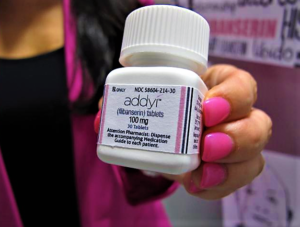
In Canada, the libido pill will come with a warning to ‘limit’ alcohol consumption, in contrast to the U.S., where women must promise they’ll abstain while on the drug...Canada has approved the first “Viagra for women” pill — and, to the alarm of some experts, loosened restrictions around alcohol that have contributed to the drug’s lacklustre sales in the United States...In Canada, the libido pill will come with a warning to women to “limit” their alcohol consumption...The drug had been under review by Health Canada for more than two years. The federal agency issued a “notice of compliance” late last month...The U.S. Food and Drug Administration twice rebuffed Addyi before granting approval in 2015, and only after lobbying from a “grassroots” campaign called Even the Score — funded by Addyi’s makers, Sprout Pharmaceuticals — that accused the regulator of being sexist for approving sex medicines for men, but not for women...
- This Week in Managed Care: March 30, 2018 (ajmc.com)
Laura Joszt, Managing Editor at The American Journal of Managed Care. Welcome to This Week in Managed Care from the Managed Markets News Network
- Insurers will study blockchain to fix their provider lists (cnbc.com)

As a patient, finding a doctor in-network on your health plan can make a big difference when it comes to out of pocket costs. For insurers and the doctors they contract with, finding a better way to keep provider lists up to date, could make a big difference when it comes to administrative costs...The administrative costs of updating and tracking down that information are estimated to be more than $2 billion dollars a year for the health-care industry...in 2016 federal health officials found that nearly half of provider listings for Medicare Advantage plans were inaccurate, with incorrect provider addresses and phone numbers...Now, UnitedHealth Group and its Medicare rival Humana are launching a pilot program together to study whether blockchain technology, with its system of decentralized ledgers, can help fix the problem...Regulators at...the Centers for Medicare and Medicaid Services, may start fining Medicare insurers up to $25,000 a day for inaccurate provider lists, so it's a problem the industry is anxious to resolve for their doctors, their patients and their bottom lines...
- Come for your drugs, leave with more shopping: Walmart’s new growth strategy? (reuters.com)

Walmart Inc’s efforts to develop closer ties with health insurer Humana Inc, which came to light...point to a brave new world of retail where superstores become healthcare centers offering basic medical care...They are also aimed at boosting Walmart’s slowing growth in brick-and-mortar store sales as it faces increasing pressure online from Amazon.com Inc. Deepening its existing partnership with Humana, or even acquiring the company outright, could be a step toward turning its 4,700 or so U.S. stores into healthcare centers that aim to attract more shoppers over 65...The end goal here is to get more people in their stores, get them to buy drugs and make an additional purchase while they are in the store...If Walmart can offer “competitive rates” on primary care and other health services...it “can grow traffic and push store visits.”...“It allows them to get ahead of everybody from warehouse club operators like Costco, Target and other retailers who run chain drugstores as well as food and drug combo operators like Kroger and Wegmans.”...
- Pharmacy Week in Review: March 30, 2018 (pharmacytimes.com)
Nicole Crisano, PTNN. This weekly video program provides our readers with an in-depth review of the latest news, product approvals, FDA rulings and more.