
- “Pharma Bro” Martin Shkreli sentenced to 7 years in prison for fraud (cbsnews.com)You Hate Martin Shkreli. That's Sort Of The Problem (forbes.com)
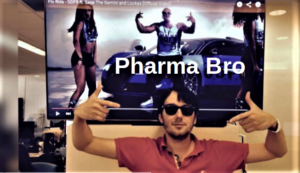
Former pharmaceutical executive Martin Shkreli wept and apologized before being sentenced to seven years in prison...for securities fraud. A U.S. District Court judge in Brooklyn handed down the sentence after a jury in August found him guilty of defrauding investors in his hedge funds...Judge Kiyo Matsumoto said she believed Shkreli to be genuinely remorseful for his crimes, but she expressed concern that a minimal sentence might not deter him in future...The judge...also imposed a $75,000 fine apart from the $7.4 million forfeiture that she...ruled Shkreli must pay.
- Numbers show drugmakers are keeping RTFs under wraps (biopharmadive.com)
When Celgene Corp. revealed receipt of a Refusal-to-File letter for its blockbuster hopeful multiple sclerosis drug ozanimod, shares in the big biotech dropped as much as 10%...The decline is no surprise — such a major disclosure was bound to hit Celgene's stock price because the Food and Drug Administration's decision not to accept the New Drug Application will significantly impact the time when (and if) ozanimod ever gets to market, potentially costing Celgene hundreds of millions in future sales...But not all pharmas seem to be so upfront with shareholders about the letters from the FDA, according to a BioPharma Dive analysis...Public disclosure therefore falls to the company when it receives one of these rejections. Company executives can disclose as much or as little information about the letters as they deem appropriate...There has been controversy over the issue for years related to CRLs (Complete Response Letters) — and public and investor outcry for the FDA to publish the letters...it comes down to what is "material" to investors, something defined by the Securities and Exchange Commission but which also gives companies some latitude...
- US FDA track and trace: Industry welcomes data standardisation (in-pharmatechnologist.com)

The US Food and Drug Administration released the Standardization of Data and Documentation Practices for Product Tracing – guidance last week, which elaborates on industry standards relating to the Drug Supply Chain Security Act...(which) aims to build an electronic system to trace prescription medicines in the US...The move to fully electronic traceability information is a positive step in terms of data integrity, availability and exchange in the supply chain...It is important firms within the pharmaceutical supply chain move in the same direction and embrace the advantages of technology and digitisation... Moving to a completely electronic system should only bring advantages to CMOs and the wider industry, improving data integrity and security and reducing the time and resource needed to produce and exchange traceability...
- Kentucky could become the first state to tax opioid prescriptions (statnews.com)

Lawmakers in Kentucky are weighing whether to impose a new tax on opioid prescriptions, the latest effort in a string of so-far failed attempts to pull new revenue from the painkillers that helped seed a nationwide addiction crisis...The proposed tax — a 25-cent levy on drug distributors for every dose sent to the state — was approved by the Kentucky House...as part of a broader budget and tax plan. But unlike in other states, where lawmakers aimed to steer the new revenue to addiction treatment and education programs, the Kentucky plan...would direct the money to fill budget gaps elsewhere, including boosting funding for the state’s public schools...the Healthcare Distribution Alliance, which represents drug distributors, said that “if a regressive tax is imposed on any product, particularly a healthcare product, it will limit the ability for legitimate patients to access the medicines they require for the treatment of chronic pain or palliative care.”
- Pharmacy Week in Review: March 9, 2018 (pharmacytimes.com)

Nicole Crisano, PTNN. This weekly video program provides our readers with an in-depth review of the latest news, product approvals, FDA rulings and more.
- Virginia lawmakers aim to stop people from abusing their pets’ prescriptions (richmond.com)

Virginia’s fight against rising rates of opioid addiction has an unlikely new front: the vet’s office...the General Assembly is poised to begin tracking prescriptions issued to animals through the state’s prescription monitoring program...The system was put in place more than a decade ago to help identify human patients who visit multiple doctors to obtain painkiller prescriptions. The new law would expand it to make it easier to identify people who frequently seek out drugs with high potential for abuse for their pets, said the measure’s sponsor, state Sen. William Stanley, R-Franklin...“You’re talking about not just opioids,” Stanley said. “If your dog is afraid of thunder, they’re giving a sedative. There’s a lot of drugs that, when they’re administered to a person, it goes through the (monitoring) system, but it’s not happening for pet owners.”...The measure passed the Senate unanimously and the House of Delegates 97-1. It now goes to Gov. Ralph Northam’s desk.
- Shkreli Ordered by U.S. Judge to Forfeit Almost $7.4 Million (bloomberg.com)Shkreli Deserves at Least 15 Years in Jail for Fraud, U.S. Says (bloomberg.com)What Happens to Martin Shkreli's Wu-Tang Album Now (vice.com)'Pharma bro' Martin Shkreli launched 'unmonitored drug trial' in Cyprus for Retrophin drug without FDA oversight: Prosecutors (cnbc.com)
Martin Shkreli must turn over almost $7.4 million...a judge ruled in a win for prosecutors who say the hedge-fund manager turned pharmaceutical executive cheated his investors...The jailed convict is scheduled to be sentenced March 9 for lying to investors in his hedge funds about his track record and performance as well as a fraud that involved Retrophin Inc., a company he founded...Shkreli had argued that he shouldn’t have to forfeit anything -- or just over $500,000 at the most -- because he didn’t profit from the crimes. Money from his investors went into the stock market, and he didn’t get anything from a plan to control Retrophin shares...Investors ultimately got their money back...Shkreli’s assets -- a Picasso, $5 million in cash in a personal trading account, a one-of-a-kind special edition album by the Wu-Tang Clan, an unreleased Lil Wayne album and shares in Vyera Pharmaceuticals...can be used to fulfill the forfeiture if there’s not enough cash available...
- This Week in Managed Care: March 9, 2018 (ajmc.com)

Laura Joszt, Managing Editor at The American Journal of Managed Care. Welcome to This Week in Managed Care from the Managed Markets News Network
- CMS Unveils Patient Data Access Initiatives (healthleadersmedia.com)

Seema Verma, Centers for Medicare and Medicaid Services Administrator
The Federal government...unveiled two initiatives designed to improve patients' access and control over their personal electronic medical records, and also pledged to overhaul Meaningful Use and refocus on data interoperability and ease of use among providers...Under the MyHealthEData initiative, patients will have access to their complete electronic health record, which they can take from doctor to doctor, choose the provider they want, and give that provider secure access to their data, leading to greater competition and reducing costs, the Centers for Medicare & Medicaid Services said...Under a second initiative, Medicare has launched Blue Button 2.0, which allows traditional Medicare beneficiaries to access and share personal health data in a universal digital format, and connect claims data to the secure applications, providers, and services they trust...CMS Administrator Seema Verma unveiled the initiatives...at the annual conference of the Healthcare Information and Management Systems Society...CMS is also taking an aggressive stance against data blocking...it is the priority of this administration to ensure that every patient and their doctor can receive free and timely access to their electronic data,"...
- Why can’t the drug industry solve its gender diversity problem? (cen.acs.org)

Women and men enter the workforce with advanced degrees in medicine and science at nearly the same rate, but for some reason, many more women either drop out or hit a plateau in their careers...Whether it is the paucity of women on company boards, the slow progress in getting women into leadership positions at big pharma, or the alarming absence of women as scientific founders and research heads, the numbers just aren’t there...organizations have amped up the number of initiatives meant to help women ascend the ranks. Networking for women, board training for women, mentorships for women—programs have proliferated...But are they actually moving the needle on gender diversity in biotech?...To try to answer that question, C&EN talked with nearly two dozen women working in the biosciences—in academic drug discovery, biotech start-ups, and big pharma...Some are optimistic that women entering the workforce now will be the true beneficiaries of a society that values an inclusive work culture. Others worry that change is simply too slow or unfolding in a way that doesn’t get at the fundamental reasons so many women drop out of the pipeline...