
- Predictive analytics can spot patients not taking their medicine (healthcarefinancenews.com)

Any health system trying to tackle population health management in any meaningful way has to grapple with the challenge of patients who don't adhere to their care plans – especially those who, for whatever reason, don't take their medicines in the way they were prescribed..."Medication nonadherence is a massive public health problem,"..."We estimate that almost $300 billion a year is spent in caring for health conditions that are attributable to nonadherence – that amount of money could be saved if patients were fully adherent to their medications,"..."11 percent of all hospitalizations and other staggeringly high numbers" – can be directly attributed to patients failing to take their meds on time, in the right dosage or at all...So what's the answer to better health? Innovating on more and more medicines, or getting better at ensure (ensuring) they're put to work on the people who need them most?...Population-level studies have shown that medication adherence is only about 50 to 60 percent...If we know each nonadherent patient had a different reason for that – maybe it's cost, or maybe it's competing priorities, or confusion and uncertainty, or fear of potential side effects – the question becomes: how to ascertain that?..."That's where predictive analytics is really coming into play,"...Predictive strategies can also "help identify who's most likely to benefit from certain types of intervention – that's really where the future of predictive analytics lies,"..."We can identify timing. And we might be able to begin to identify barriers people have and what might be reasons they're not adherent using big data...
- Stakeholders Comment on FDA Draft Guidance for Evaluating Biosimilarity (biopharminternational.com)
Biopharma majors are among the industry stakeholders who have commented and raised questions about FDA’s recently proposed draft guidance for analytical assessment of similarity in biosimilars...On Dec. 4, 2017, a final round of comments from industry stakeholders who raised questions over FDA’s draft guidance, “Statistical Approaches to Evaluate Analytical Similarity,” about how to conduct analytical evaluation of similarity in biosimilars, was published...Several biopharma majors were among the commenters, including Amgen, Boehringer Ingelheim, Genentech, a Roche company, Novartis, Pfizer, Sanofi, and Shire. Other industry stakeholders include the Association for Accessible Medicines, the Biosimilars Forum, and the Biotechnology Innovation Organization...FDA introduced the draft guidance in September 2017, which specifically describes the type of information that sponsors of proposed biosimilar products should obtain regarding the structural/physicochemical and functional attributes of the reference product. In addition, the guidance describes how that information can be used in the development of an analytical similarity assessment plan for the proposed biosimilar, as well as recommends the statistical approaches for evaluating analytical similarity.
- OTC Viagra: Pfizer snags nod for nonprescription sales of the little blue pill for men in the U.K. (fiercepharma.com)

Pfizer has won a first approval for OTC Viagra. Viagra Connect, the Pfizer OTC name for its blockbuster erectile dysfunction drug, has been approved for sale in the U.K...The Medicine and Healthcare products Regulatory Agency announced...that it will reclassify the 50 mg dose from prescription only to a pharmacy medicine in the U.K. Viagra Connect is expected to be available for sale in the spring of 2018. Anyone seeking to buy the drug will be required to have a discussion with a pharmacist, who will determine whether the drug is appropriate for their use...It will continue to sell branded versions of other doses of the drug in the U.K...In regard to its U.S. OTC ambitions, Pfizer said, in a statement to FiercePharma, “While we do not have information to share on specific Rx to OTC switch programs in the United States, generally we consider prescription drugs—both within the Pfizer portfolio and outside it—for potential switch to non-prescription status. Our objective is to provide consumers with significantly greater access to medicines with well-established efficacy and safety profiles without a prescription.”
- Dark web drug market growing rapidly in Europe: report (reuters.com)Drugs and the darknet: perspectives for enforcement, research and policy (emcdda.europa.eu)

The illegal drug trade on the dark web is growing rapidly, despite authorities shutting down major market sites like AlphaBay, as crime gangs diversify and seek new clients online, a report by two European Union agencies warned...The report, which is the first of its kind to analyze the drug trade in Europe on the dark web, showed that online markets are becoming increasingly sophisticated and offering growing numbers of illegal products to buyers...Users are largely anonymous and untraceable and mainly pay with cryptocurrencies like bitcoin...Two thirds of dark web transactions involve drugs, the report by Europol and EMCDDA (The European Monitoring Centre for Drugs and Drug Addiction) found. The biggest European markets are Germany, Britain and the Netherlands. From 2011-2015, drugs worth more than 170 million euros were sold over the dark web worldwide, including nearly 80 million euros worth in Europe...the dark web is an increasingly attractive market because buyers and sellers are anonymous and there is a perception that drugs bought there are good quality...
- Will Pharma Meet the Drug Tracking Deadline? (biopharminternational.com)
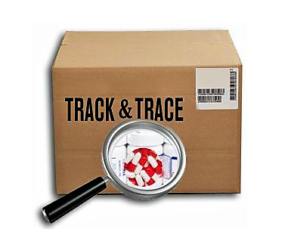
Manufacturers and trading partners struggle to meet drug tracking requirements...As FDA and industry near the halfway mark in the 10-year process for establishing a national electronic drug tracking system by 2023, there’s considerable concern among pharma companies, wholesaler/distributors, and pharmacists about meeting the deadline. The process for establishing the rules and infrastructure for the track-and-trace system envisioned in the Drug Supply Chain Security Act, part of the Drug Quality and Security Act of 2013, is proving to be complex and challenging for all parties...FDA recently delayed requiring drug manufacturers to imprint unique product identifiers on individual packages by November of 2017, saying it would not enforce that policy until Nov. 27, 2018. While major pharma companies are meeting the earlier time-frame for serializing and identifying drug packages, many generic-drug makers and contract manufacturers reported confusion over who is responsible for devising the identifiers and for confirming compliance with requirements. And while manufacturers applauded gaining an additional year to fully identify individual drug packages, pharmacists and other supply chain partners raised concerns that the delay would make it even more difficult for them to comply with reporting requirements for 2018 and 2019...
- CVS to Buy Aetna for $69 Billion in a Deal That May Reshape the Health Industry (nytimes.com)CVS-Aetna deal will change the way many big employers buy employee health-care benefits (cnbc.com)The CVS/Aetna Deal in 5 Quotes Now that an official proposal has been announced, how are industry leaders responding? (drugtopics.modernmedicine.com)
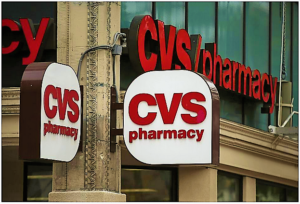
CVS Health said on Sunday that it had agreed to buy Aetna for about $69 billion in a deal that would combine the drugstore giant with one of the biggest health insurers in the United States and has the potential to reshape the nation’s health care industry...The transaction, one of the largest of the year, reflects the increasingly blurred lines between the traditionally separate spheres of a rapidly changing industry. It represents an effort to make both companies more appealing to consumers as health care that was once delivered in a doctor’s office more often reaches consumers over the phone, at a retail clinic or via an app...A combined CVS-Aetna could position itself as a formidable figure in this changing landscape. Together, the companies touch most of the basic health services that people regularly use, providing an opportunity to benefit consumers. CVS operates a chain of pharmacies and retail clinics that could be used by Aetna to provide care directly to patients, while the merged company could be better able to offer employers one-stop shopping for health insurance for their workers.
- This Week in Managed Care: December 1, 2017 (ajmc.com)

Laura Joszt, assistant managing editor at The American Journal of Managed Care. Welcome to This Week in Managed Care from the Managed Markets News Network
- EMA Updates Brexit Guidance (biopharminternational.com)

The agency and the European Commission published updated guidance to answer questions about Brexit...On Dec. 1, 2017, the European Medicines Agency and the European Commission published updated guidance for pharmaceutical companies regarding the United Kingdom’s withdrawal from the European Union. The new guidance answers additional questions about marketing applications and authorizations...New in this update is more information on batch release sites located in the UK, which must be located in the EU; the effect on herbal medicinal products; and applications for orphan drug designation. The guidance also discusses the local representatives in the UK mentioned in product information, global marketing, and the sunset clause.
- Meaningful Measures specifics emerge: CMS program will track 18 areas (healthcareitnews.com)

The Centers for Medicare and Medicaid Services...offered further insight into how the Meaningful Measures program works...deputy director of CMS' Center for Clinical Standards and Quality, said the initiative to streamline quality reporting was launched in recognition that "there's a fine line between being helpful and being a hindrance."...CMS has heard the feedback from industry stakeholders that there are too many often-overlapping quality measures...Tracking these measures does not always lead to better outcomes for patients...there are two key problems CMS wants to solve with Meaningful Measures...The first is to focus on the highest-priority measures for quality reporting and quality improvement. The second...is to improve the agency's communications with patients, clinicians and stakeholders about what measures they should be paying most attention to...the important concepts we want every measure to be filtered through...Those are: reduce regulatory burden, improve access for rural communities, achieve cost savings, safeguard public health, track to measurable outcomes and impact and eliminate disparities...Those principals...represent the guiding framework for 18 different Meaningful Measure areas that CMS wants health systems to prioritize – they're further grouped under six thematic headings:
- Make Care Safer by Reducing Harm Caused in the Delivery of Care
- Strengthen Person and Family Engagement as Partners in their Care
- Promote Effective Communication and Coordination of Care
- Promote Effective Prevention and Treatment of Chronic Disease
- Work with Communities to Promote Best Practices of Healthy Living
- Make Care Affordable
- Pharmacy Week in Review: December 1, 2017 (pharmacytimes.com)
Nicole Crisano, PTNN. This weekly video program provides our readers with an in-depth review of the latest news, product approvals, FDA rulings and more.