
- Health exchange eyes return to state-run enrollment site (lasvegassun.com)
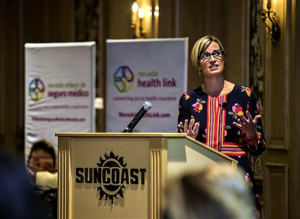
Nevada’s health exchange is looking to once again run its own enrollment site, a move off the healthcare.gov platform that could save the state millions of dollars...The Silver State Health Exchange is planning to issue a request for information in December and will likely issue a request for proposal in March, said Heather Korbulic, the agency’s executive director. She said the healthcare.gov platform limits the exchange’s access to information and how much time customers can spend shopping for plans...“We’ll just take the same business processes that we use with healthcare.gov right now and remove healthcare.gov and put in private technology,” she said. “So we limit any kind of disruption.”...She said the exchange can show that it has a plan that will comply with regulations while still going to a private option. If the new platform is in place by 2020, the exchange would save $6 million...
- Half of U.S. Adults Have High Blood Pressure in New Guidelines (ktvn.com)2017 ACC/AHA/AAPA/ABC/ACPM/AGS/APhA/ASH/ASPC/NMA/PCNA Guideline for the Prevention, Detection, Evaluation, and Management of High Blood Pressure in Adults (onlinejacc.org)

New guidelines lower the threshold for high blood pressure, adding 30 million Americans to those who have the condition, which now plagues nearly half of U.S. adults...High pressure, which for decades has been a top reading of at least 140 or a bottom one of 90, drops to 130 over 80 in advice announced Monday by a dozen medical groups...The change means an additional 14 percent of U.S. adults have the problem, but only an additional 2 percent will need medication right away; the rest should try healthier lifestyles, which get much stronger emphasis in the new advice. Poor diets, lack of exercise and other bad habits cause 90 percent of high blood pressure...The guidelines were announced Monday at an American Heart Association conference in Anaheim...WHAT THE CHANGES MEAN
- The guidelines set new categories and get rid of "prehypertension":
- Normal: Under 120 over 80
- Elevated: Top number 120-129 and bottom less than 80
- Stage 1: Top of 130-139 or bottom of 80-89
- Stage 2: Top at least 140 or bottom at least 90
- 7 cases of Legionnaires’ disease tied to Las Vegas’ Rio hotel (reviewjournal.com)

Five months after an outbreak of Legionnaires’ disease was reported at the Rio, the number of confirmed cases of the pneumonia-like bacterial illness among guests has risen to seven, with 29 more cases suspected, the Southern Nevada Health District said...Meanwhile, cleaning and testing of the hotel’s water system is continuing to ensure the disease has been eradicated...“In a situation like this, part of the process of these investigations on an environmental aspect is continued testing and monitoring,” said Robert Cole, the health district’s senior environmental health specialist...Often the process, which includes precautionary disinfection of water systems, will continue for up to a year, Cole said...In addition to the Legionnaires’ outbreak, an October report from the health district said there were 56 suspected cases of influenza-like Pontiac fever, a milder illness caused by the same bacteria, at the hotel, for a total of 92 confirmed or suspected cases related to the outbreak...
- Drug shortages loom from hurricane-impaired manufacturing in Puerto Rico (pharmacist.com)

Damaged Baxter plants on the island make large portion of saline products, already in short supply...hospitals are feeling even more compromised from the shortage ever since production at Baxter facilities in Puerto Rico was hampered...by hurricane Maria...“Clearly this has a huge impact on hospitals as well as home infusion pharmacies and infusion centers since many medications given by the I.V. route are mixed into these bags and given by infusion,” said Matthew Grissinger, RPh, from the Institute for Safe Medication Practices...The most severe shortages are being felt with small-volume parenteral solutions, such as the 50 and 100 milliliter minibags of sodium chloride 0.9%, dextrose 5%, and I.V. nutritional products made by Baxter...the American Society of Health-System Pharmacists had been hearing from both large and small hospitals alike that they only had a 1- to 2-week supply of small-volume parenteral solutions left. ASHP has been working around the clock to identify solutions and strategies for facilities...FDA has also been actively involved, and is monitoring a list of about 30 critical drug products that are either manufactured solely or primarily in Puerto Rico. Of those 30 drugs, 14 are sole-source products, meaning there are no alternatives available...To mitigate the shortage of I.V. solution products, FDA is doing something that it rarely does: import products from overseas plants. In this case, FDA is allowing temporary importation of an alternative supply of sodium chloride 0.9% injection bags, dextrose 5% injection bags, and metronidazole injection into the U.S. from Baxter facilities in Ireland, Australia, Mexico, and Canada...
- This Week in Managed Care: November 17, 2017 (ajmc.com)

Laura Joszt, assistant managing editor at The American Journal of Managed Care. Welcome to This Week in Managed Care from the Managed Markets News Network
- Hospitals file lawsuit to block 340B drug payment cut (biopharmadive.com)
The American Hospitals Association and other organizations have made good on their promise to sue the federal government in an effort to halt a major cut planned for the 340B Drug Pricing Program...The hospitals are arguing the reimbursement change exceeds the authority of the HHS secretary and is "arbitrary and capricious." They ask the court to force HHS to delay implementation or strike the cut entirely...HHS released a final rule earlier this month that changes the amount 340B hospitals will be paid for most drugs to 22.5% less than the average sales price starting at the beginning of next year. Currently those hospitals are paid the average price plus 6%...The cut of about 30% would hurt nonprofit hospitals' margins, according to a recent report from Moody's. The CMS has argued the change would reduce out-of-pocket costs and improve patient-provider relationships. The agency has calculated the 340B cut would save about $900 million next year...AHA has been strongly critical of the cut, saying it threatens patient care, particularly for vulnerable populations that are most likely to use safety net hospitals benefiting from the drug payment program...A recent report found 340B hospitals had a larger decrease in charity care spending than other hospitals, but AHA said the study was misleading and incomplete.
- FDA Expands Generic Drug Priority Reviews (raps.org)

Talk of bringing down the price of pharmaceuticals often hinges on generic competition, and the US is seeing approvals of new generic drugs faster and more consistently than ever – a trend likely to continue...The progress comes as Food and Drug Administration Commissioner Scott Gottlieb...indicated that the agency will expand which abbreviated new drug applications will see priority reviews..."Earlier this year we made changes to how we prioritize the agency’s generic drug submissions. The goal was to prioritize the review of generic applications until the FDA has approved three generic versions of each particular drug," Gottlieb said in a statement. "Today we’re expanding this competition-focused policy to prioritize any application that can meet the FDA’s approval standards at the point when the 180-day exclusivity period expires on a first generic entrant to a branded medicine."...The shift could accelerate generic competitors to market more quickly and help bring down costs, and comes a day after the Federal Trade Commission held a workshop on drug competition.
- Pharmacy Week in Review: November 17, 2017 (pharmacytimes.com)

Nicole Crisano, PTNN. This weekly video program provides our readers with an in-depth review of the latest news, product approvals, FDA rulings and more.
- Amazon tells regulators it will not sell drugs (biopharmadive.com)

Amazon.com Inc.'s filings with state pharmaceutical regulators reveal the company is not looking to sell drugs on its marketplace...The filings to distribute to at least 12 states from three facilities in Indiana reveal Amazon could distribute medical devices, supplies, gas or pharmaceuticals from the warehouses. However, to distribute drugs the company would likely also have to pursue a deal with a pharmaceutical benefits manager...In correspondence with regulators in Tennessee and Indiana, Amazon explicity (explicitly) said it would not "store or ship drugs," tempering rumors that the company would move into the pharmacy business in the near term...Spinners have spread rumors Amazon will soon disrupt the pharmaceutical supply chain, but it turns out the opposite is true: drugs, at least, are safe from e-commerce — but medical distributors are not so lucky...Companies like McKesson Corp. and Cardinal Health Inc. have long had a stranglehold on the medical supply distribution market, serving as middlemen between countless suppliers and the dozens of hospitals and clinics they serve. As healthcare providers continue to consolidate, so does suppliers' opportunities to sell to big clients...pharmaceutical companies and healthcare providers alike should watch the e-commerce giant's healthcare experiment with interest, as its success will likely anticipate further expansions — either in distribution or logistics.
- Why Major Hospitals Are Losing Money By The Millions (forbes.com)

According to the Harvard Business Review, several big-name hospitals reported significant declines and, in some cases, net losses to their FY 2016 operating margins...How did some of the biggest brands in care delivery lose this much money? The problem isn’t declining revenue...Part Of The Problem Is Rooted In The Past...From the late 19th century to the early 20th, hospitals were places the sick went to die. For practically everyone else, healthcare was delivered by house call. With the introduction of general anesthesia and the discovery of powerful antibiotics, medical care began moving from people’s homes to inpatient facilities. And by the 1950s, some 6,000 hospitals had sprouted throughout the country...By the time Medicare rolled out in 1965, healthcare consumed just 5% of the Gross Domestic Product. Today, that number is 18%...Hospitals have contributed to the cost hike in recent decades by: (1) purchasing redundant, expensive medical equipment and generating excess demand, (2) hiring highly paid specialists to perform ever-more complex procedures with diminishing value, rather than right-sizing their work forces, and (3) tolerating massive inefficiencies in care delivery...Most hospital leaders acknowledge the need to course correct, but very few have been able to deliver care that’s significantly more efficient or cost-effective than before. Instead, hospitals in most communities have focused on reducing and eliminating competition. As a result, a recent study found that 90% of large U.S. cities were “highly concentrated for hospitals,” allowing those that remain to increase their market power and prices...