
- The Unhealthy Politics of Pork: How It Increases Your Medical Costs (nytimes.com)

No industry in America spends more on lobbying than health care...In 2016, the health care industry spent half a billion dollars on lobbying, with pharmaceutical companies, hospitals and health professionals making the largest contributions...Closely related to industry lobbying is the political maneuvering that congressional leaders use in an effort to pass legislation — specifically, targeted provisions known as earmarks, “sweeteners” or pork barrel spending...In 2010, Democrats hoping to secure votes from reluctant rural state senators added the “Frontier States” provision to the A.C.A., which increased Medicare payments to five states with low population densities...We all know earmarks and lobbying influence policymakers and policy. In health care, this has critical implications: who gets care, how much they get, how we pay for it. But there’s little hard data on exactly who benefits and how large the effects can be. A new study illuminates the ways these political dynamics can change congressional and hospital behavior — and how they can increase health care costs for the rest of us...America’s increasingly burdensome health care spending has many roots: new technologies, high drug prices, fragmented care, administrative expenses and the like. But lobbying and political maneuvering can increase costs, too — without clear benefits for patients, communities or society at large...Often these costs are borne by all of us, while the benefits — if any — go to a favored few. Excess medical spending, then, is driven not only by inefficiencies in our health system, but also by those in our political system. Our solutions, it seems, must confront that uncomfortable reality.
- U.S. to promote use of opioid alternatives to treat addiction (reuters.com)

The U.S. Food and Drug Administration plans to encourage widespread use among opioid addicts of less harmful opioid drugs such as methadone and buprenorphine, a radical shift in policy that could draw opposition from those in the addiction field who believe abstinence is the only effective treatment...FDA Commissioner Scott Gottlieb outlined a proposal under which every addict who suffers a non-fatal overdose would be treated with an opioid substitute, for long periods if necessary, or even for life...“I know this may make some people uncomfortable,” Gottlieb said...“FDA will join efforts to break the stigma associated with medications used for addiction treatment.”...The FDA, Gottlieb said, will issue guidance for drugmakers to promote the development of new addiction treatments and lay out the agency’s interest in “novel, non-abstinence-based” products...
- Nevada State Board of Pharmacy – October Newsletter 2017 (bop.nv.gov)

Message From the Executive Secretary, Larry Pinson - It is with mixed emotions that I announce my decision to retire, effective sometime within the next year, after over 22 years of being associated in one way or another with the Nevada State Board of Pharmacy.
New Executive Secretary Announced (The Ultimate Bearcat!) - J. David (“Dave”) Wuest, a graduate of the University of Cincinnati in Ohio and hence an avid Bearcat fan, has been selected to succeed Executive Secretary Larry Pinson upon Larry’s pending retirement in 2018.
Regulatory Update
SB 59 requires the uploading of Schedule V opioid medications into the state’s prescription monitoring database.
SB 337 authorizes a registered pharmacist to manipulate a person for the collection of specimens.
SB 131 requires each retail community pharmacy in the state to provide a prescription reader upon the request of a person to whom a drug is dispensed or advice on obtaining a prescription reader.
SB 260 authorizes a pharmacist who has entered into a valid collaborative practice agreement (CPA) to engage in the collaborative practice of pharmacy and collaborative drug therapy management in the retail setting.
SB 171 requires retail pharmacies in Nevada to post instructions for the safe disposal of unused drugs. Assembly Bill 474 - many requirements on practitioners using CS to treat patients...Bowl of Hygeia Recipient 2017 - Congratulations to Mark C. Decerbo
Friendly Reminder - Technicians-in-training must have a separate registration for each individual pharmacy in which they receive their training.
Is Your Pharmacy Helping or Hindering the Health of Nevadans? - Adults may grow up, but they never outgrow the need for vaccines.
.Pharmacy Domain Signals Safety on the Web - With only 4% of websites selling prescription drugs online following United States pharmacy laws and practice standards, consumers seeking medications online are faced with the daunting task of finding a safe site. To assist consumers and those legitimate pharmacies with an online presence, NABP has streamlined its website verification programs.
Quality Processes, Risk Management, and Culture: HR-Related Policies That Conflict With a Just Culture
AMA Task Force to Reduce Opioid Abuse Promotes Safe Storage, Disposal of Opioids
CDC Guide Shows Importance of Physicians, Pharmacists Working Together
FIP Report Shows Value of Pharmacists’ Role in Consumers’ Self-Care
FDA Restricts Use of Codeine and Tramadol Medicines in Children; Recommends Against Use in Breastfeeding Women
AVMA Warns Pharmacists and Pet Owners About Xylitol Pharmaceutical Products
CDC Publishes Guide to Help Pharmacists Initiate CPAs With Prescribers
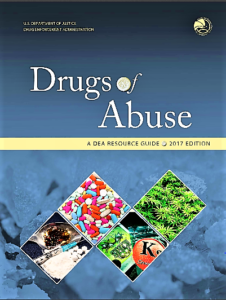
DEA Releases New Edition of Drugs of Abuse Resource Guide - 2017 edition of Drugs of Abuse, A DEA Resource Guide
- The U.S. Opioid Crisis Hits Tasmania’s Poppy Farmers (bloomberg.com)

Australia provides half of the world’s legal supply of raw opiate, but demand and prices are tumbling...With the U.S. imposing stricter rules on the use of painkillers, demand for the raw material has tumbled. Poppy growers in Tasmania have responded by scaling back or giving up on the crop altogether. The state is the source of about half of global supply, thanks to a 1971 agreement with the Commonwealth of Australia that granted it a decades-long monopoly on poppy cultivation...Tasmanian farmers...are reeling from the impact of government and corporate efforts to stem the abuse of prescription painkillers and their illegal knockoffs. The volume of opioid-based medicines prescribed in the U.S. has dropped 28 percent since 2012 following moves by the Drug Enforcement Agency to tighten access...The prescription branded-opioid market is at its lowest point in almost a decade...Tasmania is facing more competition: Three states on the Australian mainland have eased restrictions on poppy growing in recent years...As they wait for a rebound in demand, Tasmania’s poppy farmers need to focus on becoming more efficient...Some growers have managed to boost their yields to an average of about 40 kilograms of active raw material per hectare, up from 25 kilograms five years ago...It is a really, really tough marketplace out there, and it doesn’t look like it’s improving...The only thing at the present time to make it viable is increasing productivity...
- Amazon gains wholesale pharmacy licenses in multiple states (stltoday.com)

Throughout the past year, and without much fanfare, Amazon.com Inc. has gained approval to become a wholesale distributor from a number of state pharmaceutical boards...It’s unclear, though, whether the regulatory filings support speculation that the e-commerce giant is planning a move into the prescription drug delivery business, territory currently dominated by a handful of companies...Industry analysts in recent weeks have raised the possibility that Amazon was eyeing this lucrative new business, posing a potential threat to such companies as north St. Louis County-based Express Scripts Holding Co...According to a review of records by the St. Louis Post-Dispatch, Amazon has received approval for wholesale pharmacy licenses in at least 12 states, including Nevada, Arizona, North Dakota, Louisiana, Alabama, New Jersey, Michigan, Connecticut, Idaho, New Hampshire, Oregon and Tennessee....
- Navigating New FDA Guidance on Preapproval Payer (ajmc.com)

In light of recent guidance from the FDA on appropriate communications between payers and drug manufacturers prior to a drug’s approval, a panel of stakeholders at the Academy of Managed Care Pharmacy 2017 Nexus meeting...discussed how these new guidelines can raise as many questions as they answer.
Soumi Saha...background on the implications of the guidance...Payers and other healthcare decision makers need thorough healthcare economic information (HCEI) on a potential new drug’s budgetary impact and treatment population in order to plan and budget their resources...Saha pointed to surveys that found that 64% of payers perceived a gap between the information they needed and what they received, and 91% of manufacturers said it was difficult to have their HCEI materials approved under FDAM (Food and Drug Administration Modernization Act)...
Mark Gaydos...was not aware of any enforcement letters that had been sent by the FDA regarding formulary communications, and that it would have been difficult for the FDA’s Office of Prescription Drug Promotion to write such letters anyway, considering the lack of clarity in the rules...
Jay Jackson...provided more insight on how manufacturers are using the updated guidance to change how they generate HCEI. It is important for companies to establish standards on the scope of the data they will present, the scientific evidence supporting it, and how it should be presented, in a process he called “beginning with the end in mind.”...“I think we’re moving in the right direction,” Jackson said. “We’re not even 1 year into this, but I do think there’s increased knowledge of how to handle” HCEI both proactively and reactively....
Kat Wolf Khatchatourian...discussed her experiences with HCEI communications...Because formularies and rate filings are locked in by June for the next year, they cannot be adjusted to account for any additional products that are approved later on in the year. As such, plans are “perpetually playing catch-up with the innovation that’s coming to market.”...She called for additional legislation that “would improve both the timing and the quality of information that’s able to be exchanged and enable a safe harbor where people are not fearful” of sharing information...
- Walgreens to shutter 600 stores (bizjournals.com)Walgreens pulls off solid quarter, at time when pharmacy and retail are suffering (secure.marketwatch.com)

Walgreens said Wednesday that it will shutter 600 stores early next year following its $4.4 billion Rite Aid deal...The closures will be mostly Rite Aid stores, but may include some Walgreens locations...The company plans to shut down stores within a mile of another Walgreens or Rite Aid location. The closings will start next spring and will continue over an 18-month period...The move is expected to cost Walgreens $450 million, but should save the Deerfield, Illinois-based company $300 million yearly by 2020...In September, the Walgreens Boots Alliance received regulatory approval to buy 1,900 Rite Aid stores from the Pennsylvania-based drugstore chain. The deal will make Walgreens the country's largest retail pharmacy by store locations. Walgreens now has more than 13,200 stores worldwide...The company said it expects to complete integration of the acquired stores within three years at an estimated cost of approximately $750 million.
- CVS makes more than $66 billion bid for Aetna: sources (reuters.com)

U.S. pharmacy operator CVS Health Corp has made an offer to acquire No. 3 U.S. health insurer Aetna Inc for more than $200 per share, or over $66 billion...A deal would merge one of the nation’s largest pharmacy benefits managers and pharmacy operators with one of its oldest health insurers, whose far-reaching business ranges from employer healthcare to government plans nationwide...Aetna shares rose more than 11 percent, or $18.48, to $178.60, while CVS shares fell 3 percent, or $2.22, to $73.31...A tie-up with Aetna could give CVS more leverage in its price negotiations with drug makers. But it would also subject it to more antitrust scrutiny...The deal could also help counter pressure on CVS’s stock following speculation that Amazon.com Inc is preparing to enter the drug prescription market, using its vast e-commerce platform to take market share from traditional pharmacies...
- 2017 edition of Drugs of Abuse, A DEA Resource Guide (dea.gov)
- Project ECHO Expands Rural and Urban Clinics in Nevada (med.unr.edu)

Thousands of Nevadans have limited access to specialty health care, including the nearly 300,000 living in rural areas and many others living in urban centers who have no health insurance or Medicaid coverage. To help remedy this issue, the University of Nevada, Reno School of Medicine Office of Statewide Initiatives has expanded Project ECHO (Extension for Community Healthcare Outcomes) with new clinics in cardiology, pediatric endocrinology, medication assisted therapy for substance use disorder, as well as a unique school-based behavioral health program...Project ECHO uses teleconferencing technology to connect specialists at UNR Med with primary care clinicians in rural and urban under-served communities...These virtual clinics give primary care physicians, advanced practice registered nurses, physician assistants and other professionals the tools and resources to deliver high quality care in their communities...The impact is enormous...The work...has been transformative in providing critical rural outreach and health care to patients who otherwise would be without. Their work is changing the face of rural health care in the state of Nevada and is a model for delivering access to health care in efficient and affordable ways...