
- Mylan to pay $465 million to settle claims of shortchanging Medicaid (statnews.com)
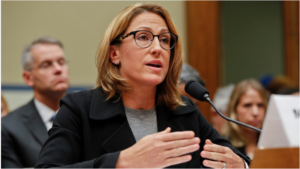
Mylan reached a $465 million settlement on Friday with the US Department of Justice and other government agencies over accusations that it shortchanged Medicaid...The move comes after a month of controversy over charges that Mylan improperly classified its EpiPen allergy device in reports to the Medicaid Drug Rebate Program. Under this program, companies must accurately report — and pay — a rebate on drugs paid for by the agency...Mylan, however, had been reporting EpiPen as a generic product for nearly a decade. And this is an important distinction, because classifications are used to determine the size of rebates that companies pay Medicaid. Rebates, which companies pay in exchange for having their products covered, are lower for generics — 13 percent versus 23 percent for a brand-name product.
- Pharmacy Week in Review: October 7, 2016 (pharmacytimes.com)
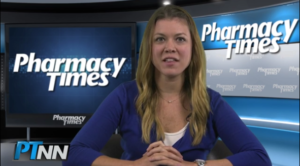
Kelly Walsh, PTNN. This weekly video program provides our readers with an in-depth review of the latest news, product approvals, FDA rulings and more.
- Pharma industry should take a page from airline social media mavens, consultant says (fiercepharma.com)

Airlines are known for their quick and effective social media responses, often helping stranded and annoyed passengers in real time. But while pharma companies can’t solve problems instantly with a reroute or seat change, they can definitely look to airline’s social media savvy for inspiration, one industry consultant says...Pharma companies need to get over the mindset that social media is too difficult to do in the regulated industry…You have a social media manager who is actively monitoring public forums for complaints and seeking to address those complaints as quickly as possible...actionable intelligence...or...acting on the data to provide a benefit of some kind...becoming aware of discussions on social media…a "treasure trove of valuable patient insights"--and analyzing what percentage could be acted upon to the mutual benefit of the brand and the patient...
- Buyers remorse or fraud? Teva and Mexican brothers slug it out over sour deal (statnews.com)
Drug makers are constantly foraging for deals to bulk up their pipelines, but not all go according to plan...Consider the nasty spat between Teva Pharmaceuticals and two Mexican brothers, Fernando and Leopoldo Espinosa...they have filed dueling lawsuits after their $2.3 billion deal went sour…At issue was a move made last year by Teva...to expand in Mexico by purchasing Rimsa, one of the country’s largest independent pharmaceutical manufacturers, from the Espinosa brothers. At the time, Teva hailed its acquisition...as a "significant platform for growth" in the second-largest market in Latin America...Teva claims the brothers engaged in chicanery, ploys, and misrepresentations about their business in order to walk away with huge profits, according to its lawsuit...Rimsa was "was engaged in a years-long scheme to sell defective and unlawful products and to conceal those violations from Mexican regulators...Teva lawsuit goes on to claim that Rimsa submitted fraudulent information to regulators about ingredients suppliers and lied about laboratory tests, including the stability tests that must ensure the stated shelf life of each product was accurate and that the product would remain stable, and, therefore, safe and effective…
- What outrage? Ariad raises price of its leukemia drug four times so far this year (statnews.com)
At a time when drug makers are under intense scrutiny for their pricing, Ariad Pharmaceuticals does not appear to have any concerns about continually raising the price of an already expensive medicine...Since the beginning of the year, the company raised the price of its Iclusig (ponatinib) chronic myeloid leukemia treatment four times, which has amounted to a cumulative increase of 27 percent. As a result, the drug now has a list price of $16,560 a month, or almost $199,000 a year, before any rebates or discounts. And Ariad had also raised the price twice last year...Ariad, however, is bucking the trend. In explaining the rising prices, an Ariad spokeswoman sent us a statement saying the company assesses...pricing based on a range of factors, including efforts to make sure that pricing appropriately reflects the benefit the therapy delivers to patients and to the healthcare system..."This drug has a tattered history," said Dr. Peter Bach...Memorial Sloan-Kettering Cancer Center. "If the drug works well and has a good side effect profile, it should have a higher price. But there have been signals about problems. So both of things can’t be true, yet there’s no downward pressure on price. They just decide what they think they can get away with and serially raise the price every few months."...These price hikes, however, are fueling Wall Street.
- New center for kids with sickle cell disease aims to fill void in Southern Nevada (reviewjournal.com)

Danielle Bello, left, Angela Berg, Kimberly Moffatt-Brazile, Sue Waltermeyer, Jordan Lipio, Monike Richardson, Dr. Nik Abdul Rashid and Tamiko Brooks
Children in the Las Vegas Valley who have sickle cell disease soon will be able to visit a one-stop hub for medical care and social services to help them cope with the painful, sometimes debilitating blood disorder...The new Sickle Cell Treatment Center will open at the Children’s Specialty Center of Nevada, 3121 S. Maryland Parkway, by the end of October, according to Dr. Nik Abdul Rashid, director of the sickle cell center...The center will provide patients with access to a multidisciplinary team, including doctors, a social worker and a clinical research associate, who can help with everything from psychological assessments to communicating with a child’s school about the impact of the disease, Rashid said...the new center will help ensure kids with sickle cell disease receive adequate care while also giving parents the information and resources they need to be the best caregivers they can be...
- The Patent Truth: The Access to Medicines Debate (realclearhealth.com)

Bill Gates and Abraham Lincoln are in agreement. Gates, whose foundation funds the development and distribution of new medicines in the developing world, said the U.S. system is better than most other systems one can imagine…. The drug companies are turning out miracles, and we need their R&D budgets to stay strong. They need to see the opportunity." It turns out that Mr. Gates is in good company. Lincoln, the only U.S. President to hold a patent, called the IP system, "the fuel of interest which fires man’s genius."...At the United Nation’s General Assembly...a group called the High Level Panel on Access to Medicines was working hard to extinguish that source of miracles. The UN’s HLP issued a report with recommendations that would disrupt medical innovation and potentially lower the health status of impoverished communities throughout the world. The report’s fundamental premise is that millions of people in low and middle-income countries have been denied access to medicines because patents have increased their prices...The UN’s HLP ignores...progress, and the evidence that innovation and its intellectual property laws can exist alongside the delivery of medicines and health services to people in need...Governments need to be aware of attempts by UN agencies to put the HLP recommendations into programs....Replacing the current system’s proven accomplishments with an untested system would endanger the astounding improvement in health conditions of the poor over the past half-century. Over time, it might turn a miracle into a tragedy...
- This Week in Managed Care: October 7, 2016 (ajmc.com)
Justin Gallagher, associate publisher of The American Journal of Managed Care. Welcome to This Week in Managed Care, From the Managed Markets News Network.
- Humana, UnitedHealthcare join new value-based prescription drug model (modernhealthcare.com)
Humana, UnitedHealthcare, WellCare, Blue Cross and Blue Shield of Florida, Blue Cross and Blue Shield Northern Plains Alliance and CVS Health are among those participating in the Part D model that gives insurers financial incentives when they offer innovative programs that encourage seniors to take their medications...The experiment comes out of the Affordable Care Act…Evidence suggests that medication therapy services currently offered by Part D plans don't improve quality or reduce unnecessary medical expenditures. That's likely due to misaligned financial incentives and regulatory constraints…The focused approach is critical Medicare Advantage plans currently have more of an incentive than stand-alone Part D plans to work with patients to take their medications because they are on the hook for hospitalizations…The Medicare Advantage value-based insurance design model will begin Jan. 1, 2017, and run for five years…
- SEC charges former Puma biotech exec with $1.1 million in insider trading (statnews.com)

In the latest instance of alleged insider trading in the pharmaceutical industry, a former Puma Biotechnology executive was charged with illegally making more than $1.1 million by taking advantage of confidential information about clinical trials for a cancer drug...Robert Gadimian, who was senior director of regulatory affairs, bought and sold Puma stock after learning about favorable study results for a medicine that was being tested to treat breast cancer…This alleged episode of insider trading is only the latest instance involving the pharmaceutical industry or those working with drug makers. The issue has increasingly raised concerns in connection with clinical trial work, as well as deal-making and the drug approval process, which some fear can be distorted by such activities.