
- Prescription drug abuse epidemic extends beyond the United States (rti.org)

There is a high rate of prescription pain reliever abuse in Europe, largely accounted by opioids, according to the first comparative study of prescription drug abuse in the European Union, which was conducted by researchers at RTI International....The study investigated nonmedical prescription drug use in five European countries – Denmark, Germany, Spain, Sweden and the United Kingdom...For certain classes of medications, like opioids, we found a significant rate of prescription pain reliever abuse in the EU...While the lifetime rates were not as high as in the U.S. – 20 percent for those aged 12 years and over, compared to between 7 percent and 13 percent in the EU – the past-year rates were only slightly lower. This suggests that the EU may be catching up to the United States for some substances...Previously, it was thought that the prescription drug epidemic was limited to the United States...but this study shows that the epidemic extends well beyond the U.S...Identification of the scope and prevalence of nonmedical prescription drug use in the EU is an important first step in building a worldwide system that can be used to monitor trends, track risk and protective factors and to develop targeted interventions aimed at reducing the risk of nonmedical prescription drug use...
- Six Retail Chains Now Dominate the Still-Booming 340B Contract Pharmacy Business (drugchannels.net)
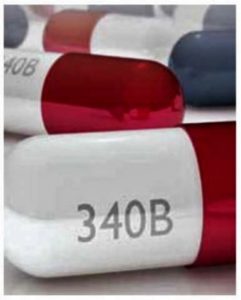
The pharmacy industry’s role in the 340B Drug Pricing Program continues to expand...latest analysis finds that nearly 18,000 pharmacy locations contract with 340B-eligible covered entities. That accounts for more than one in four U.S. retail, mail, and specialty pharmacy locations...Walgreens remains the biggest player, with about the same number of locations as those of Walmart, CVS, Rite Aid, Kroger, and Albertsons combined...Amidst the contract pharmacy boom...what’s really going on. How many prescriptions do contract pharmacies provide at discounted prices to uninsured, underinsured, and low-income patients? Who is really benefiting from the contract pharmacy business?…a 340B contract pharmacy doesn’t earn traditional spreads and dispensing fees. They instead profit from fees paid by the 340B entity. Given providers’ substantial profit opportunities, a 340B entity can afford fees that often far exceed a pharmacy’s typical profits from dispensing a third-party-paid prescription...There are many other profit opportunities...The extensive use of 340B contract pharmacies allows hospitals and other providers to benefit from 340B drug discounts earned from commercially paid prescriptions dispensed by contract pharmacies...Do needy patients benefit? No one knows. Covered entities are not specifically obligated to share any 340B savings with financially needy or uninsured patents, nor are they required to disclose how they use profits from the 340B program...
- A Health-Monitoring Sticker Powered by Your Cell Phone (technologyreview.com)Battery-free, stretchable optoelectronic systems for wireless optical characterization of the skin (advances.sciencemag.org)
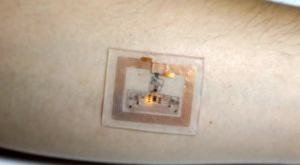
A wearable sensor measures blood oxygen using flashing LEDs. It's powered by radio waves from a nearby phone or tablet.
Stretchy electronics offer wearable health gadgets without batteries...Picture a health-monitoring patch you wear like a tattoo and that doesn’t need a battery...That’s the idea behind a demonstration by John Rogers, a stretchable electronics pioneer at the University of Illinois...whose lab created a stretchy skin patch that uses light pulses to monitor heart rate or sun exposure...it’s powered by a cell phone...with a near-field communications chip, the kind that’s used in apps like Apple Pay or for sharing photos between phones. That is, radio signals from a phone actually power the device and let it transmit information...Rogers says it means health-monitoring gadgets could be cheaper, smaller, and more lightweight than ever before...new device also measures heart rate and blood oxygenation using four LEDs to shine different colors of light into the skin. Changes to the color of the reflected light is picked up by photodetectors. A person’s heart rate is displayed as a flashing light.
- Doctor charged with insider trading while heading a clinical trial (statnews.com)

As a rule, principal investigators for clinical trials should not be trading in the stocks of companies whose drugs they are testing. But the feds allege that Dr. Edward Kosinski ignored this dictum and now faces charges of insider trading...Kosinski sold his shares in Regado Biosciences after receiving bad news about a clinical trial in which he was the principal investigator, according to...Securities and Exchange Commission. In the first stock trade, he avoided $160,000 in losses, and in the second transaction he made more than $3,000 by exercising options...He faces a maximum term of imprisonment of 20 years...alleged episode of insider trading is only the latest instance involving the pharmaceutical industry or those working with drug makers. The issue has increasingly raised concerns in connection with clinical trial work, as well as deal-making and the drug approval process, which some fear can be distorted by such activities.
- EPA pharmaceutical waste rule examined (chaindrugreview.com)

The Environmental Protection Agency recently proposed steps to streamline the process surrounding the disposal and handling of hazardous pharmaceutical waste for all health care facilities that dispense pharmaceuticals as set forth by the Resource Conservation and Recovery Act...While the intent of the proposed rule is fundamentally solid, it raises several red flags with serious implications for the pharmaceutical supply chain and the patients it serves that must be addressed before EPA finalizes the rule...many organizations indicated during the comment period...the rule potentially may lead to unintended and extreme consequences for pharmacies, such as increasing costs, limiting inventories, possible product shortages and the need for pharmacists to take on additional back-office services...What are the red flags?
First...Excluding wholesale distributors from the requirements...means that distributors will no longer be allowed to send pharmaceuticals to reverse distributors to determine whether they are eligible for a credit from the product's manufacturer. Second...EPA has introduced a new provision that all pharmaceuticals including unopened, unused and those that have not yet expired will now be considered waste when sent to a reverse distributor.
- Pharma brings the heat in July as TV ad spending soars (fiercepharma.com)

Pharma marketers must have missed the memo about the dog days of summer. TV spending by the top 10 pharma advertisers topped $140 million, making the total for July the highest since January, according to data from real-time TV ad tracker iSpot.tv...Disease awareness campaigns were prominent last month, with two marketers debuting in the top 10 group. Merck, which began a campaign to promote the importance of HPV vaccinations in June, landed at No. 7, spending $9.9 million split between that HPV ad and an ongoing campaign aimed at encouraging shingles vaccinations for older people. Merck markets Gardasil for HPV and Zostavax for shingles...July was also a big month for diabetes marketers on TV, with total spending of $64 million on TV ads for the month. That category was led by Pfizer’s Lyrica, which maintained the No. 2 spender spot for the third month in a row...Watch the ads...
- Humira (adalimumab) - "Teacher"
- Lyrica (pregabalin) - "Coach"
- Xeljanz XR (tofacitinib) - "Mother"
- Entresto (sacubitril/valsartan) - "Tomorrow"
- Toujeo (insulin glargine) - "Journal"
- Eliquis (apixaban) - "DVT and PE Blood Clots"
- Merck disease awareness ads - "HPV Vaccination"
- Victoza (liraglutide) - "Moment of Truth"
- Mylan disease awareness ads - "Allergic Reactions"
- Tresiba (insulin degludec) - "Ready"
- Business groups sue U.S. gov over tax rules that spoiled ‘Pfizergan’ (fiercepharma.com)
Pfizer and Allergan weren’t the only ones that were unhappy with the U.S. Treasury’s April move to block their $160 billion proposed megamerger. The U.S. Chamber of Commerce and one Texas business group were, too--and now they’re doing something about it...The pair sued the federal government...claiming that the Treasury Department’s move to tighten the reins on inversion deals violated the law...According to the allegations, the government tweaked the Internal Revenue Code itself after Congress refused to get on board with President Barack Obama’s inversion-limiting legislative changes--and the way Thomas Donohue, the chamber’s president and CEO, sees it, "this is not the way government is supposed to work."..."Instead of breaking the rules to punish companies engaged in lawful transactions, Washington should just do its job and comprehensively reform the tax code...The inversion crackdown that scuttled the Pfizergan transaction wasn’t the first of its kind. The April actions represented the third time the U.S. Treasury took matters into its own hands, with the first set--in October of 2014--toppling a proposed AbbVie-Shire merger....
- Analysis-Future of Drug Pricing: Paying for Benefits Not Per Pill (nytimes.com)

Global pressure on health spending is forcing the $1 trillion-a-year pharmaceutical industry to look for new ways to price its products: charging based on how much they improve patients' health, rather than how many pills or vials are sold...In the United States, both parties are promising fresh action on drug prices whoever wins the White House. In Europe, economies are stalled, squeezing state health budgets. And in China and other Asian markets, governments are getting tougher with suppliers...Pricing drugs based on clinical outcomes is one way to ensure that limited funds bring the most benefits to patients now and pay for the most promising medical advances in future. Some experiments in pricing have already been made...shifting the overall industry to a new model requires improvements in data collection and a change in thinking...The aim is a flexible pricing system that rebates healthcare providers when a drug doesn’t work as planned and charges more when it works well...
- The Justice Department Fights Health Insurers Trying To Survive The Obamacare Wasteland (forbes.com)

Most health policy experts knew, and many warned, that the Affordable Care Act would lead to massive consolidation in the health care industry, including hospitals, physicians’ practices, and especially health insurers. Now the Justice Department is pushing back by opposing the mergers of four large health insurers—Aetna with Humana and Anthem with Cigna —as they try to survive the Obamacare wasteland...The Obama administration defended its opposition by claiming the mergers would reduce competition. Attorney General Loretta Lynch explained, "If allowed to proceed, these mergers would fundamentally reshape the health insurance industry." That’s rich, since nothing has reshaped the health insurance industry more than Obamacare—and by design...Obama officials dismiss the health insurer losses, claiming that many of the insurers are still profitable. But that’s because health insurers often have several lines of business, some of which may be profitable even as they lose hundreds of millions of dollars selling in Obamacare exchanges. No responsible board of directors will let such losses continue indefinitely...Policyholders will likely be receiving the notice that their premiums are rising or policy is being canceled in September or October—just before the election...
- Cephalon, U.S. states reach $125 million settlement over generic drugs (reuters.com)

Cephalon has reached a $125 million settlement with 48 states in connection with its alleged efforts to delay generic versions of its blockbuster sleep disorder drug Provigil from entering the market, New York Attorney General Eric Schneiderman said...The settlement...comes a little more than a year after the company struck a $1.2 billion parallel settlement with the Federal Trade Commission...The FTC accused the company of protecting its monopoly on Provigil by paying generic drug makers to drop their challenges to Cephalon's patent, in what is known as a "pay-for-delay" deal...the company successfully delayed generic competition of the drug by six years through filing patent infringement lawsuits and then settling them by paying competitions to delay selling generic versions of Provigil, Schneiderman said...When pharmaceutical companies put profits ahead of people by illegally restricting competition, it harms patients...