
- Slimy clumps of bacteria kill thousands. Scientists are fighting back (statnews.com)

It’s a battle that seems ripped from a sci-fi film: Scientists are racing to develop new weapons to destroy the slimy colonies of bacteria, known as biofilms, that cause tens of thousands of deaths across the US each year...Biofilms are the leading cause of infections acquired in hospitals. They grow on medical devices such as heart valves, pacemakers, and catheters. They take root inside wounds, pulsing and rippling as they spread...Encased in gooey protective sheaths, biofilms are exceptionally hard to stop. Many are impervious to antibiotics. They also cost the health care system billions each year, as patients often require surgery to remove and replace contaminated implants...researchers and biotech startups are testing new methods of attack, from coating medical devices with spiky coverings to blasting bacteria with electrical fields to interrupting the chemicals that cells inside biofilm colonies use to send messages to each other...researchers at Ohio State announced they’d invented a way to coat the surfaces of medical devices with Y-shaped nanoparticles of quartz in a bid to block biofilms from latching on tight...
- Here’s a look at the battle:
- What are biofilms?
- Is this a new menace?
- Why are biofilms so hard to kill?
- So, what’s being done?
- Supreme Court rejects pharmacists’ religious claim (reuters.com)

A divided U.S. Supreme Court...rejected an appeal filed by pharmacists in Washington state who objected on religious grounds to providing emergency contraceptives to women...The justices, with three conservatives dissenting, left in place a July ruling by the San Francisco-based 9th U.S. Circuit Court of Appeals that upheld a state regulation that requires pharmacies to deliver all prescribed medicines in a timely manner...In Washington, the state permits a religiously objecting individual pharmacist to deny medicine, as long as another pharmacist working at the location provides timely delivery. The rules require a pharmacy to deliver all medicine, even if the owner objects...Alito said there is evidence the regulation was adopted because of "hostility to pharmacists whose religious beliefs regarding abortion and contraception are out of step with prevailing opinion in the state."..."If this is a sign of how religious liberty claims will be treated in the years ahead, those who value religious freedom have cause for great concern," Alito added.
- Drug industry overstates impact of patent reviews on innovation (statnews.com)
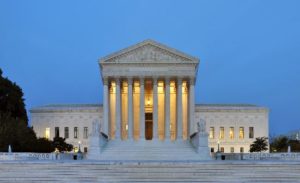
Drug makers complained bitterly...after the Supreme Court left intact a controversial procedure for reviewing patent disputes, arguing that the decision threatens valuable research efforts and that patients will eventually suffer. But the truth of those claims is debatable...The ruling upheld a process Congress created...for challenging patents outside the courts. It allows the Patent and Trademark Office to issue the "broadest reasonable interpretation" of patents. The case at hand had nothing to do with pharmaceuticals, but drug makers believe it will make their patents more easily challenged, and more likely to be overturned...The companies believe the procedure, known as inter partes review, is riskier than patent disputes decided in federal courts... Without the promise of effective patent rights, investments [in new medicines] would be far more difficult — if not impossible — to undertake...
- Sandoval opens summit, calls drug abuse one of deadliest epidemics (reviewjournal.com)
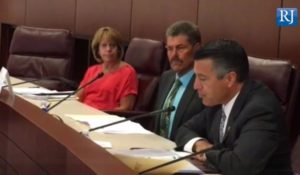
Prescription drug addiction, the downward spiral of lives ruined, loved ones lost, and the cost to society were the focus of a daylong meeting convened...by Gov. Brian Sandoval, who called the problem a crisis...Without question this is one of the most important health challenges we currently face...calling prescription drug abuse "one of the deadliest epidemics" in the United States...Statistics are sobering. While overdose deaths related to opiates in Nevada have declined from 517 in 2010 to 382 last year, at least one Nevadan dies every day from an opiate overdose...From 2010 to 2014, hospital inpatient admissions related to opioids jumped to 3,783 from 2,993...Sandoval said he wants the panel to focus on duties and responsibilities of health care licensing boards; coordination among law enforcement; substance abuse treatment; and sale and availability of pharmaceuticals..."We seek answers, not excuses,"...
- AstraZeneca sues FDA to prevent generic versions of Crestor (statnews.com)

Drug makers generally don’t complain when regulators widen the market for their medicines. But AstraZeneca filed a lawsuit...claiming the Food and Drug Administration is on the verge of illegally broadening the indication for its best-selling Crestor cholesterol pill, and the move would unfairly allow generic competition...The argument, which the company also made late last month in a citizen’s petition, hinges on the interpretation of federal law governing product labeling. Depending upon the outcome, AstraZeneca may either maintain a monopoly on Crestor for another seven years or face lower-cost rivals to a key revenue stream when the Crestor patent expires on July 8...the drug maker won FDA approval to sell Crestor to treat children with a rare genetic disorder called homozygous familial hypercholesterolemia...Under the Orphan Drug Act, the company was awarded an additional seven years of marketing exclusivity for Crestor, but only for treating this particular rare...disease...Several generic companies are lined up to sell a version of Crestor. AstraZeneca argues that a generic must include all pediatric labeling information approved for the corresponding brand-name drug. The company filed its lawsuit over concerns that the FDA will, instead, rely on a decision it made last year allowing generic companies to exclude certain information, so long as a safety risk is not created...AstraZeneca...believes federal law entitles the company to an additional exclusivity period of seven years for Crestor in the US...the American Journal of Clinical Oncology, a team of researchers argued that drug makers are exploiting loopholes in the Orphan Drug Act that allow them to widen the market for such drugs and distorting the original purpose of the law.
- Another big insurer will pay for key drugs based on patient outcomes (statnews.com)

Yet another health plan is aggressively pursuing deals with drug makers based on patient outcomes...Harvard Pilgrim Health Care...has reached agreements with Novartis and Eli Lilly to calibrate payments for two of their most important medicines...In one deal, the insurer will receive a discount from Novartis if its new Entresto (sacubitril/valsartan) treatment for congestive heart failure does not yield a specified drop in hospitalizations. In the other, Harvard Pilgrim agreed to accept a lower rebate from Lilly if its Trulicity (dulaglutide) diabetes drug lowers hemoglobin levels...Paying for value for drugs is an obvious way to go...The pharmaceutical industry is recognizing greater potential for regulation [on pricing], so I think they’re thinking more creatively and are more open-minded about how to develop contracts where cost is somehow related to outcome...The move toward so-called value-based contracting reflects accelerating costs for prescription drugs...It’s not rocket science to think about paying for value...Unfortunately, the pharmaceutical companies have been slow to adopt this...
- Indonesian lawmakers seek seizure of unapproved vaccines amid fake drug scare (reuters.com)

Indonesian lawmakers...urged authorities to seize from hospitals and health clinics all vaccines made by unapproved manufacturers, after police exposed a syndicate selling fake child vaccines for more than a decade...In a country where counterfeit drugs are widespread, the case deals a blow to government health regulators whom many believed to have kept a tight leash on the distribution of vaccines...Authorities have shut some private health facilities after police smashed a drug-making ring last week that sold fake and potentially harmful booster vaccines for measles, hepatitis B and other viruses in Jakarta and the island of Java...Police uncovered the syndicate after a pharmacist in Bekasi...was arrested in May for selling medicine without a license. The drugs turned out to be fake and led to the arrest of 14 distributors and makers of the fake vaccines, whose ingredients included the antibiotic gentamicin and saline...
- WV considers prescriber rankings in fight against opioid abuse (wvgazettemail.com)
A new way to curb the proliferation of prescription painkillers in West Virginia is in the works: "Prescriber report cards."...The state Board of Pharmacy is developing a system that will rank doctors by specialty based on the number of prescriptions they write for pain medications..."We’re going to categorize prescribers, and then send notifications of how they rank among their peers with their prescribing practices," said Michael Goff, a pharmacy board administrator. "It’s a way of telling them, ‘Hey, among other doctors in your field, doctors who do what you do, here’s where you rank.’"...One drawback: The report cards won’t be made public. State law requires such information to be kept confidential. Doctors would only see their own numerical ranking, not a complete list of rankings by specialty...
- UK pharma trade group on Brexit: ‘There’s a potentially negative story here’ (statnews.com)“UK must send strong signal it is open for business”, ABPI responds to Britain voting to leave the European Union (abpi.org.uk)
The aftermath from the Brexit vote in the United Kingdom is only first being digested the world over. As with so many other sectors, there are implications for the pharmaceutical industry. Some 70,000 people in the UK work for drug makers, including AstraZeneca and GlaxoSmithKline, which are based there. Will companies want to shift substantial portions of their operations elsewhere? The European Medicines Agency, which oversees product approvals, is also headquartered in London, raising questions about the ability of the UK’s own regulator, the Medicines and Healthcare products Regulatory Agency, to fill that role. Then there is concern about government support for basic research. We spoke with Michael Thompson, who heads the Association of the British Pharmaceutical Industry, the large trade group, about these unknowns...
- Astellas suspended from UK pharma trade group for ‘deception on a grand scale’ (statnews.com)

In an unusual step, the pharmaceutical industry trade group in the United Kingdom has suspended Astellas for a year after discovering the drug maker disguised the true purpose of a meeting held for doctors, and then senior executives compounded the infraction by withholding crucial information when asked to explain the arrangements..."There was an institutional failure," an oversight panel for the Association of British Pharmaceutical Industries (Prescription Medicines Code of Practice Authority) concluded in a harshly worded...report. "This was one of the worst cases (the panel) ever had to consider…Very senior staff at Astellas Europe had lied and there was deception on a grand scale which was appalling and shocking."...The suspension had its roots in a meeting that the Astellas division in the UK held in...February 2014 for more than 100 physicians. The company billed the gathering as an educational event to obtain advice about prostate cancer when, in fact, it was more of a promotional stunt designed to woo doctors who were targeted to become high prescribers for Xtandi (enzalutamide)...it is rare...for the ABPI to suspend a company from its membership...