
- India’s Sun Pharma gets U.S. subpoena over generic drugs pricing (finance.yahoo.com)

U.S. Department of Justice has subpoenaed India's largest drugmaker Sun Pharmaceutical Industries Ltd seeking information about the pricing and marketing of the generic drugs it sells in the United States...The DoJ's antitrust division has also asked Sun Pharma's U.S. unit for documents related to employee and corporate records and communications with competitors...They specifically cited doxycycline hyclate 100 milligram, an antibiotic for which the price doubled in the year through June 2014...Other generic drugmakers including India's Dr Reddy's Laboratories Ltd and U.S. firm Allergan Plc also received subpoenas from regulators seeking similar information last year, but they did not disclose the names of the products involved...
- Roche and Novartis face off in biosimilar drug battle (reuters.com)
Switzerland's biggest drugmakers are clashing over cheaper copies of pricey biotech drugs - one reason why Novartis is considering selling its $14 billion stake in...Roche...With a copycat of Roche's blood cancer drug Rituxan pending European approval, Novartis aims to muscle in on a share of sales that last year hit 7 billion Swiss francs ($7.1 billion)...But Roche is fighting back with a new medicine, Gazyva, which it contends is better than Rituxan...Beyond its own new drug portfolio, Novartis has a big side bet that cheaper "biosimilars" from its Sandoz generics unit can grab rivals' profits, while Roche has limited its focus to new drugs to counter such incursions.
- Pharma’s reputation improved slightly, but still has a ways to go (statnews.com)

Despite blistering criticism over its pricing, the pharmaceutical industry managed to improve its reputation last year, albeit very slightly, according to a new survey released this week. Using a formula that relies on ranking several different attributes, the industry received a passing grade of 67.6, a modest two-point improvement..."These results show that the industry is not perceived as badly as many industry insiders think...perceptions are "very polarized," since one-third of those asked said drug makers have an excellent reputation, but another third view their reputation as weak or poor...Overall, consumers thought the companies were doing better when it comes to the quality of products and services, as well as financial performance. But an industry weak spot is being a good corporate citizen, which is another way of describing a company that behaves ethically and is transparent in its dealings...
- This Week in Managed Care: May 28, 2016 (ajmc.com)
Brian Haug, president of The American Journal of Managed Care. Welcome to This Week in Managed Care, from the Managed Markets News Network.
- Washington state told to lift restrictions on hepatitis C medicines (statnews.com)

The Washington state Medicaid program has been ordered to lift restrictions on coverage of pricey hepatitis C treatments, according to a preliminary injunction issued...by a federal judge...The ruling came in response to a lawsuit filed by state residents who claim the drugs are "medically necessary," and that the decision by the Washington State Health Care Authority to provide coverage to only the sickest patients had caused them harm...In a strongly worded...opinion, United States District Court Judge John Coughenour agreed with their argument. He wrote that the facts "clearly favor" their contention that state policy violates federal law. In his view, the evidence "establishes that there is a consensus among medical experts and providers that the life-saving [drugs] are medically necessary" for all hepatitis C patients...This is the first time a federal court has declared that widespread restrictions across a state Medicaid program is illegal for hepatitis C medicines...The opinion is only the latest instance in which a public or private insurer has been forced to reconsider its coverage policies toward hepatitis C medicines, which helped trigger a wave of controversy over the cost of prescription drugs...
- New incentives needed to develop antibiotics to fight superbugs (reuters.com)G7 told to act on antibiotics as dreaded superbug hits U.S. (reuters.com)Scientists have just found a “nightmare superbug” in the US (vox.com)
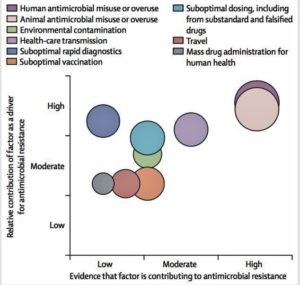
Drugmakers are renewing efforts to develop medicines to fight emerging antibiotic-resistant bacteria, but creating new classes of drugs on the scale needed is unlikely to happen without new financial incentives to make the effort worth the investment...American military researchers...announced the first U.S. case of a patient with an infection found to be resistant to the antibiotic colistin, the drug often held in reserve for when all else fails...That put a spotlight on the urgent need for new medicines that can combat what health officials have called "nightmare bacteria."...Drugmakers...acknowledged that in the absence of a new way of compensating them, it simply does not make economic sense to pour serious resources into work on new antibiotics...80 drugmakers and diagnostics companies...signed a declaration calling for cooperation among governments and companies to create incentives to revitalize research and development of new antibiotics...It proposed a new business model in which profit would not be linked to higher sales...
- Debate over Duchenne drug hits fever pitch as D-day approaches (fiercebiotech.com)

The deadline for a final marketing decision at the FDA on Sarepta’s Duchenne muscular dystrophy drug eteplirsen arrives on Thursday. And the lead up to D-day continues to see patient advocates and their supporters passionately squaring off against some prominent experts who believe that an approval based on data regulatory insiders have deemed woefully inadequate would create a dangerous precedent at the FDA...Quite a few analysts give Sarepta only a 15% to 20% chance of success in gaining an accelerated approval this week, and that figure would likely be much lower if not for the powerful lobbying campaign that has enlisted the support of some prominent newspapers and politicians...The FDA's job is to get drugs out on the market that are proven safe and effective...there simply were not enough data in place from the corporate sponsor to make that possible. At the same time, companies shouldn't be deluding patients and families into thinking that they have enough data to go to the FDA. They shouldn't approach the FDA unless they truly have the available data to get approved. Relying on patient testimonials and lobbying is not the path to drug approval...There’s only one thing that’s absolutely certain at this point: Whichever way the FDA turns, there will be a storm of protest.
- Why taking morphine, oxycodone can sometimes make pain worse (sciencemag.org)

There’s an unfortunate irony for people who rely on morphine, oxycodone, and other opioid painkillers: The drug that’s supposed to offer you relief can actually make you more sensitive to pain over time. That effect, known as hyperalgesia, could render these medications gradually less effective for chronic pain, leading people to rely on higher and higher doses. A new study...the first to look at the interaction between opioids and nerve injury for months after the pain-killing treatment was stopped—paints an especially grim picture. An opioid sets off a chain of immune signals in the spinal cord that amplifies pain rather than dulling it, even after the drug leaves the body...Yet drugs already under development might be able to reverse the effect...spinal cord...microglia—sentinels of the nervous system that scout for infection...release inflammatory signaling molecules into the spinal cord, which activate neurons that shoot pain signals up to the brain...Researchers are...exploring drugs that interrupt this pathway to treat pain or improve the performance of opioids. A clinical trial recently launched at Yale University, for example, will test whether an antibiotic that inhibits glial cells prevents the inflammatory effects of opioids.
- Most Americans would avoid clinical trials due to worries over safety and costs (statnews.com)

Most Americans would not enroll in clinical trials over concerns they would experience side effects, encounter higher costs, or receive a placebo instead of an actual medicine, according to a new survey...only 35 percent say they were likely to participate in a study and, overall, just 40 percent have a positive view of clinical trials, according to the survey...conducted by the Memorial Sloan Kettering Cancer Center...The results underscore the difficulties that confront policy makers, pharmaceutical companies, and health care providers as they seek to develop and deliver new treatments. And if this sort of reluctance to participate in trials continues, there is concern there will be a research and discovery "crisis,"...clinical trials are the engine that drives innovation...This is a critical element in the process...We have so many new agents and opportunities to improve outcomes. But if we don’t enroll people in clinical trials, we will not realize the benefits...
- Health district board to consider MountainView’s Level III trauma center application June 23 (reviewjournal.com)

If things go as some people hope, northwest Las Vegas could be getting a Level III trauma center at MountainView Hospital...The plan has been under consideration for years but needed updated numbers to show demand...The possibility of MountainView getting approval is not assured. The Regional Trauma Advisory Board did not support its application when the hospital first formally explored the possibility in October...The biggest pushback that we’re getting in the current system is from the existing trauma centers, and many people publicly are concerned that this would have a detrimental effect on UMC...It’s important to remember that the Level III trauma centers take care of the more minor cases, and if it turns out to be something significant, they send the patient to the Level I or II centers. So, looking at the current system, and Siena being a Level III, 85 percent of the people they see either get discharged from the emergency center or get sent to a Level I or Level II facility. They see less than four patients a year who should have gone to a Level I or II center right off the bat. So, the impact is three or four patients a year...At current population levels, MountainView is expected to handle roughly two trauma cases a day, said Swenson, adding the area sees 500 to 600 trauma cases annually.