
- Drug diversion: Collaboration is key to detection, control (drugtopics.modernmedicine.com)
Diversion of controlled substances in the hospital setting can be detected with relative ease using current auditing software. But to confirm and correct diversion calls for close collaboration between pharmacy and nursing...The risks of diversions are not only to our patients, but to our employees and our institutions...Detecting diversion and addressing the problem calls for a collaborative process, with buy-in and investment from all stakeholders. Diversion is not just a pharmacy issue...Uncovering drug diversion clearly needs nursing support...the cost of diversion is more than just the dollar value. There is the erosion of reputation. The perception that diversion is easy at an institution is likely to lead to greater diversion...
- When It Comes To Health, Rural Areas Getting Left Behind (forbes.com)2016 County Health Rankings - Nevada (countyhealthrankings.org)Washoe County ranks fifth in Nevada health rankings (kolotv.com)Report ranks Clark County sixth in Nevada for health outcomes (reviewjournal.com)

...the Robert Wood Johnson Foundation released its seventh annual County Health Rankings, which, despite their name, aren’t a competition between U.S. counties to see who’s the best at health. Rather, the report exists to assess all the counties in the U.S. based on factors ranging from tobacco use and access to healthcare to air quality and even education…on the whole and for most of the country, the report doesn’t look terrible. Generally speaking, premature death numbers–a key indicator of overall community health–have been steadily going down. That is, unless you live in a rural area...There are 46 million people who live in rural communities. Nearly one in six Americans lives in a rural area…And the challenges they are facing are showing up in how they are not living as long as other Americans… Many of those rural counties, in fact, are already finding ways to address their local problems by offering services that are otherwise out of reach…some rural areas are getting together with communities nearby and combining to offer services that would be impossible to do alone…
- Rattled by drug price increases, hospitals seek ways to stay on guard (washingtonpost.com)

Doctors at the University Hospitals of Cleveland see an immediately recognizable symbol pop up alongside certain drugs when they sign in online these days to prescribe medications for patients: $$$$$...The dollar signs, affixed by hospital administrators, carry a not-so-subtle message: Think twice before using this drug. Pick an alternative if possible...The Zagat-like approach is just one of the strategies hospitals nationwide are using to try to counter drug costs. It was inspired...by... the University Hospitals system’s vice president of pharmacy services, who saw unexpected price hikes wreak havoc on his budget last year...The industry...notes that drug spending accounts for only about 10 percent of the country’s health-care costs and that published list prices do not reflect the steep discounts and rebates that companies may offer. Hospitals generally purchase drugs from wholesalers at costs below the list price, although wholesale prices are subject to increases...Hospital officials insist that even when sudden price increases occur, patients receive access to the medicines they need. But the unpredictable increases wedge their institutions financially...They can’t immediately pass on the cost if a drug gets more expensive because reimbursement rates for certain procedures already have been set by Medicare and private insurers. That means sharply higher prices can lead to losses..."I want drug companies to make money. I need them to make money, or I don’t have any ammo..."But there has to be a balance, a middle ground. If this keeps happening . . . it’s only a matter of time before we get to a point where we have to choose less desirable medications than what’s out there."
- Why Is No One Buying ‘Pink Viagra’? (forbes.com)
...as of January only 240 to 290 prescriptions were being written per week. Sales are running at a rate of $11 million/year...Contrast these results with what occurred with the real Viagra. Launched...in 1998..had first-year sales of $788 million...1999, sales exceeded $1 billion and Viagra sales eventually progressed to over $2 billion annually...Is the HSDD (hypoactive sexual desire disorder) population grossly overestimated?..Addyi...is a flawed drug. Unlike Viagra, its effects are not immediate. A patient needs to take it every day for weeks before the effects kick in. Second, the drug is saddled with side effects such as dizziness, low blood pressure, fainting and sleepiness; plus, it’s contraindicated with alcohol consumption. Add all this to the issue of modest efficacy, and it could be that women don’t believe Addyi’s benefit is worth the risks…Perhaps sales will pick up with time...Advertising might also increase awareness, but Valeant agreed with the FDA’s request to delay direct-to-consumer advertising for 18 months. This moratorium, however, could end just in time for Super Bowl 52. One could only imagine the ad campaign that Valeant will employ, given their recent toenail fungus ads.
- Northern Nevada HOPES expands to new facility (kolotv.com)
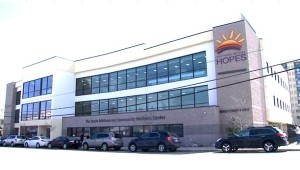
Northern Nevada HOPES, a Reno medical facility, has a new $13 million facility. The clinic itself has been around for 20 years…"This building is going to give us an opportunity to expand our services and serve so many more people," said Sharon Chamberlain, CEO of Norther Nevada HOPES…HOPES has been serving Northern Nevada since 1997…The whole family can get treatment here. All the way from their medical needs up to their counseling and psychological needs… The new facility is state-of-the-art with separate patient exam rooms for adults and children. In the building, x-rays as well as blood work can be done on site. The clinic also offers case management so patients don't fall through the cracks… HOPES will be able to serve 10,000 patients a year…The clinic has moved into the new facility, but it is not completely paid for yet. HOPES is looking for an additional $2 million to pay off their loans…Normal services at the clinic are paid for through a combination of grant funding, health insurance and pharmacy fees.
- Why CMS’s Crazy Plan to Remake Medicare Part B Won’t Work (drugchannels.net) Community Oncology Alliance’s letter to Secretary Burwell, HHS (blog2.communityoncology.org)Health-Care Providers Aim to Fight Medicare Drug Plan (wsj.com)
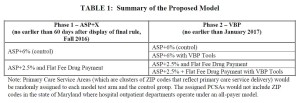
In an amazing display of bureaucratic hubris, the Centers for Medicare & Medicaid Services has proposed a mandatory, real-world experiment with provider reimbursement under the Medicare Part B program…CMS wants to reduce reimbursement for buy-and-bill drugs—but for only half of the country's providers. The other half will retain current reimbursement levels. After five years, CMS will see what happened…the proposal so overreaches that it will face enormous opposition and has little chance of being implemented…CMS’s proposed…Payment Model and the glaring methodological flaw that could end up raising drug costs…CMS wants to go after the buy-and-bill system’s theoretically…incentive for physicians to prescribe more-expensive drugs. For pricey specialty drugs, even a low single-digit markup over ASP can generate substantial dollar profits for a provider…These practices are for-profit private businesses. They will surely attempt to optimize against the CMS Phase I proposal by, for example, strategically directing patients to certain locations based on the cost of therapy and expected reimbursement…CMS even claims that its Phase I proposed model is “budget neutral.” This conclusion is based on the false assumption that there will be no behavior change in response to the study…CMS also ignores the possibility that patients will be shifted to higher-cost sites of care, including hospital outpatient departments…We are already seeing similarly brutal opposition to CMS’s latest brainstorm.
- Swiss and Indian regulators trying to determine how fake Harvoni reached Israel (in-pharmatechnologist.com)

The Swiss importer that supplied fake Harvoni to Israel has named the Indian manufacturer from which it bought the drug and is cooperating with an investigation say regulators...The knockoff versions of Gilead's $1,350-a-pill hepatitis C drug seized by Israeli authorities were supplied by a Swiss trading firm, which sourced them from a manufacturer in India according to...Swissmedic...Under the Swiss Federal Act on Medicinal Products and Medical Devices, Swissmedic can neither name the Swiss trader nor contact any other customers to which it may have supplied Harvoni until the investigation is completed...Similar investigations have taken up to two years...Gilead licensed rights to manufacture and distribute pills...Harvoni...to...Indian companies Cadila Healthcare, Cipla, Hetero Labs, Ranbaxy Laboratories, Sequent Scientific and Strides Arcolab...
- ICD-10 to get 5,500 new codes, including ones for face, hand transplants, CMS says (healthcareitnews.com)
CMS said it plans to add about 1,900 diagnosis codes and 3,651 hospital inpatient procedure codes to the coding system…On Oct. 1, the Centers for Medicare and Medicaid Services will add another 5,500 codes to the ICD-10 diagnostic library, officials announced…The addition will come exactly one year after ICD-10, with its nearly 70,000 billable codes, replaced the dated, and much more compact, ICD-9 code set… The new and revised ICD-10-CM (Clinical Modification) and ICD-10 PCS (Procedure Coding System) codes will be included in the hospital inpatient prospective payment system proposed rule for fiscal 2017…
- Valeant slashes financial outlook; investors flee ‘a broken company’ (statnews.com)
After years of enviable growth and brash moves, Valeant Pharmaceuticals appears to be succumbing to a broken business model...The beleaguered drug maker held a lengthy and much-anticipated briefing...for investors, and the news wasn’t pretty — the company cut its 2016 revenues and earnings forecast more than expected and disclosed weakness in areas of its business that caught investors by surprise. Particularly disturbing is the possibility that Valeant is in danger of defaulting on some of its debt...Valeant stock plunged 48 percent during the day on huge trading volume, continuing a slide that began last fall amid accusations by short sellers that the company had improperly booked revenue and used a specialty pharmacy to manipulate insurance reimbursements for key products. Even before the conference call ended, some Wall Street analysts recommended that investors flee.
- Plant-based vaccines poised to challenge $4bn seasonal flu shot market (in-pharmatechnologist.com)
An influenza vaccine produced in tobacco plants could make a big impact in the market if it reaches the market in the US in time for the 2018-19 flu season, says a market analyst...The vaccine - currently being tested in phase III trials by Mitsubishi Tanabe - has clear advantages over not only vaccines produced via the traditional route in eggs but also newer vaccines produced in cell culture...Mitsubishi Tanabe's candidate is one of a number of flu vaccines in development based on the expression of virus-like particles - self-assembled units that are closer in structure to the wild-type virus than subunit-based vaccines made in eggs. Clinical trials suggest they may be able to provide greater and longer-lasting protective immunity...By incorporating influenza genetic material into tobacco leaves new vaccines can be made in as little as four weeks - six times faster than egg-based methods - which means producers can match circulating flu strains more closely. They can also react quickly if a new strain of the virus starts to emerge...plant-based manufacturing offers reduced infrastructure costs and can slash production times in half...If the company's product, or one like it, is approved, GlobalData expects a novel vaccine that boasts a rapid, plant-based manufacturing process to have a significant impact on the seasonal influenza vaccine landscape...