
- Community pharmacy reforms (rpharms.com)
Changes to community pharmacy in 2016/17 and beyond...In a letter to the Pharmaceutical Services Negotiating Committee...the Department of Health and NHS England announced there would be a...reduction in funding through the community pharmacy contractual framework...this reduction in funding will have a substantial impact on pharmacy business owners, their employees and locums...it was announced that funding...would be cut by at least 6%, equating to £170 million ($242 million); lowering the funding available through the community pharmacy contractual framework from £2.8 billion ($4 billion) to £2.63 billion (3.75 billion). It is anticipated these changes will take effect in October 2016...Alongside the cut in funding...further changes that the Government would like to see, including:
- To better integrate pharmacy into the wider primary care and community health system – such as closer working with GP surgeries, care homes and urgent and emergency care departments - so that patients can benefit from pharmacists’ clinical skills through a "Pharmacy Integration Fund".
- A "Pharmacy Access Fund", which would provide more NHS funds to certain pharmacies compared to others, considering factors such as location and the health needs of the local population.
- The potential for automation and centralising dispensing to provide efficiencies. Also, in some areas, the distribution and number of pharmacies does not match local patients' needs.
- The view of the Government that patients would like to order prescriptions online and that "click and collect" and delivery options would be easier to arrange.
- Improving Data Analytics for Payers in Specialty Pharmacy (specialtypharmacytimes.com)
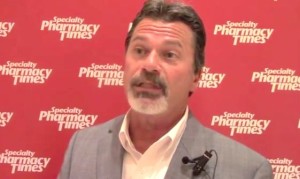
David D'Altorio, PharmD, senior vice president of health services at MedImpact Healthcare Systems, discusses the benefits of MedImpact's iRx program.
- Opioid Crisis Puts Pharmacists on the Front Line, Pressed to Serve As Drug Cops (realclearhealth.com)
Pharmacist Joe Harmison has been burglarized...many times...It’s the price he pays for running a pharmacy as an opioid epidemic sweeps the United States...Pharmacists...are in an especially tough position, pulled between patients in dire need of relief and people addicted to opioids who will stop at nothing to get their hands on the drugs. More than 4 million Americans abuse prescription painkillers...pharmacists are increasingly, and controversially, called upon to play drug cop — to turn away abusers, to reject phony prescriptions, and to protect their inventory of pills from criminals who see pharmacies as an easy target...It’s a role that’s been given to us, and many pharmacists choose to embrace it, while others run as far away and as fast as they can...When I see someone trying to abuse the system, in my mind they’re standing in the way of patients who really need those drugs...They’re bastardizing the good work that pharmacists are trying to do...Though he’s frustrated by all the fraudulent prescriptions that come his way, Harmison sees the legitimate need for these powerful drugs every day...There are people who really need this drug, who do good just to get out of bed with their terminal illnesses...He’s comfortable as drug cop. But he also wants to continue to be the friendly neighborhood pharmacist of Grand Prairie...
- VTE Guideline Weighs in on Newer Oral Anticoagulants (ashp.org)Antithrombotic Therapy for VTE Disease: CHEST Guideline and Expert Panel Report (journal.publications.chestnet.org)

A revised guideline from the American College of Chest Physicians favors the use of dabigatran, rivaroxaban, apixaban, or edoxaban over traditional vitamin K antagonist or low-molecular-weight heparin therapy for the long-term treatment of venous thromboembolism in patients without cancer..."Antithrombotic Therapy for VTE Disease," released online in December by the publishers of Chest, is the 10th published version of the guideline, which updates a guideline released in early 2012. In that version of the guideline, VKA or LMWH therapy was preferred over the two available "new oral anticoagulant drugs" for the long-term treatment of pulmonary embolism or deep vein thrombosis...
- Moving Away from Pharmacist Efficacy and Toward Pharmacist Effectiveness: Refocusing Research that Generates Knowledge about Pharmacist-Provided Services (pharmacytimes.com)
Despite a significant body of evidence supporting pharmacist-provided services, gaps remaining in the evidence base need to be addressed to accelerate the adoption of pharmacy services into evolving health care delivery models. Understanding these gaps is important in targeting research efforts...we have reached a critical time in the evolution of pharmacy and pharmacist-provided services...we must carefully consider the research questions that are most relevant to advance pharmacy practice...As health care transitions toward value-based care, it is important that we demonstrate the role of the pharmacist as an integral member of the health care team in optimizing medication use and improving patient care. We need to rethink our...research and shift some of our efforts to the translation and implementation of research findings...Efforts to demonstrate that pharmacist-provided services work...should continue; however, we must place more emphasis on how to integrate best practices in pharmacy-provided services into value-based care delivery and payment models.
- Congressman Heck pushing for EMS to continue to use controlled substances (kolotv.com)
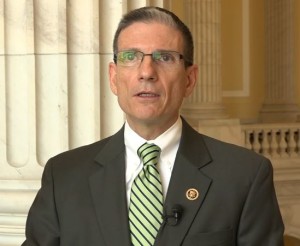
Representative Joe Heck, Nevada's 3rd district
A Nevada Congressman is pushing to make sure emergency medical teams retain the ability to administer life-saving medicine in the field. Congressman Joe Heck says the Drug Enforcement Agency wants certain drugs to be used only in hospitals, because of fears over the accountability of controlled substances and how they are administered. Heck says paramedics should be able to do the job they’re trained to do...current law states that medical directors can create standing orders that apply to emergency situations. If a patient meets certain criteria, a substance can be administered in the field...He says the DEA wants to take that ability away from paramedics, saying they can no longer use controlled substances, even under these standing orders from medical directors. Heck says this will hinder a paramedic’s ability to give quality care to a patient. He says this is an issue especially in rural areas, where a patient could be in an ambulance for a long time without proper care..."There’s a way to make sure that we can ensure the accountability of these controlled substances while still allowing the paramedics to administer these life-saving materials...this bill will specify the protocol for a physician creating a standing order. The bill also says standing orders must be made available for Attorney General Loretta Lynch at her request...
- More College Students Misusing ADHD Med as Study Aid (realclearhealth.com)
College students aiming for an academic edge may explain a surge in the misuse of a stimulant commonly prescribed for attention-deficit hyperactivity disorder...Among U.S. adults, the number of Adderall prescriptions stayed stable from 2006 to 2011, but misuse of the drug jumped 67 percent and related visits to emergency rooms went up by 156 percent...The majority of adults who are using Adderall nonmedically are in the age range of 18 to 25...The researchers speculate that college students may prefer Adderall over the other stimulants because it increases two brain chemicals linked with better cognitive functioning and has a reputation for making people smarter...Many students mistakenly believe these drugs will make them smarter and more efficient at studying, so in their view the risk is worth the reward...because Adderall can improve focus, it may also give some students an unfair advantage, thus constituting academic dishonesty...
- Report calls out weak FDA stance on medical device cybersecurity, favors stronger regulation (healthcareitnews.com)Assessing the FDA's Cybersecurity Guidelines for Medical Device Manufacturers: Why Subtle 'Suggestions' May Not Be Enough (icitech.org)

...the Institute for Critical Infrastructure Technology, a bipartisan collaborative meant to bridge the gap between federal agencies and private-sector leaders in the interest of protecting the nation's technology backbone, claims recent guidance from Food and Drug Administration for device makers falls way short...In practically all matters of cybersecurity within the health sector, the FDA seems to be in a constant state of offering subtle suggestions where regulatory enforcement is needed..."Assessing the FDA's Cybersecurity Guidelines for Medical Device Manufacturers: Why Subtle 'Suggestions' May Not Be Enough," knocks the agency for failing to implement enforceable regulations for manufacturers...It may be beneficial to healthcare providers, healthcare payers, and legislators to petition the FDA to make the guidelines regulatory. Otherwise, medical device manufacturers could ignore the guidelines altogether...
- Hospital operator, Nevada coalition at odds over contract negotiations (reviewjournal.com)Health care coalition pickets in front of Sunrise Hospital and Medical Center (reviewjournal.com)

A contract dispute between a major hospital operator and a health care coalition in Southern Nevada could affect more than 275,000 people...Health Services Coalition, which negotiates health plans for about 20 labor groups and employers in Nevada...that talks were ongoing with Hospital Corporation of America, the operator of Sunrise Hospital and Medical Center, Southern Hills Hospital and Medical Center and MountainView Hospital...The two parties are trying to negotiate a three- or four-year contract, according to the coalition... HCA wants to increase rates for access to their medical facilities but declined to provide additional details...Historically, we've had trouble with the increases they're requesting...Our main goal is to make sure that we have a contract or an extension past the deadline...
- Hollywood Presbyterian hack signals more ransomware attacks to come (healthcareitnews.com)Hollywood Presbyterian Medical Center Pays Hackers $17K Ransom (nbcnews.com)

As hackers hold Hollywood Presbyterian Medical Center’s data and demand $3.4 million Bitcoin to give it back, experts say the "hostage situation" likely signals more ransomware attacks to come...There is no style to this attack...it was likely messaging-based, whether a malicious link in an email or perpetrated via a social network and, basically, an employee fell for it...Such attacks are particularly alluring to cybercriminals...because they are reasonably easy to pull off and have a big impact...the cybercriminals are demanding the hospital pay a $3.4 million ransom if they want their data back...In the meantime, executives declared the hospital in a state of emergency and employees are reverting to paper and faxes to communicate..."This incident really sheds light how weak the core of many providers' internal infrastructure is...It's very common for hospitals to have a large number of outdated and vulnerable systems on the network...