
- China toughens drug quality standards, rejects 13 applications (reuters.com)

China's food and drug regulator said late on Monday it had rejected applications for 13 new drugs, citing false or incomplete trial data, as the government toughens enforcement of quality standards…China Food and Drug Administration last month also rejected applications by eight Chinese companies for inadequate trial data related to generic drugs for heart problems, schizophrenia, pain, infections and other diseases…quality of locally made drugs is a priority for the government, which is pushing an ambitious program of healthcare reforms to reduce reliance on both generic and more innovative imported drugs.
- ASHP to Launch Comprehensive Digital Drug Information Resource (ashp.org)
ASHP today announced that it will release a comprehensive suite of its…drug information databases, including AHFS Drug Information®, in early 2016. Recruitment for beta testers will begin during ASHP’s 50th Midyear Clinical Meeting this week in New Orleans…The new product, AHFS® Clinical Drug Information, will provide clinicians with easy access to detailed drug information, including real-time drug and safety updates, direct links to more than 60,000 supporting evidence sources, and in-depth coverage of off-label uses… AHFS Clinical Drug Information will be available via Web browser as well as iOS and Android apps. Individual pricing will begin at $10 per month. The user interface will also integrate into clinical workflow solutions in hospitals and ambulatory care settings.
- Pfizer-Allergan Merger Raises Concerns That Fraud Is Part Of ‘Corporate DNA’ (forbes.com)
The massive Pfizer-Allergan merger is getting a lot of attention. It is one of the largest takeovers ever in the healthcare industry, worth an estimated $160 billion…But consider another number: The amount Pfizer, Allergan and their predecessor companies have paid to settle government healthcare fraud allegations in the US – a total of nearly $4.5 billion. That total doesn’t include close to $1 billion paid to settle related consumer actions…Add to that the six criminal pleas and four corporate integrity agreements that the companies and their predecessor subsidiaries have agreed to, and one might question whether cheating and corruption are part of their “corporate DNA.”… The duo’s “hall of shame” is staggering and impossible to overlook. Here are some of the settlements the two corporations and/or their predecessor companies have paid the US and states:
- Pfizer/Parke Davis/Warner Lambert — $430 million settlement and a criminal plea. (2004)
- Pfizer/Pharmacia & Upjohn Co. — $2.3 billion and a criminal plea. (2009)
- Allergan — $600 million and a criminal plea. (2010)
- (Allergan/Actavis) Forest Labs — $313 million and a criminal plea. (2010)
- Pfizer — $14.5 million. (2011)
- (Allergan/Actavis) Watson Pharmaceuticals — $1.7 million. (2012)
- Pfizer/Wyeth Pharmaceuticals — $491 million and a criminal plea. (2013)
- Allergan/Actavis/Watson Pharmaceuticals — $12.4 million. (2013)
- Pfizer/Wyeth — $35 million. (2014)
- Allergan/Warner Chilcott — $125 million and a criminal plea. (2015)
- Martin Shkreli just reminded us why we need Martin Shkreli (vox.com)Martin Shkreli, the Bad Boy of Pharmaceuticals, Hits Back (nytimes.com)
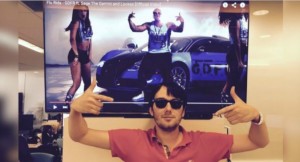
Martin Shkreli, CEO ,Turing Pharmaceuticals
Martin Shkreli thinks he made a mistake: He didn't hike the price of his drug enough…And that willingness to say something so awful, so off-putting, is just one reason why he's so darn useful to have around…Shkreli styles himself as a truth teller, saying the hard things that no one else is brave enough to reveal about health care. And in some ways, he's right! Major insurers, drugmakers, and hospital systems collect billions of dollars in annual earnings…but cloak many profit-driven decisions by defending them as beneficial for patients. By being brutally honest about his motives, Shkreli is a rare exception. His comments may be odious, but they're not baseless…That doesn't make them morally right, though. One reason we need Martin Shkreli is to protect against other Martin Shkrelis, who find ways to exploit the system and turn patients into profit centers.
- British review calls for urgent cuts to antibiotic use in livestock (reuters.com)
Massive use of antibiotics in farming poses a critical threat to global public health and should be reduced dramatically to an internationally-agreed target…implementing a global target for agricultural antibiotic use won't be easy…but is vital if life-saving medicines designed to fight bacterial infections are to be kept effective, both for animals and for people…in many countries most of the use of antibiotics is in animals, rather than in humans…This creates a big resistance risk for everyone…Any use of antibiotics promotes the development and spread of so-called superbugs - multi-drug-resistant infections that can evade the medicines designed to kill them…estimated antibiotic and microbial resistance could kill an extra 10 million people a year and cost up to $100 trillion by 2050 if it is not brought under control..."We need international governments, policy makers and the agricultural industry to coordinate their actions and set tangible targets for the reduction and better use of antibiotics in animals."
- Affordable Care and Specialty Pharmacy (specialtypharmacytimes.com)
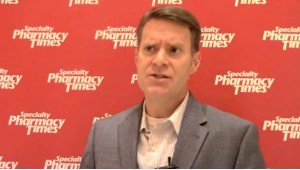
David Lassen, chief clinical officer at Prime Therapeutics, discusses implications for specialty pharmacy from health care reform.
- Big Pharma Payments for High Prescribing Doctors (news.yahoo.com)
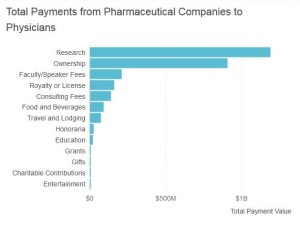
In an ideal world, doctors avoid outside influence and commit to ethical practice. However, they are also huge influencers in a for-profit pharmaceutical industry. This creates a breeding ground for potential conflicts of interest…In order to make relationships between health care providers and pharmaceutical companies more transparent, the Physician Payments Sunshine Act was enacted into law…Open Payments is the program that collects this information…Within this data, a pattern emerges: doctors who prescribe a lot of drugs tend to get more money from pharmaceutical companies…this data…identifies doctor and pharma relationships, it still does not determine causation. It only brings up certain questions: Are doctors prescribing specific drugs more because a pharmaceutical company is paying them? Or do pharma companies pay certain doctors because they prescribe a lot of their drugs? Further complicating the analysis is the knowledge that some physicians prescribe certain drugs in high volumes simply because they’re the best for their patients…While some argue that physicians should have nothing to do with drug marketing, others believe that collaboration between doctors and pharmaceutical companies is critical to improving the health and quality of life for patients. Not all doctors work simultaneously as drug prescribers and drug marketers, but those who do must strike a careful balance.
- Tonix Pharma, U.S. Defense Department partner on PTSD drug (reuters.com)
Tonix Pharmaceuticals Holding Corp said it was teaming up with the U.S. Department of Defense to further develop its experimental PTSD drug, which if approved, could be the first treatment for the psychiatric disorder in more than 15 years…The Cooperative Research and Development Agreement with the Department of Defense will allow Tonix to gain access to and study military personnel who are on active duty…"Since we are specifically seeking a label for military-related PTSD for our drug, it's important to study these patients as the active duty personnel are closer to traumatic events, as opposed to veterans,"… Tonix's TNX-102 is currently being tested in mid-stage studies and has a long path to approval…Some analysts have called the drug a "dark horse" opportunity, which could be transformative for the company…The only two drugs currently approved for PTSD - Zoloft and Paxil - come with substantial side effects. Tonix's drug is intended to improve sleep quality in these patients, which is considered to be a crucial characteristic of the disease.
- Pharmacy Students Educate Community on OTC, Natural Products (pharmacytimes.com)

Bill Gatton College of Pharmacy
Pharmacy students from the Bill Gatton College of Pharmacy at East Tennessee State University recently held a free educational presentation on OTC and natural products…covered more than 2 dozen topics and offered community members a chance to ask questions…“The main inspiration for this event is the community in which ETSU Bill Gatton College of Pharmacy is located. We are within the heart of Appalachia where there is very prominent use of alternative medicine, such as supplements, herbal products, and natural products,”…“This is heavily engrained within our culture, and the goal of this presentation is to better inform our community.”…the students’ presentation would help the community understand that there are some potential risks associated with alternative medicine…“We hope to make them more informed and more capable of using these therapies in a safe manner,”…
- 5 things to know about CMS’ mandatory bundled payment program (healthcareitnews.com)
CMS announced the first mandatory test of shared-risk, outcomes-based payment model and the first initiative to make hospitals financially-responsible for patient recovery, 90-days after a knee or hip replacement surgery…The landmark program, Comprehensive Care for Joint Replacement, goes into effect April 1, 2016. Patient engagement and care coordination technology will be key to helping hospitals meet cost containment requirements…can lead to lower costs and increased healthcare quality…Healthcare institutions and leaders should know five items to move forward into the coordinated care initiative:
- 789 hospitals will be impacted
- 500,000 patients can participate, annually
- Quality matters. Hospitals must adhere to strict quality metrics and keep down care costs from admissions to 90 days after discharge
- Hospitals can donate $1,000 per Medicare beneficiary for patient engagement IT and services
- CMS will provide incentives for Patient Reported Outcomes