
- Researchers want to turn acid-loving microbes into safe drug-carriers (worldpharmanews.com)

Sulfolobus islandicus
Usually the microbe S. islandicus (Sulfolobus islandicus) is found in hot and acidic volcanic springs, but now the microbe has also found its way to the labs…researchers have for the first time showed that the exotic microbe is capable of delivering drugs to the human body…"One of the major challenges in pharmacy is to find ways to carry and protect drugs on their passage through the stomach. Many drugs may be absorbed through the intestines, so it would be a great help to be able to transport drugs safely through the stomach to the intestines", explains Sara Munk Jensen…Jensen and her colleagues…have managed to use S. islandicus to construct a nano-capsule (liposomes) that can transport drugs safely through the stomach.
- The Impact of Primary Medication Nonadherence in Specialty Pharmacy (specialtypharmacytimes.com)
Nonadherence carries significant implications for stakeholders throughout the specialty space…There is not a lot of information about primary medication nonadherence, but it could have a huge impact on patients…if the patient doesn’t start on medication … well, the outcome is going to be very poor in those circumstances…reasons for PMN:
- Cost of the drug
- Concern for side effects
- Treatment change
- Perceived need
- Patient forgot or didn’t know
There are also issues that are specific to specialty pharmacy…why patients might delay treatment:
- Cost and copay/co-insurance
- Patient perceptions: they don’t believe the disease is severe enough or they don’t believe in the efficacy of the drug
- Fear of side effects or a fear of injections
- Pharmacy Podcast – The Changing Landscape of Retail Pharmacy (pharmacypodcast.com)
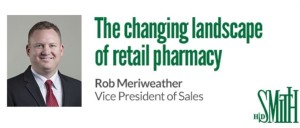
We interview the Vice President of Sales with H. D. Smith – Rob Meriweather about the impact of drug wholesale on the future of our pharmacy industry. (podcast 24:29)
- Researchers May Soon Predict Drug Side Effects on Different Patients (specialtypharmacytimes.com)
Researchers seek to determine which side effects will be experienced by different patient groups…the most difficult hurdles for patients… to overcome are the debilitating side effects that accompany some treatments…To address this…investigators…constructed a proof of concept predictive model that may be able to forecast side effects different patients are likely to experience…We're not just interested in predicting the efficacy of a drug, but its side effects as well…Side effects are very personalized. Two different people can take the same drug, but one person might experience side effects while the other doesn't...This study is a step forward in demonstrating that patients could be precisely treated based on their genetic makeup…
- Challenges of Pain: Part 2 – Pharmacies in the crosshairs: Prescription drug crime and law enforcement (pharmacist.com) Pharmacy Crime: A Look at Pharmacy Burglary and Robbery in the United States and the Strategies and Tactics Needed to Manage the Problem (apps.phmic.com)Challenges of Pain: Part 1: Impact of government responses on frontline pharmacists and patients (pharmacist.com)
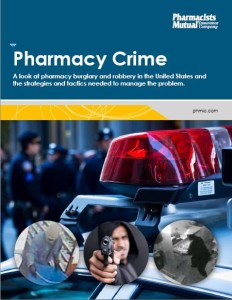
…law enforcement side of prescription drug abuse—including the rise in pharmacy crime, such as robberies, and second in Pharmacy Today’s “Challenges of Pain” series. The series shows how pharmacists and their patients with legitimate pain needs are affected by issues and efforts around prescription drug abuse.
- Concern for pharmacists’ safety
- Preventing robberies: Start with the basics
- DEA adds to its focus
- GAO report: Questions raised about DEA’s approach
- GAO surveys of DEA registrants
- DEA: Patient access not affected
- Be aware and prepared
- Direct-to-consumer company tests FDA’s resolve on gene testing (reuters.com)

Just as 23andMe has made peace with the...Food and Drug Administration, another direct-to-consumer genetics company is testing the regulatory waters with the launch of a $249 DNA test designed to predict drug response…The test, from tiny startup DNA4Life...comes in the wake of 23andMe's two-year tussle with the FDA over its direct-to-consumer personal DNA testing service, which the FDA ordered off the market in 2013…But the agency has yet to approve direct-to-consumer tests for pharmacogenetics, a field experts believe could be much riskier in the hands of consumers, who might use the information to make decisions about the drugs they are taking…"We would be delighted to have a conversation with the FDA," but added that it is not under the agency's purview. "Of course, the government can do what it likes."…The problem…is that patients, and even doctors, struggle to understand what to do with the results.
- Pharmacies Face Financial Hardship with Rising DIR Fees (specialtypharmacytimes.com)
Direct and indirect remuneration fees rise from preferred network drug plans offered by insurers and pharmacy benefit managers…fees…are causing financial hardship for many pharmacies…These fees may encompass “pay-to-play” fees for network participation, periodic reimbursement reconciliations, or non-compliance with quality measures…Many pharmacists feel that there is a lack of transparency regarding how DIR fees are calculated…the fees are retroactive, which can make it hard for pharmacy owners to run a business…Originally, DIRs were established to allow PBMs and Medicare to share in rebates that the insurers received from drug manufacturers under Medicare Part D coverage…cost imposed by the PBM on pharmacies that is not necessarily disclosed to Medicare officials…the financial realities associated with very high DIR may force many pharmacies to withdraw from networks…CMS has said in the past that the fees distort the real price of prescription drugs in the market.
- DEA chief says smoking marijuana as medicine “is a joke” (cbsnews.com)
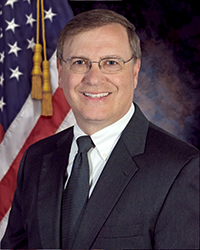
DEA chief Chuck Rosenberg on Wednesday rejected the notion that smoking marijuana is "medicine," calling the premise a "joke."…"What really bothers me is the notion that marijuana is also medicinal -- because it's not," Rosenberg said in a briefing to reporters. "We can have an intellectually honest debate about whether we should legalize something that is bad and dangerous, but don't call it medicine -- that is a joke."…Rosenberg said that people shouldn't conflate the issue of legalizing recreational marijuana with medicinal marijuana…"There are pieces of marijuana -- extracts or constituents or component parts -- that have great promise" medicinally, he said. "But if you talk about smoking the leaf of marijuana -- which is what people are talking about when they talk about medicinal marijuana -- it has never been shown to be safe or effective as a medicine."
- Drug Disposal Data Raises Questions Over Mail-Order Pharmacies (specialtypharmacytimes.com)
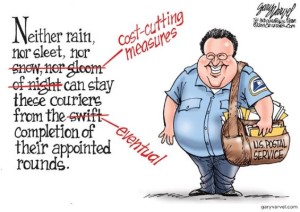
Mail-order disposals involve more expensive brand-name medications than retail disposals…Medication waste may be more likely among patients who use mail-order pharmacies, rather than retail pharmacies…also…mail-order disposals tend to involve more expensive brand-name medications than retail disposals…disposals that had more than 80% of the medication remaining were more likely to be from mail-order pharmacies than retail pharmacies...which raises questions about nonadherence among mail-order patients…patients who disposed 100% of their medication were more likely to have received their medication via mail-order pharmacies…the patient did not take any of it and, likely, the medication was not needed in the first place and should not have been shipped…medication…returned for disposal was more likely to be brand-name medication when it came from mail-order refill patients. Since brand-name medication is typically more expensive, it was money down the drain…
- CMS warns state Medicaid programs on hepatitis c drug restrictions (pharmalot.com)

…the Obama administration wrote state Medicaid programs that they may be violating federal law by restricting access to hepatitis C medicines. At the same time, the Centers for Medicare and Medicaid Services wrote four drug makers asking for information about pricing arrangements with insurers and pharmacy benefits managers… A new crop of hepatitis C treatments have factored heavily in the conversation, thanks to very high cure rates but also high price tags… Ever since the new hepatitis C medications arrived nearly two years ago, public and private payers have called them budget-busters...some state Medicaid programs began restricting access based on a number of factors…CMS officials warned the state Medicaid programs against “imposing conditions for coverage that may unreasonably restrict access” to hepatitis C drugs. Placing restrictions may be “contrary to the statutory requirements” of a federal law that requires state Medicaid programs to pay for all medically necessary treatments…