
- New drug safety alliance launches to tout REMS benefits (drugstorenews.com)
A new coalition of 20 healthcare organizations has come together to form the Patients Alliance for Drug Safety Protections, whose goal is to tout the public health benefits of Risk Evaluation and Management Strategies. The PADSP has also launched a website, DrugProtections.org, that explains the REMS program to patients and lists medication(s) that are currently marketed with a REMS…We encourage healthcare organizations to work collaboratively to design and conduct drug studies in order to ensure that people with serious diseases have access to appropriate treatments…
- Review Of Proposed 340B Omnibus Guidance: How We Got Here And What It Says (healthaffairs.org)340B Drug Pricing Program Omnibus Guidance (federalregister.gov)
In a previous post—now almost one and a half years ago—I described "the coming storm" I anticipated would develop around the 340B drug discount program. After a brief tornado hit the House Energy and Commerce Committee when they considered including 340B reforms in their 21st Century Cures initiative, a slower, hurricane-style churn over the Administration’s proposed guidance on the topic has settled in…With the October 27 comment window steadily approaching, let’s take a look at what the rule says and what it could mean for interested stakeholders.
- A Brief History Of 340B
- What Happened At The Energy And Commerce Committee?
- What’s In The HRSA Guidance?
- AstraZeneca share price: Drugmaker opens new $224m factory in Russia (invezz.com)

AstraZeneca Plc opened a new $224-million factory in Russia…The move is intended to reinforce the group’s long-term commitment to the country which is one of the drugmaker’s key emerging markets…it…opened a new manufacturing and packaging plant in the Kaluga region southwest of Moscow…largest foreign investment in the construction of a new pharmaceutical facility in the country…the plant to reach full capacity in 2017 and to produce about 40 million packs and 850 million tablets of some 30 medicines every year, which represents more than 60 percent of the medicines the company sells in Russia...
- J&J chalks up a win in first Tylenol liver-damage case to go to trial (fiercepharma.com)
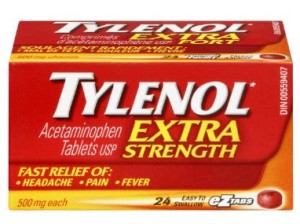
Johnson & Johnson scored a victory in the first case to go to trial over claims that its blockbuster painkiller Tylenol (acetaminophen) causes liver damage and its dosing doesn't adequately account for the risk. A New Jersey jury ruled that the plaintiff did not prove that she took the painkiller… plaintiff …claims that she spent a week in the hospital for liver damage after accidentally overdosing on Extra Strength Tylenol…The news provides J&J/McNeil with an early win as it stares down about 220 lawsuits in state and federal court in New Jersey and Pennsylvania. The first federal trial is set for next year in Philadelphia, where about 200 of the cases are consolidated…
- Pharmacy-physician partnership hikes efficiencies (drugtopics.modernmedicine.com)
Sharing electronic health records access between physicians and pharmacists can improve workflow efficiencies for both… that pharmacist involvement in patient’s medication therapy improves adherence and reduces costs. However, since it is not financially feasible for many physicians to employ full-time pharmacists, collaboration is often the best alternative…Sharing EHR access is one way that collaboration can benefit patients while simultaneously improving workflow efficiencies…Pharmacists were able to more readily collect data related to patients’ medical conditions, prescribed medications, lab data, and treatment plans. Communication between the pharmacists and providers was significantly enhanced...
- The US FDA has issued an alert warning the public not to take drugs marked as sterile by compounding firm Qualgen. (outsourcing-pharma.com)FDA alerts health care professionals not to use sterile drug products from Qualgen (fda.gov)

During an inspection of Qualgen’s facility in Edmond, Oklahoma, FDA investigators observed "insanitary conditions, including poor sterile production practices, which raise concerns about Qualgen’s ability to assure the sterility of drug products that it produced," said the agency…The FDA recommended the company cease sterile operations until it fixed the problems, but Qualgen agreed only to voluntarily recall 67 lots of drugs. The recalled products were compounded before September 1, 2015 and have not yet expired…The Food and Drug Administration said it is not aware of any adverse events associated with Qualgen’s products…
- Indian drug manufacturers face higher costs with bar-code requirement (fiercepharmaasia.com)

Small and medium-sized Indian drugmakers are decrying a move by the government to impose new bar-code requirements and say the action shows the government is taking sides with big multinational players to elbow out smaller competition. The larger companies are saying the move is necessary to protect the country's reputation…Pharmaceutical companies in India are now required to establish a "parent-child" relationship with all drugs from Oct. 1, which means a bar code will be used on every drug strip that goes into a unique package…The regulation is an attempt to track the origins of a shipment and to stamp out fake drugs. Indian officials representing the smaller drug companies believe they will be forced out of business because of the requirement.
- How Pharmacy Benefit Deductibles Stimulate Manufacturer Copay Program Spending (drugchannels.net)
...the IMS Institute has just snuck out an interesting report: Emergence and Impact of Pharmacy Deductibles: Implications for Patients in Commercial Health Plans. The report’s overarching theme is unsurprising: Higher out-of-pocket costs reduce patients’ adherence to drug therapy and increase prescription abandonment rates…The report’s major contribution, however, links the growth in pharmacy deductibles to manufacturers’ copayment offset programs, which cover a beneficiary’s out-of-pocket costs for a brand-name drug. High deductible plans are shifting costs from payers to consumers and—in many cases—back to manufacturers.
- BMS’ Phelan: The digital drug launch is upon us (mmm-online.com)
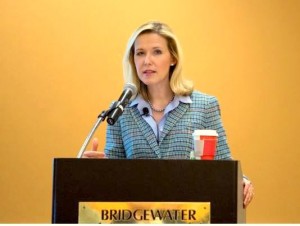
Examples of big brands altering their commercial approach away from the rep-driven model have often involved mature products. Those in the sunset of their patent life provided drugmakers a haven for experimenting with alternative marketing channels: non-personal promotion, sophisticated CRM (customer relationship management)… we're in the middle of significant structural change…Digital transformation can be a key enabler of success in some really challenging and very fiercely competitive markets. But it's going to [require] us to do things very differently...
- U.S. oncology group rates blood cancer regimens, including cost (reuters.com)
…most influential source for U.S. oncology treatment guidelines…unveiled ratings aimed at helping doctors and patients assess the costs versus benefits of current therapies for two types of blood cancer…National Comprehensive Cancer Network…its new "Evidence Blocks" for multiple myeloma and chronic myelogenous leukemia are the first in a series that by the end of next year will encompass all oncology therapies, other than surgery or radiation… These are crafted to provide a little bit more information about cost, effectiveness, safety - all those things that the NCCN guidelines in the past haven't provided...The blocks give each therapy a score of between one and five in five categories: efficacy, safety, quality and consistency of evidence and affordability.