
- State Efforts to Reform Secretive Pharmacy Benefit Manager Pricing Policies Gain National Momentum | Commentary (blogs.rollcall.com)
Americans today rightly demand more transparency...It is the foundation upon which to assess accountability, performance and trust… the Senior Care Pharmacy Coalition — a coalition dedicated to representing the exclusive legislative and regulatory interests of independent Long Term Care pharmacies and the vulnerable patients they serve — hopes to work with Congress on reforms that both increase transparency in drug pricing practices and ensure protection against Medicare Part D pricing policies that hinder LTC pharmacies’ ability to delivery quality pharmaceutical care and services...
- ‘Jiffy’ Health Clinics Save Patients Money and Time, Undermine Obamacare (news.heartland.org)
"Jiffy" health care clinics represent one of the fastest-growing sectors of the health care industry, providing quick, convenient, and affordable primary care services without the long waits and higher costs of traditional family practices…In-and-out health clinics exist in states across the country and are often located inside pharmacies, such as CVS and Walgreens, as well as in grocery stores and large retail stores…more than ever, patients are looking for convenient and inexpensive ways to receive care, and the model utilized by in-and-out health facilities offers a seemingly perfect solution.
- Pharmacy Week in Review: September 11, 2015 (pharmacytimes.com)
Ashley Talamo, Publisher: Pharmacy Times...(PTNN) This weekly video program highlights the latest in pharmacy news, product news, and more. (video)
- Uncertainty reigns over possible end of 9/11 health programs (hosted.ap.org)Jon Stewart joins Sept. 11 medical care push: first responders (reuters.com)
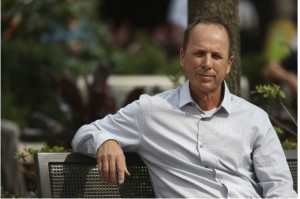
Fourteen years after the 9/11 attacks, a new round of uncertainty looms for people exposed to the million tons of toxic dust that fell on New York when hijacked jets toppled the World Trade Center….Two federal programs that promised billions of dollars in compensation and medical care to sick 9/11 responders and survivors are set to expire next year, five years after they were created by Congress.,, As Friday's anniversary of the terror attacks approached, advocates for responders renewed their push for an extension…Almost 21,600 people received treatment through the World Trade Center Health Program over the past year,… officials haven't been able to say how many patients might lose access to doctors or medication if the program shuts down as planned next September.
- Lower Blood Pressure Guidelines Could Be ‘Lifesaving,’ Federal Study Says (nytimes.com)

Declaring they had "potentially lifesaving information," federal health officials said on Friday that they were ending a major study more than a year early because it has already conclusively answered a question cardiologists have puzzled over for decades: How low should blood pressure go? The answer: way lower than the current guidelines… The study found that patients who were assigned to reach a systolic blood pressure goal below 120 — far lower than current guidelines of 140, or 150 for people over 60 — had their risk of heart attacks, heart failure and strokes reduced by a third and their risk of death reduced by nearly a quarter.
- The case for creating an ICD-10 command center (healthcareitnews.com)

When the clock ticks in a new month and the entire healthcare industry is thereby mandated to begin using the new ICD-10 code set, there will most likely be glitches here and there…given the limited testing…that has taken place to date, it's impossible to predict with certainty whether those will be small and easily ironed out -- or significant enough to severely disrupt cash flow and launch more downstream problems…some organizations are establishing ICD-10 command centers…a help line to triage savvy billing, IT or coding representatives...
- Big Pharma’s Foe Takes Victory Lap as Drug Price Increases Slow (bloomberg.com)
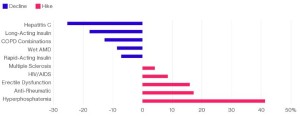
George Paz’s strategy to rein in drug companies’ price increases is starting to show results. A new analysis shows that attempts by drugmakers to raise prices on their prescription medications are being wiped out in negotiations with managers of drug insurance benefits, led…Express Scripts Holding Co.,.. While list prices for drugs continue to rise rapidly,…U.S. brand-name drug prices rose just 0.7 percent in the second quarter from the previous year…. That’s because companies like Express Scripts and CVS have embarked on strategies to exclude big-selling treatments from lists of covered drugs unless their makers offer better prices...
- Encouraging results from real-world users of HIV-prevention pill (reuters.com)

A pill meant to prevent HIV infections in high-risk individuals appears to be working, according to two new studies…in…San Francisco…there were no new HIV infections…people who took the daily pill Truvada (emtricitabine and tenofovir)…in the UK taking Truvada had a lower risk of being diagnosed with HIV…
- Hospitalized newborns have shorter stays with parents’ presence, data shows (reviewjournal.com)

Silva Farra deserves creature comforts after delivering twins…The 37-year-old mother…is still in the hospital and will be for months…Dougie and Donnie…will be in the neonatal intensive care unit of Spring Valley Hospital and Medical Center until at least mid-November…The more the parents can be there, the better…Hospitalized children need the presence of their parents, family member or other trusted friends throughout their treatment and recovery. Neonatal intensive care units can be the most important place for that company.
- An Age-Old Battle: The FDA Versus the Shill (theatlantic.com)
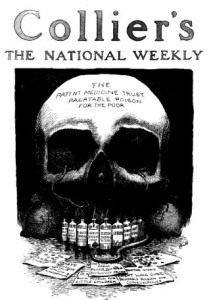
The kerfuffle over Kim Kardashian's drug-promoting Instagram selfie is nothing new: As long as the agency has existed, it's had to figure out how to regulate drug advertisements in new forms of communication technology…The rise of social media has raised a parade of new questions for the agency: How is it supposed to monitor person-to-person pharmaceutical recommendations? Can something be considered an advertisement if it’s only 140 characters long? Who is responsible for the accuracy of tweets about a drug? But this isn’t the first time evolving technology has forced the FDA to rethink its role.