
- The Lancet’s COVID Fiasco (hoover.org)

On June 4...The Lancet, a venerable British medical publication, formally retracted a thoroughly flawed study on the drug hydroxychloroquine, originally published on May 22...The key findings of the study were stunners: most critically, that the use of HCQ led to a substantial increase in mortality rates—around 30 percent—and the occurrence of cardiac arrhythmias in these COVID-19 patients...Many experts immediately promoted the study...the initial burst of favorable publicity did not prevent a large cadre of researchers in the field from questioning its findings...pointing out multiple defects...The retraction brings into question The Lancet’s editorial process. All of the defects pointed out in the open letter should have been evident to the editors before the study was published, yet at no point did The Lancet’s retraction explicitly acknowledge any breakdown in its internal procedures. It has been hinted more than once that The Lancet took its hasty position in part because of its own visceral distaste for President Donald Trump, who has long been derided for his advocacy of HCQ to ward off the virus. Indeed, on May 16, 2020, The Lancet published an editorial calling for his defeat in the 2020 Presidential election...READ MORE
- America’s global leadership in biopharmaceutical manufacturing (catalyst.phrma.org)

Unfortunately, there are a lot of assertions floating around that tell a misleading story about pharmaceutical manufacturing, diminishing America’s leadership and suggesting our reliance on other countries has put us at risk of potential shortages. In reality...the biopharmaceutical industry supports more than 4 million jobs across the United States, directly employing more than 811,000 Americans. Of those jobs, nearly 120,000 are high-wage manufacturing jobs, which is double the percentage of manufacturing jobs compared to the private sector overall...Discussions about enabling more manufacturing in the United States are important, but let’s not forget that the United States already sustains a substantial manufacturing presence that is part of a larger global network. We cannot replace all global manufacturing with solely U.S. manufacturing without upsetting the entire biopharmaceutical supply chain to the detriment of patients...READ MORE
- As U.S. calls for stateside manufacturing, antibiotic maker Paratek gambles on ‘onshoring’ effort (fiercepharma.com)

...the U.S. government has shelled out big money for a stable and reliable supply of key drugs made on U.S. soil. For drugmakers accustomed to offshore manufacturing in cheaper countries, does it make any sense to onshore production to meet U.S. demand?...One company has a compelling argument, and it's taking big risks—and government funding—to test its hypothesis...Paratek Pharmaceuticals, maker of antibiotic Nuzyra, is kick-starting a three-year plan to build a government-funded, second supply chain in the U.S. in an effort to flesh out the nation's strategic supply of pandemic response drugs...The U.S. government, through its Biomedical Advanced Research and Development Authority, has dumped more than $300 million combined into helping Paratek build the U.S. supply line, which will stand apart from its current manufacturing network in Europe...READ MORE
- ‘Professor Lockdown’ Modeler Resigns in Disgrace (nationalreview.com)

Epidemiologist Neil Ferguson
Neil Ferguson is the British academic who created the infamous Imperial College model that warned Boris Johnson that, without an immediate lockdown, the coronavirus would cause 500,000 deaths and swamp the National Health Service...Johnson’s government promptly abandoned its Sweden-like “social distancing” approach, and Ferguson’s model also influenced the U.S. to make lockdown moves with its shocking prediction of over two million Americans dead...Johan Giesecke, the former chief scientist for the European Center for Disease Control and Prevention, has called Ferguson’s model “the most influential scientific paper” in memory. He also says it was, sadly, “one of the most wrong.”...Ferguson has been wrong so often that some of his fellow modelers call him “The Master of Disaster.”...READ MORE
- Experts Examine the Many Factors of Pharmacist Burnout (drugtopics.com)

Professional burnout among pharmacists, already a growing concern in the United States, could be exacerbated by the coronavirus disease 2019 crisis. The current pandemic strains pharmacy capacity and exposes persistent underlying problems, according to 3 experts on pharmacy burnout...A national survey of more than 4700 pharmacist concluded that, although more than half (54.2%) of respondents reported meaningful work, 32% and 33% also said they felt “a lot” or “totally” emotionally and physically exhausted. Community pharmacists demonstrated higher rates of work exhaustion and interpersonal disengagement, as well as lower levels of professional fulfillment, compared with those practicing in hospitals and other work settings...READ MORE
- ICYMI: Pharmacy benefit managers increasingly exclude medicines from formularies, restricting patient access (catalyst.phrma.org)

...CVS Caremark and Express Scripts, have once again increased the number of medicines on their standard formulary exclusion lists...As these PBMs control over half of the market combined, these changes have widespread implications for patients across the country...PBMs leverage their vast purchasing power and ability to exclude medicines from their standard formularies to negotiate large rebates and discounts from biopharmaceutical companies. PBMs then compel insurers and employers to use standard formularies by reducing the rebates offered to those who choose to adopt custom formularies without exclusions, which increases costs to the plan sponsor. In 2019, manufacturer rebates, discounts, fees and other price concessions grew to $175 billion. However, these rebates and discounts are typically not shared with patients at the point-of-sale...formulary exclusions can create additional barriers for patients who may experience challenges accessing prescribed treatments. These barriers to access can lead to health complications resulting from delayed treatment initiation or treatment disruption...READ MORE
- Europe wants to make its own drugs, but it needs American blood plasma (reuters.com)
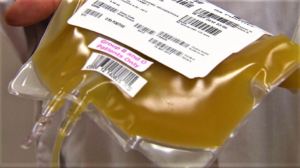
Europe wants to be master of its own destiny in producing essential drugs and finding COVID-19 treatments, but it’s got a problem. It relies on the United States for a critical ingredient: blood plasma...As global mistrust deepens, European Union officials are casting around for ways to reduce the bloc’s dependence on American plasma...now widely applied in COVID-19 experimental therapies...The coronavirus crisis should push authorities to overhaul Europe’s blood donation system...The United States’ steadier plasma supplies are partly due to its system of paying people to donate blood used to develop medicines. In most European countries, donations are unpaid because of safety and ethical reasons...The PPTA (Plasma Protein Therapeutics Association ) drugmakers body sees a strategy based on unpaid blood donations as counterproductive. It pointed to Germany, the largest collector of plasma in Europe, as one of the few countries that compensate blood donors...READ MORE
- HHS to distribute $25B for Medicaid, safety-net providers (medcitynews.com)

The Department of Health and Human Services will dole out another $25 billion in funding targeted at healthcare providers that primarily serve Medicaid and low-income patients...The agency will distribute $15 billion to providers that participate in Medicaid and CHIP programs, and another $10 billion to safety-net hospitals...The funds are intended to help hundreds of thousands Medicaid providers that did not receive funding through the general distribution that went out to providers in April and May...Safety-net hospitals, which provide a significant proportion of care to uninsured and low-income patients, will be able to receive between $5 million and $50 million. HHS said it plans to distribute the funds to hospitals this week...READ MORE
- Flu shot makers gear up—and get creative—for a critical vaccination season (fiercepharma.com)
With the novel coronavirus continuing its global spread and a second wave threatening the United States later this year, experts worry an influx of influenza patients and COVID-19 patients will hit U.S. hospitals at the same time...pharma's working to ramp up not only for the increased demand but also for the logistical challenges of vaccinating millions of people during a pandemic...Manufacturers distributed about 170 million flu vaccine doses to the U.S. last year. This year, they're aiming to increase that by about 20 million...Vaccine makers are already producing their doses, with plans to start shipping later this summer...READ MORE
- Pharmacists Feel Overworked, Face More Discrimination (drugtopics.com)2019 National Pharmacist Workforce Study (aacp.org)

Pharmacists, pharmacy technicians, and other pharmacy staff felt overtaxed even before the coronavirus disease 2019 pandemic hit, according to findings from the 2019 National Pharmacist Workforce Study. The survey results showed that 69% of full-time pharmacists reported that their workload “increased” or “greatly increased” compared with the prior year...Although the profession is much more racially and gender diverse than in previous years, pharmacy staff reported age, race, and gender discrimination...Among full-time, actively practicing pharmacists, 71% rated their workload level at their primary place of employment as “high” or “excessively high” in 2019, compared with 66% and 68% of full-time pharmacists in 2014 and 2009, respectively...READ MORE