
- Week in Review: Investigational HIV drug May Extend Protection Against the Infection for 1 Year; Top Motivators for PharmD Candidates Revealed (pharmacytimes.com)

Nicole Grassano, PTNN, Pharmacy Week in Review, this weekly video program provides our readers with an in-depth review of the latest news, product approvals, FDA rulings and more.
- Big pharma deals show industry’s weak spots (biopharmadive.com)

Large-scale M&A among drugmakers isn't a new phenomena. Expiring patents, coupled with persistent struggles to develop new drugs, spur periodic waves of consolidation... Today's deals relate to upcoming patent expirations, but the uncertainty around regulatory efforts targeting pricing is much greater today than it was in 2009...On top of that, drugmakers face insurers and buying groups that are consolidated to a point that's resulted in higher rebate payments and reduced net prices for drugs in certain competitive classes...READ MORE
- Pharmacy Week in Review: Pharmacy Times Rides RAGBRAI; New Blood Test May Predict Breast Cancer Relaspe (pharmacytimes.com)

Nicole Grassano, PTNN, Pharmacy Week in Review, this weekly video program provides our readers with an in-depth review of the latest news, product approvals, FDA rulings and more.
- Drug Czar James W. Carroll: ‘More Drugs Are Coming in Than Ever Before’ Because of Political Diversions (breitbart.com)

Diverting border security resources to address the “humanitarian need” of migrants is leading to record-high levels of illicit drug smuggling across the U.S.-Mexico border, said James W. Carroll, director of the U.S. Office of Drug Control Policy...Carroll said, “I couldn’t tell you how bad this is. Seizures are down, and it’s not because there are less drugs coming in. It’s because their attention has to be diverted because of the humanitarian need, but what that means is more drugs are coming in than ever before.”...READ MORE
- Trump firms up plan to import medicines; pharma companies resist (reuters.com)
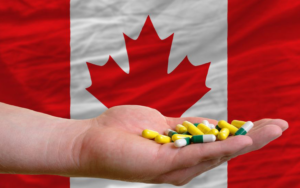
The Trump administration took a step...toward allowing importation of medicines from Canada, an action the president has advocated as a way to bring cheaper prescription drugs to Americans, but the pharmaceutical industry was quick to resist the move...The U.S. Department of Health and Human Services said it and the Food and Drug Administration will propose a rule that will allow it to authorize states and other groups to pursue pilot projects related to importing drugs from Canada...READ MORE
- Opioid and price fixing legal liabilities mount for generic companies (biopharmadive.com)

The past business practices of biopharma companies like Endo and Teva continue to be under scrutiny. The scope of pending legal actions is difficult to quantify, given that both governments and individuals are involved, and the actions have now extended to price fixing as well as marketing...Using Iqvia prescription data, Purdue Pharma's $270 million settlement with Oklahoma and Teva's subsequent $85 million deal as benchmarks, Fadia calculated the total liability to be $4 billion for Endo, $2.5 billion for Teva, $1.2 billion for Amneal and $800 million for Mylan. That estimate relates to improper marketing of opioids...On the price-fixing charges, Fadia built an estimate around Iqvia prescriptions and potential excess sales that could have occurred on 114 different drugs, and then applied treble damages. In this scenario, Teva's liability could be as much as $3.1 billion, Mylan's $2.8 billion, Endo's $265 million and Amneal's $55 million…READ MORE
- CVS, Walgreens To Lead $23 Billion CBD Market By 2023

Retail chains led by CVS Health and Walgreens Boots Alliance are expected to dominate the emerging multi-billion-dollar U.S. market of CBD, the compound derived from cannabis...CBD is gaining in popularity among consumers with the legal CBD market projected to surpass $23 billion in annual U.S. sales by 2023...This year, such sales are projected to be $5 billion - a sevenfold increase over 2018...“The CBD market has been growing rapidly, but we will see unprecedented growth in 2019,”...“The bulk of this growth is coming from large retailers like CVS, Walgreens, and Kroger entering the market and providing that availability to consumers.”...READ MORE
- Our STAT Op-Ed: Drug Importation Can’t Coexist with U.S. Track-and-Trace Law (drugchannels.net)
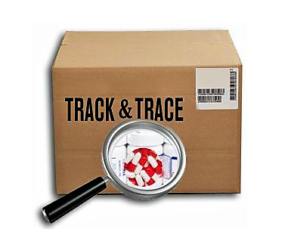
STAT recently published our op-ed: State drug importation laws undermine the process that keeps our supply chain safe...there is no legal or operational way of transforming a drug packaged for a foreign market into a drug that meets the U.S. requirements of our in-progress track-and-trace system. What’s more, there is no way to alter the law to enable importation without undermining the law’s purpose and value...States can't wish away the requirements of a significant federal law. Either we have a secure drug supply chain or we don’t...READ MORE
- Why the U.S. is building a track-and-trace system
- How track-and-trace works
- Importation undermines the track-and-trace system
- Importation enables counterfeits
- Forgetting the lessons
- This Week in Managed Care: July 26, 2019 (ajmc.com)

Jaime Rosenberg, welcome to This Week in Managed Care from the Managed Markets News Network
- Putting safety first: Retailers wrestle with supply chain safety amid drug import push (drugstorenews.com)
Product safety is a multifaceted issue for any retailer dealing with the pharmacy and prescriptions, and the systems that are in place to protect the quality and integrity of the goods offered constantly are evolving to strengthen the industry’s defenses...One of the key loopholes between consumers and the dangers of unsafe products, however, is the potential for the introduction of items from other countries that fail to meet the rigorous safety standards of the United States...The Food Safety Modernization Act, which took effect in 2011, sought to close that gap by imposing tighter regulation around the import of foods and ingredients from overseas...Market pressures in the pharmaceutical industry, however, have led officials at both the state and federal levels to explore the possibility of bringing drugs in from other countries at a lower cost, potentially circumventing the Food and Drug Administration’s close oversight of U.S.-made medications...the...National Association of Chain Drug Stores see several potential problems with the import of prescription medications from other countries, including:
Issues around the adequacy, consistency and integrity of the supply;
Issues around quality and safety;
Problems with maintaining dual inventories inside pharmacies;
Burdensome testing requirements;
Costs of establishing an infrastructure for imported drugs; and
Liabilities for injuries caused by imported drugs...READ MORE