
- Independent Pharmacy Economics Keep Deteriorating (drugchannels.net)

Time for Drug Channels’annual look at independent pharmacy owners’ business economics, drawn from the recently released 2018 National Community Pharmacists Association Digest...Our analysis reveals that independent pharmacy owners have faced another year of deteriorating finances ...What's more, we estimate that in 2017, the average pharmacy owner’s salary fell to a level comparable to that of an employed pharmacist. Owning a pharmacy, with all of its hassles and additional obligations, now brings the same reward as being an employee. I wonder how many owners will conclude that it’s barely worth the risk and effort...The pharmacy consolidation endgame is getting closer...
OBSERVATIONS ON THE 2017 DATA
1) Overall independent pharmacy profit margins continue to decline.
2) Independent pharmacies’ prescription profit margins also keep trending downward.
3) Independent pharmacies’ generic dispensing rates have caught up to those of the overall market.
4) The average pharmacist owning a single pharmacy earned about $136,000 in 2017—down for the fourth consecutive year.
5) By the NCPA's count, the total number of independent pharmacies is slowly declining.
- U.S. lawmaker launches investigation into pharma drug pricing (reuters.com)
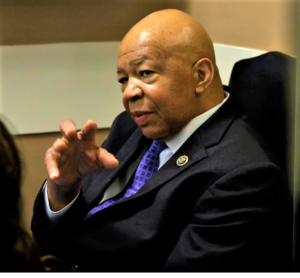
Representative Elijah Cummings
A top U.S. lawmaker launched an investigation into pharmaceutical industry pricing practices on Monday, less than a week after he and fellow Democrats introduced legislation aimed at lowering medicine prices. Representative Elijah Cummings, who chairs the House Oversight Committee, sent letters to 12 drugmakers seeking information on price increases, investment in research and development, and corporate strategies to preserve market share and pricing power...Cummings’ letters focused on drugs that are the costliest to Medicare Part D, a program that helps beneficiaries of the federal health insurance program for the elderly and disabled pay for self-administered medicines like those purchased at drugstores, as well as drugs that have had the largest price increases over a five-year period.
- Exposing the Risks of America’s Dependence on China for Medicine (americanthinker.com)

Concern over China's territorial, military, and economic aggressiveness has been building over the past decade as the country is increasingly perceived as a threat to the United States, U.S. Asian allies, and the West. In China Rx: Exposing the Risks of America's Dependence on China for Medicine (Prometheus Books, 2018), authors Rosemary Gibson and Janardan Prasad Singh explore yet another peril: China as the largest global supplier of ingredients for many prescription drugs, over-the-counter products, and vitamins...China Rx is an important wake-up call for American citizens and government officials about the danger of our dependency on a hostile superpower and the need to safeguard our drug supply, American jobs, and industries and national security.
- U.S. health care industry spends $30 billion a year on marketing (reuters.com)Medical Marketing in the United States, 1997-2016 (jamanetwork.com)

Spending on health care advertising in the U.S. has almost doubled over the past two decades as companies compete for their share of the world’s biggest health care market...Annual health care marketing surged from $17.7 billion in 1997 to at least $29.9 billion in 2016, driven by a rapid spike in spending on direct-to-consumer (DTC) advertisements for prescription drugs, the study found...DTC spending climbed from $2.1 billion to $9.6 billion...Pharmaceutical marketing to health professionals accounted for the biggest outlay, and climbed from $15.6 billion to $20.3 billion despite new policies at hospitals and medical schools designed to limit industry influence over prescribing...
- Amid scrutiny, Memorial Sloan Kettering bans execs from pharma directorships (biopharmadive.com)

Memorial Sloan Kettering will no longer allow its top executives to simultaneously sit on corporate boards of for-profit, health-related companies, including drugmakers...The decision comes as the New York-based cancer center has found itself the center of public scrutiny following a series of investigative reports published by The New York Times and ProPublica that raised ethical questions on the nonprofit's relationships with industry. The organization's chief executive, Craig Thompson, resigned in October from his seat on the board of Merck & Co.
- This Week in Managed Care: January 11, 2019 (ajmc.com)
Laura Joszt, Managing Editor at The American Journal of Managed Care. Welcome to This Week in Managed Care from the Managed Markets News Network
- January 11 Pharmacy Week in Review: Vecuronium Bromide Recall, and New App for OUD Treatment (pharmacytimes.com)
Nicole Grassano, PTNN, Pharmacy Week in Review, this weekly video program provides our readers with an in-depth review of the latest news, product approvals, FDA rulings and more.
- Walmart pharmacies likely to leave CVS network because of pricing dispute (cnbc.com)
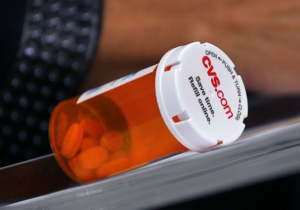
CVS announced...that Walmart pharmacies are leaving its network because of a dispute over pricing...Both Walmart and CVS are saying that the other company is trying to make prescriptions more expensive for consumers...CVS said it has asked Walmart to stay in its networks through April 30...Walmart is one of the largest pharmacy chains in the United States with about 4,600 locations, but CVS said that the matter will not considerably impact its financial results. Less than 5 percent of affected CVS Caremark members use only Walmart to fill their prescriptions...
- Sen. Sanders, Rep. Cummings introduce bill to lower U.S. drug prices (reuters.com)
U.S. Senator Bernie Sanders and Representative Elijah Cummings introduced legislation...aimed at lowering the cost of prescription drugs for American consumers...
- bill would peg U.S. prescription drug prices to the median price from five countries - Canada, Britain, France, Germany and Japan - where drug costs are typically far lower because of government price controls.
- also allow the U.S. Secretary for Health and Human Services to negotiate prices in Medicare Part D, a program that helps Medicare beneficiaries pay for self-administered medicines like those purchased at drugstores.
- end a ban that keeps Americans from buying medicines at lower prices from Canada and other countries.
- CES 2019: A little-known pain relief tool could end the opioid crisis (reviewjournal.com)
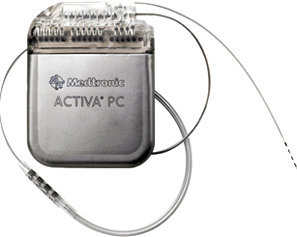
Nerve stimulation to treat neurological conditions such as Parkinson’s disease, addiction and chronic pain has been around for the past five decades...But the lack of knowledge of its existence — and proven effectiveness — led in part to the rise in the national opioid epidemic, five doctors and engineers said during a panel at CES...This discussion, titled “The Solution to the Opioid Crisis No One is Talking About,”...neuromodulation to treat chronic pain...is a very safe and effective therapy, with a lot of data and publications to back it up...This is a very safe and effective therapy, with a lot of data and publications to back it up.”...electrodes on a needle stimulate nerves in the spine to eliminate pain...Some implants last up to a decade...It’s what Rafael Carbunaru, head of research and development at Boston Scientific, called the “ultimate wearable.”...It sounds like a dream. So why isn’t it the norm in treatment, and why don’t more patients know to ask their doctors about it?...