
- Nine Ways Community Pharmacies Can Enhance Services (drugtopics.com)

One way that community pharmacies can improve how well they care for their patients and their bottom line is to provide enhanced services. These include services that can help keep patients out of the emergency room or hospital and, for which, in some instances, the pharmacist can be reimbursed by a third-party payer or by the patient...These services can be revenue streams that can help local pharmacies compete with big-box stores and mail-order...There are nine ways that community pharmacies can profitably implement enhanced services...If you don’t do this, other healthcare providers will...Other pharmacies, nursing services, and telephone-based providers are already on board with these things...The nine services are:
- Enhanced delivery
- Immunizations
- Medication therapy management (MTM)
- Medication synchronization
- Adherence or convenience packaging
- Medicare plan selection
- Point-of-care testing
- Nutrition
- eCare capability
- Trump Signs New Laws Aimed at Drug Costs and Battles Democrats on Medicare (nytimes.com)President Trump Signs Bill to Cut Costs on Prescription Drugs - ENN 2018-10-10 (video) (youtube.com)S.2554 - Patient Right to Know Drug Prices Act (congress.gov)S.2553 - Know the Lowest Price Act of 2018 (congress.gov)
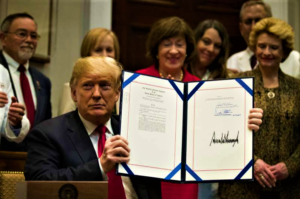
President Trump signed bipartisan legislation...that would free pharmacists to tell consumers when they could actually save money by paying the full cash price for prescription drugs rather than using health insurance with large co-payments, deductibles and other out-of-pocket costs...The legislation on gag clauses has been praised by lawmakers in both parties...The legislation...also includes a provision to combat agreements between drug makers that stifle competition by delaying the marketing of lower-cost copycat versions of expensive biotechnology medicines. Such biologic medicines account for a rapidly growing share of drug spending...Under the new law, manufacturers of the original product and the copy, known as a biosimilar, will have to report such agreements to the Federal Trade Commission, which can challenge them as violations of antitrust laws. The agreements are known as pay-for-delay deals because the branded drug company pays a potential competitor to delay entering the market...
- GSK resumes some doctor payments, backtracking on blanket ban
GlaxoSmithKline, which five years ago stopped paying doctors for promoting its drugs, said...it would allow such payments once again in limited circumstances...The British group’s 2013 no-payment pledge marked a first for an industry battling past scandals over sales practices. But other drugmakers failed to follow suit, leaving it at a competitive disadvantage...Drugmakers have long used so-called key opinion leaders to promote the benefits of their products to other prescribing physicians and the decision to abandon this strategy was questioned by a number of analysts...GSK’s new updated policy...will now permit payments to global experts who speak about the science behind novel new medicines...“These changes are being made for a select number of innovative products in a limited number of countries and apply to restricted time periods in a product’s lifecycle,” the drugmaker said.
- Use of Evolution to Design Molecules Nets Nobel Prize in Chemistry for 3 Scientists (nytimes.com)The Nobel Prize in Chemistry 2018 (nobelprize.org)

Three scientists shared this year’s Nobel Prize in Chemistry for tapping the power of evolutionary biology to design molecules with a range of practical uses...Those include new drugs, more efficient and less toxic reactions in the manufacture of chemicals and plant-derived fuels to replace oil, gas and coal extracted from the ground...Half of the prize and the accompanying $1 million...Stockholm, went to Frances H. Arnold, a professor of chemical engineering at the California Institute of Technology. She is only the fifth woman to win a chemistry Nobel and the first since 2009...The other half of the prize is shared by George P. Smith, an emeritus professor of biological sciences at the University of Missouri, and Gregory P. Winter, a biochemist at the M.R.C. Laboratory of Molecular Biology in England...The prize highlights the narrowing of the gap between biology and some fields of chemistry as chemists turn to nature for inspiration...
- Why Did I Get the Wrong Rx? (realclearhealth.com)

A recent memo from Centers for Medicare and Medicaid Services clarifies why many Americans aren’t getting the medications they need. The wrong person is choosing your prescription drug, and it isn’t your doctor...starting in 2020, Medicare Part D health plans can implement “indication-based drug therapy.”...Doctors do not treat indications; we treat patients, one at a time, each with his or her own name, unique medical history, and individual reactions to specific medications, whether good or bad...In other words, the person choosing your medications has no medical training, no license to practice medicine, and does not even know your name...Prescribing the wrong Rx for you occurs throughout health care. It is not limited to Medicare...Most health plans require doctors in their panels to use the “fail first” approach, also known as step therapy. When starting treatment, the treating physician can only prescribe the most “cost-effective, medically sound” medication. “Cost-effective” means cheapest drug for the health plan. “Medically sound” means lowest risk of side effects, which often means least likely to be medically effective. After the first drug fails to help the patient, the doctor is then allowed to take the next step with a second drug also chosen by the health plan. Eventually, when all the cheap alternatives fail, the doctor may be allowed to special order the right drug. The bottom line? An insurance actuary, not your doctor, chooses your Rx..
- Better insurance coverage of non-drug therapies might help ease opioid crisis (reuters.com)Coverage of Nonpharmacologic Treatments for Low Back Pain Among US Public and Private Insurers (jamanetwork.com)

When it comes to non-drug therapies for back pain, U.S. insurance plans vary widely in what they will cover, a new study finds...Private and public insurers are missing important opportunities to promote alternatives to opioids...insurers often provide little or no coverage for evidence-backed interventions for chronic pain such as acupuncture and psychological counseling...“Insurers can be part of the problem or part of the solution,” said study coauthor Dr. Caleb Alexander...at the Center for Drug Safety and Effectiveness...“All too often doctors reach for the quick solution, prescription drugs, especially opioids, to manage pain that would be more effectively and safely treated with non-pharmacological approaches,” Alexander said. “This is a system that is designed with, and fosters, the idea that there is a pill for every ill...
- This Week in Managed Care: October 5, 2018 (ajmc.com)
Laura Joszt, Managing Editor at The American Journal of Managed Care. Welcome to This Week in Managed Care from the Managed Markets News Network
- UK clinical trials fall as Brexit clouds drug approval process (reuters.com)

The number of new clinical trials started in Britain last year was 25 percent lower than the average for 2009-16, as anxiety about Brexit’s impact on future medicines regulation made companies hesitate about running studies in the country...Drugmakers’ confidence has been dented by fears research data collected in Britain might not be acceptable to the European Medicines Agency after the UK leaves the European Union...The pharmaceuticals industry has long warned that Brexit could have a serious impact on research and access to medicines, unless London and Brussels hammer out a deal for regulatory continuity and close liaison with the EMA...If there is no deal, the UK’s Medicines and Healthcare products Regulatory Agency would have to operate as a stand-alone regulator and there is no clarity over how UK data would be treated by the EMA...
- FDA to call out drugmaker misuse of citizen petitions (biopharmadive.com)
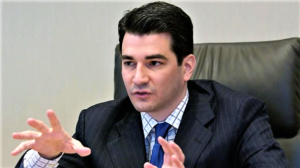
Gottlieb has made speeding generics to market one feature of his tenure, with some harsh warnings to pharmas not playing by the rules...One tactic used by drugmakers is using the FDA citizen petition process, created to allow individuals and community groups to make requests for changes to health policy. Pharma companies have been using this route to counter the impact of the Drug Price Competition and Patent Term Restoration Act...citizen petitions have rarely delayed specific generic drug approvals, there's no doubt that the process requirements associated with 505(q) petitions can add to resource burdens on the generic drug review process and the FDA's regulatory decision making...This increased burden on the FDA can take resources away from the daily work of application review...The FDA will now publish the factors it will consider to determine whether to allow the petition through. If the agency determines a petition has been set up with the primary purpose of delaying the approval of a generic drug application, it will look to deny it and explicitly note the reason...effectively naming and shaming the company in question. The FDA will also consider referring the company to the Federal Trade Commission, which oversees anticompetitive business practices...
- October 5 Pharmacy Week in Review: 2018 Next Generation Pharmacist Awards, Vaccines for Health Care Professionals (pharmacytimes.com)
Nicole Grassano, PTNN, Pharmacy Week in Review, this weekly video program provides our readers with an in-depth review of the latest news, product approvals, FDA rulings and more.