
- Wave of Opioid Litigation Spreads to Canada With Fresh Lawsuit (bloomberg.com)

A Canadian province has launched a proposed class-action lawsuit against the opioid industry, targeting companies from the nation’s biggest grocer Loblaw Cos. to Oxycontin-maker Purdue Pharma Inc., marking a new front of international action against the industry...British Columbia filed its claim...against more than 40 manufacturers, wholesalers and distributors of opioids, seeking to recover “millions of dollars in opioid-related health care costs incurred by the provincial government,” Attorney General David Eby said in a statement...The suit accuses companies of contributing to “an epidemic of addiction”...in Canada. The class action is probably the first such lawsuit outside of the U.S...If the court certifies British Columbia’s claim as a class action, other Canadian provinces and territories will be able to join...
- Drug Shortages Lead OR Pharmacies to Issue Motivational Items (gomerblog.com)Matt Foley: Van Down By The River - SNL (youtube.com)
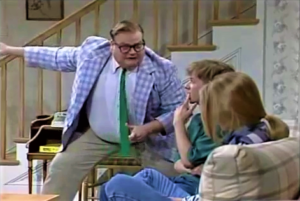
Nationwide drug shortages have forced physicians to consider alternative ways to take care of patients. At the forefront of this movement is the National Organization of Medically Equivalent Drug Seekers (NOMEDS), a pharmacist run think tank that leads the charge in giving physicians options for patient treatment...NOMEDS President, P. In Discup Pharm. D., has spearheaded a program where OR pharmacies will partner with motivational speakers to provide a healthy alternative to hard to obtain medications such as opioids and local anesthetics. Dr. Discup said, “I don’t know what all the fuss is about, there are tons of internet videos that show properly motivated people doing amazing things. I don’t see why doctors can’t use the power of the mind to get patients through 17 hour orthopedic spine cases.”
- FDA confronts its limits in push on drug pricing (biopharmadive.com)
Legally, the agency has few levers to pull when it comes to addressing prices. But that hasn't stopped Commissioner Scott Gottlieb from taking a more spirited and vocal approach than past FDA chiefs. The effort comes as eye-popping price tags, some spurred by groundbreaking new treatments but others by manipulation of the drug pricing system, have prompted public and political opposition to rising drug costs...Gottlieb has aggressively used public statements to call out drugmakers for blocking or impeding market competition. And, under his leadership, the FDA has continued to ramp up approval of generic and biosimilar drugs, while pushing the boundaries of regulatory flexibility.
- Indirect effect..."Where the FDA does have authority to get involved is in how much, in what way, and how aggressively it approves drugs, or their generic or biosimilar competitors."...While it's an indirect effect, approving low-cost competitors more quickly can be a powerful force for lowering prices.
- Biosimilars showcase hurdles facing FDA...speeding competitors to market can only go so far if other forces block lower-cost rivals from reaching patients. To date, that's exactly what's played out with biosimilars...Gottlieb has expressed frustration that the FDA's steady increase in approving biosimilars hasn't resulted in greater savings. "Competition is, for the most part, anemic,"
- Naming and shaming...Gottlieb has made full use of his public platform to call out market "shenanigans" by drugmakers...Gottlieb received a lot of media coverage by attacking such practices as "regulatory gaming," and has since kept up pressure on drugmakers through public statements.
- Worth cooperating?...As Health and Human Services Secretary Alex Azar and Gottlieb continue to criticize pricing and anticompetitive practices, drugmakers are faced with a choice: ignore the growing chorus or cooperate.
- This Week in Managed Care: August 24, 2018 (ajmc.com)
- House bill seeks to create nationwide Prescription Safety Alert System (healthdatamanagement.com)
Bipartisan congressional legislation has been introduced to create a nationwide Prescription Safety Alert System to enable pharmacists to better protect patients from opioid overuse...The Analyzing and Leveraging Existing Rx Transactions Act, introduced...by Reps. Tom MacArthur, Ann Kuster and Barbara Comstock, would require the Department of Health and Human Services to work with the private sector to establish a system that analyzes the transaction data that pharmacists and payers—such as health insurers and Medicare— generate when prescriptions are filled...“We absolutely have to get smarter about how we use technology and data analysis to fight this crisis,”...“By giving pharmacists, insurance companies, and programs like Medicare a new tool to understand the data they already have, we can help prevent further harm.”...the data analysis would provide real-time feedback to pharmacists at the point of sale and would be included in their normal workflow...“A pharmacist will receive an alert that someone might be at risk of overuse based on their prescription history, or might be doctor-shopping to feed their addiction,”...“Instead of filling that unnecessary prescription, pharmacists will have an extra tool to detect and prevent these dangers.”...
- August 31 Pharmacy Week in Review: Digital Health Market Growing Rapidly, Testing For Gene Mutation Linked to Cancer is Underused (pharmacytimes.com)
Nicole Grassano, PTNN, Pharmacy Week in Review, this weekly video program provides our readers with an in-depth review of the latest news, product approvals, FDA rulings and more.
- Lawmakers push to require price disclosure in DTC drug ads (biopharmadive.com)

The Senate...passed a measure that would provide the Department of Health and Human Services with $1 million to implement proposed rules requiring drugmakers disclose the price of their prescription drugs in direct-to-consumer advertising...Approved as part of a larger spending bill, the bipartisan amendment gives legislative backing for an idea that the Trump administration has pushed as part of its plan to combat rising drug prices...touted the measure as a common-sense step toward greater transparency, it's a proposal likely to generate substantial debate. Drug prices are notoriously opaque, and most patients don't pay the so-called "list price" that such a requirement would likely rely on..."We have FDA and CMS working to examine how to require drug companies to post their list prices in direct-to-consumer advertising. When patients hear about a wonderful new drug, they should know whether it costs $100 or $50,000," said HHS Secretary Alex Azar...The administration's proposal, unsurprisingly, has been met with resistance from drugmakers..."Disclosing list prices in DTC ads would not benefit patients as they are often not the prices insurers pay and are generally not a good indicator of what patients will pay at the pharmacy counter," wrote a spokesperson for PhRMA...
- This Week in Managed Care: August 31, 2018 (ajmc.com)
Laura Joszt, Managing Editor at The American Journal of Managed Care. Welcome to This Week in Managed Care from the Managed Markets News Network
- How Can Medicare Save A Billion Bucks? Use Generics (ptcommunity.com)Medicare Spending on Brand-name Combination Medications vs Their Generic Constituents (jamanetwork.com)
In 2016, the cost difference between the amount that the Medicare Part D drug program spent on brand-name combination medications and the estimated cost for generic constituents for the same number of doses was $925 million, according to an investigation in the Journal of the American Medical Association...a retrospective analysis of Medicare drug spending from 2011 through 2016, looked at 29 brand-name oral combination medications, separated into three categories: medications that were available in generic form at identical doses; generic medications available at different doses; and therapeutically equivalent generic substitutes. The savings for all three categories was in the millions of dollars, with the largest discrepancy (an estimated $471 million) seen with the therapeutically equivalent generic substitutes. The authors also found that for the 10 most costly combination products that were available throughout the entire study period, the listed Medicare spending could have been an estimated $2.7 billion lower if the generic constituents had been prescribed.
- What the FDA Wants Pharmacists to Know About Generic Drugs (drugtopics.com)
Demand for generics and biosimilars is growing. In 2017, generic drugs generated $265 billion in savings. New biosimilars could play a major role in increasing competition and driving down costs...Drug Topics spoke with officials from the FDA’s Office of Generic Drugs (OGD)and from the Therapeutic Biologics and Biosimilars team (TBB) about how the agency is helping accelerate generics to market, and the role pharmacists play in educating patients about the safety, effectiveness, and quality of generics and biosimilars.
- DT: How is the FDA accelerating generics to market? What are some of the obstacles? What does the generic market look like going forward into 2019 in terms of approvals?
- DT: As more generic drugs enter the market, what role can pharmacists play in educating healthcare providers about using generics? How are pharmacists positioned for this task? How does the FDA disseminate information/reports to the pharmacy community on generic drug development and review?
- DT: What is the status of biosimilars in regard to lowering healthcare costs?
- DT: What do you see as the biggest challenge for the healthcare industry as the new forms of drugs are introduced?
- DT: What else might be important for our readers to consider regarding biosimilars?