
- Opioids Have Sparked An HIV Outbreak In Massachusetts (yahoo.com)

For many public health experts, Massachusetts’ near-universal health insurance coverage makes it the gold standard for access to care…the industrial cities of Lowell and Lawrence...have both seen a surge in new HIV cases among people who use intravenous drugs...Between 2015 and 2018, there were 129 new HIV cases linked to drug use in the two cities...By comparison, from 2012 to 2014, an average of just 41 cases of HIV linked to injection drug use were diagnosed per year in the entire state of Massachusetts...local stakeholders told investigators that Lawrence had a local illegal fentanyl manufacturing operation, which made the synthetic opioid ― an efficient vector for HIV because its short high leads to more frequent injections ― both pervasive and cheap. Meanwhile, rampant homelessness disrupted treatment for those most at risk. And even though community leaders in Lawrence and Lowell pushed for clean needle exchanges, a known method for stopping infectious disease spread, they only did so after the outbreak began...As fentanyl spreads across the U.S. and drug use patterns evolve, other areas of the country with this same constellation of risk factors should take note.
- FDA Anticipates Need for Expanding National Drug Code, Calls for Industry Input (raps.org)
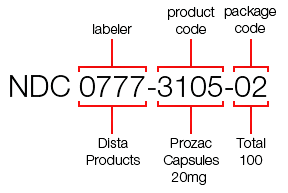
The Food and Drug Administration announced...it plans to hold a public discussion on expanding the National Drug Code format and the impact on industry...FDA currently assigns 10-digit NDCs for the purposes of identifying drugs in the country and the format is comprised of three codes regarding the labeler, the product and the package...“FDA anticipates that it will run out of 5-digit labeler codes in approximately 15 years,” the agency wrote in the notice on the 5 November public hearing. “FDA will begin assigning 6-digit labeler codes at some point in the future due to exhaustion of 5-digit labeler codes.”...Prior to implementing the new formats for longer configurations, FDA officials will seek feedback from meeting participants on the potential impact on companies’ bottom line and drug safety, as well as “issues associated with the current lack of NDC uniformity in the marketplace.”
- China drug scandals highlight risks to global supply chain (cnbc.com)

The drug safety scandals...have underlined the risks to international consumers posed by weak oversight in China, the world's largest supplier of active pharmaceutical ingredients...The European Medicines Agency and the US Food and Drug Administration issued alerts over a cancer-causing ingredient used in a blood pressure medication, supplied by Chinese company Zhejiang Huahai, resulting in a recall of affected drugs...Then Beijing announced that hundreds of thousands of substandard vaccine doses had been sold in China, prompting a public outcry. Senior executives were arrested at the pharma company, Changsheng Biotech, which was also accused by authorities of forging data during the production of rabies vaccines...China is home to thousands of API producers, with exports worth $29bn last year...its producers supply ingredients for generic drugmakers such as Teva Pharmaceutical and multinationals including Johnson & Johnson and Novartis. About 80 percent of APIs used in the US come from China and India…Warnings to Chinese companies published by the FDA and EMA in recent years show that dozens have violated standards, mainly relating to record-keeping during the manufacturing process. In several cases the exporters shipped large volumes of product before the infractions were discovered...
- Physician numbers are on the rise, though Nevada still well below the national average (thenevadaindependent.com)Physician Workforce in Nevada 2018 Edition (med.unr.edu)
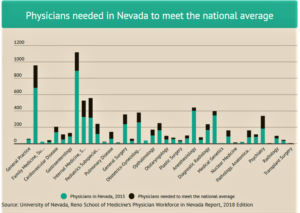
The report, released by the school’s Office of Statewide Initiatives last week, found that the state has added 1,789 physicians over the last decade, a 31.7 percent increase, but because of population growth, the number of physicians per 100,000 Nevadans only grew by about 10 percent. And, when accounting for roughly 50 percent growth in the number of licensed but inactive physicians — meaning those who are retired, semi-retired, temporarily not in practice or otherwise not active — there was actually only a 1.7 percent increase in active physicians over the last decade...“treading water effect”...“There’s so much demand for health care in general so it’s part of a broader workforce problem in that they’re struggling with nurses now, struggling in mental and behavioral health,”...“You throw on top of that population growth, it makes it very difficult.”
- August 10 Pharmacy Week in Review: National Immunization Awareness Month, Bilingual Clinical Service for Diabetes Outcomes (pharmacytimes.com)

Nicole Grassano, PTNN, Pharmacy Week in Review, this weekly video program provides our readers with an in-depth review of the latest news, product approvals, FDA rulings and more.
- Brexit Guidance: MHRA Outlines What to Expect (raps.org)

The UK’s Medicines & Healthcare products Regulatory Agency...explained what pharmaceutical and medical device companies can expect during the period that the Brexit agreement is implemented...During the implementation period, which will end in December 2020, pharmaceutical firms will be able to continue UK batch release testing and Qualified Person certification in the UK, which will be recognized by the EU and vice versa, MHRA said...But one of the setbacks is that for medicines, the UK will not have voting rights in EMA and EU committees during the implementation period, MHRA said...“Marketing authorisation holders and qualified persons for pharmacovigilance will continue to be able to be based in the UK and access EU markets. There will be continued mutual recognition of manufacturing and distribution licences, as well as associated inspections such as good manufacturing practice (GMP),” the regulator added.
- Drugs make up more US health spending than thought, report suggests (biopharmadive.com)

Prescription drugs could account for nearly 15% of all money spent on healthcare in the U.S., according to a new report published in Health Affairs July 31 that offers a counterpoint to the frequent industry claim only 10% of spending goes toward pharmaceuticals...researchers...approximated revenues retained at each step in the drug supply chain to place total U.S. spending on pharmaceuticals at $480 billion in 2016...Drug manufacturers "captured" $323 billion, or two-thirds, of that total. Pharmacy benefit managers — most recently the target of criticism over their role in rising drug costs — retained only $23 billion in gross profits, suggesting reforms targeted only at PBMs may have limited impact on prices and overall spending.
- Albertsons, Rite Aid terminate merger (drugstorenews.com)Rite Aid, Albertsons Call Off Merger Amid Investor Opposition (wsj.com)

Albertsons and Rite Aid on Wednesday evening announced that they had mutually decided to terminate the proposed merger...The termination came a day before Rite Aid was set to hold a special shareholders meeting at which the company has been urging its shareholders to vote in favor of the merger...“Albertsons believes that the strategic rationale of the Rite Aid combination was compelling, including the $375 million of cost synergies and $3.6 billion of identified revenue opportunities,” Albertsons said. “We disagree with the conclusion of certain Rite Aid stockholders and third-party advisory firms that although they acknowledged the strategic logic of the combination, did not believe that Albertsons was offering sufficient merger consideration to Rite Aid stockholders.”...Rite Aid chairman and CEO John Standley said that despite believing in the merits of the merger, it had listened to its stockholders and has committed to moving forward as a standalone company...
- Cashing in on DNA: race on to unlock value in genetic data (reuters.com)

How much is your DNA worth? As millions of people pay for home tests to check on ancestry or health risks, genetic data is becoming an increasingly valuable resource for drugmakers, triggering a race to create a DNA marketplace...GlaxoSmithKline’s decision to invest $300 million in 23andMe and forge an exclusive drug development deal...crystallizes the value locked up in genetic code...Firms like EncrypGen, Nebula Genomics, LunaDNA and Zenome are using blockchain...to secure sensitive DNA records and create a transaction ledger. The new players all have slightly different models, with most simply provide data platforms, where people are rewarded for providing data...For drugmakers...access to this data offers a way to accelerate drug development, since finding a drug target linked to a human genetic variant doubles the chance of producing a new medicine.
- Antianxiety drugs — often more deadly than opioids — are fueling the next drug crisis in US (cnbc.com)

Today more than 40 million adults in the United States suffer from anxiety, and it is the most common mental illness in the United States...Overdose deaths involving benzodiazepines — such as Xanax, Librium, Valium and Ativan, drugs commonly used to treat anxiety, phobias, panic attacks, seizures and insomnia — have quadrupled between 2002 and 2015...The trend is being fueled by a 67 percent rise in prescriptions...The market for...(benzodiazepines)...is expected to reach $3.8 billion in the U.S. by 2020...many mental health experts are sounding the alarm, claiming that benzodiazepine addiction is an epidemic as frightening and serious as the opioid crisis...