
- Trump’s Drug Pricing Reform Proposals May Be Politically Tepid But Are Sensible Policy (forbes.com)The Trump Drug Pricing Plan: Short Term Reprieve, Long Term Disruption (drugchannels.net)
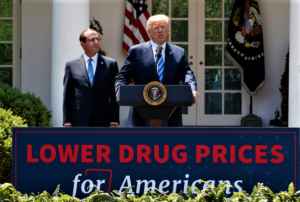
President Trump and Alex M. Azar II, the Secretary of Health and Human Services
With HHS Secretary Alex Azar by his side, President Trump...promised that “we are going to see prices go down, and it will be a beautiful thing.” Based upon the actual blueprint, which remains a work in progress, that may well be the case. But if it proves to be so, it will not be because the administration is wielding the metaphorical meat cleaver to cut prices by government edict and risk gutting our biomedical innovation engine...Instead...he appears to...endorse a series of incremental policy and market-based reforms that will eliminate many of the existing incentives that compel drug manufacturers to push list prices ever higher...These relatively modest proposals will not satisfy Democrats who remain fixated on adopting a single payer system where the Federal government can set prices, as is the case in western Europe. But then, it might be good to remember that risk capital and large drug companies are necessary to develop the compounds that are discovered in government and university research laboratories. If we wish to realize the promise of new medicines in treating rare diseases and in harnessing our immune systems to fight cancer, a thoughtful, cautious incrementalism is preferable to the harshness of the meat cleaver.
- Walgreen, Kroger, Albertsons, HEB sue Allergan over dry-eye drug (reuters.com)

Allergan Inc was sued...by four large U.S. retailers that accused the drugmaker of antitrust violations for trying to stop rivals from selling generic versions of Restasis, its medication to treat dry-eye disease...Walgreen Co, Kroger Co, Albertsons Cos and HEB Grocery Co accused Allergan of illegally preserving its monopoly by obtaining illegal patents, suing rivals that challenged those patents and transferring the patents to a sovereign Native American tribe, New York’s Saint Regis Mohawk Tribe, to escape scrutiny by U.S. courts...The retailers said generic Restasis would have been on the U.S. market by May 2014 but for Allergan’s activities, and that the...company should pay triple and other damages for its anticompetitive conduct...The company holds patents covering various elements of Restasis that expire in 2024...
- U.S. joins whistleblower case against Insys over kickbacks (reuters.com)

The U.S. Department of Justice has joined whistleblower litigation accusing Insys Therapeutics Inc of trying to generate more profit by paying kickbacks to doctors to prescribe powerful opioid medications...The government’s involvement...adds firepower to the civil litigation as Insys tries to resolve a federal probe into its marketing of Subsys, a spray form of fentanyl...Six U.S. states - California, Colorado, Indiana, New York, North Carolina and Virginia - also joined whistleblower litigation against Insys, according to the filing in U.S. District Court in Los Angeles...The litigation comes amid a wave of related criminal cases against medical practitioners, and former executives and sales representatives employed by Insys, including its billionaire founder John Kapoor.
- Starbucks Offering Frappuccino Drips for a Limited Time (gomerblog.com)
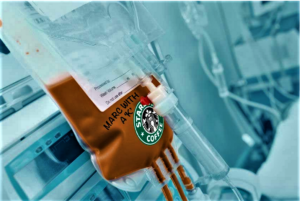
To help mitigate caffeine withdrawal in its hospitalized customers, Starbucks will be partnering with inpatient pharmacies for a limited time to provide Frappuccino drips and infusions to those who need it most...“We were astonished to learn from our friends at Harborview [Medical Center] that patients with alcohol withdrawal are given benzos and patients with tobacco withdrawal are given nicotine patches, but patients with caffeine withdrawal get diddly-squat,” remarked Starbucks President and CEO Kevin Johnson. “We saw this as a huge opportunity.”
- Focus on pharmacists’ supply chain expertise in order to improve access to medicines, FIP says (fip.org)
Inefficient pharmaceutical supply chains are partly to blame for a substantial proportion of the world still being without access to basic live-saving medicines, the International Pharmaceutical Federation says in a new report...The report, “Pharmacists in the supply chain: The role of the medicines expert in ensuring quality and availability”, is released in a landscape of challenges such as substandard and falsified medicines, and a shortage of human resources in the health supply chain. “The need to ensure effective and safe medicines supply prompted FIP to take a close look at the actual role of pharmacists in pharmaceutical supply chains. This report -
- aims to provide a foundation from which improvement can develop
- gives a global overview of the role of pharmacists in different supply chains in low-, middle- and high-income countries, and describes the evolution of supply chains
- points out that investment in training and education are needed to strengthen pharmacists’ roles in supply chains.
- FDA names drugmakers potentially acting to delay cheap generics (reuters.com)
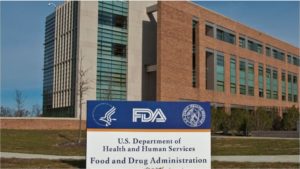
The U.S. Food and Drug Administration...listed a number of drugmakers it said could be improperly blocking access to their medicines in order to delay generic competition...But many of the companies immediately pushed back, saying the FDA list of drugmakers may be out of date and that some of the drugs included on it already have generic competitors...The FDA said the list contained all of the inquiries about drugs it had received from generic drugmakers since 2005. It said companies generally do not inform it if they have made samples available after a generic developer has reached out to the agency...The agency said companies on the list may be using FDA safety regulations and other tactics to deny access to their medicines from generic drugmakers hoping to copy them...The FDA is notifying the Federal Trade Commission, which can investigate anti-competitive acts, of cases where drugmakers may be blocking access to their products if there is no safety reason...
- It’s Time for Pharmacists to Carve Out a New Role (drugtopics.com)

Pharmacists and other healthcare professionals have to reinvent themselves as healthcare becomes more of a retail business. With the threat of new competition, the pressure for pharmacists to add value in healthcare is mounting...Ensuring the appropriate use and management of specialty pharmaceuticals is one area in which pharmacists can offer unique and necessary expertise. These medications will have a profound impact on the practice of pharmacy over the next ten years as they consume more of the healthcare dollar. They will affect all pharmacy practice settings...accelerating the importance of medication management to ensure the appropriate use of these therapeutic agents...The majority of specialty pharmaceuticals are distributed and administered in the physician’s office, an outpatient setting, or as home infusion...The role of the pharmacist in the physician’s office will emerge as a way to manage patients taking certain specialty medications...patients taking specialty pharmaceuticals represent only 1% of the patient population, yet, amazingly, they represent 30% of total drug spend...healthcare will need a different approach to the optimal dispensing of specialty pharmaceuticals...The industry will need creativity and focus to demonstrate just how far specialty pharmaceuticals can take us...The role of the pharmacist will be critical as specialty pharmaceuticals consume more of the healthcare dollar...
- Policy Strategies For Aligning Price And Value For Brand-Name Pharmaceuticals (healthaffairs.org)

Systemic factors in the US health care system lead to greater pricing power for drug manufacturers than is the case in other countries. The result is higher prices that are often poorly aligned with the degree of added benefit for patients and the health system. To achieve the difficult balance between necessary incentives for innovation and affordability, many economists favor “value-based” pricing, in which the price for a new drug reflects an assessment of the comparative effectiveness of the drug compared to other available treatments. In this brief we explore the different varieties of value-based pricing, and we outline several measures through which drug competition may be increased, supported by regulatory steps and payment mechanisms to bring drug prices into greater alignment with their underlying clinical value.
- Using Competition To Align Price With Value
- Accelerated Approval Of Competitors
- Contingent Exclusivity Periods
- Reimportation
- Using Comparative Effectiveness To Align Price With Value
- Negotiation And Value-Based Benchmarks
- Targeted, Value-Based Rebates
- Indication-Specific Pricing
- Outcomes-Based Agreements
- Promoting Competition To Address Pharmaceutical Prices (healthaffairs.org)

Under ideal market conditions, competition among producers of a commercial good can drive down prices. The market for pharmaceuticals, however, is inefficient in many ways, leading to rapid price increases in recent years, even for some drugs without patent protection. This brief surveys the two principal types of pharmaceutical competition—inter-brand and brand/generic—and examines the reasons they may fail to produce lower prices for patients, including the absence of information on comparative efficacy, lack of federal agency authority to consider drugs’ value, narrow drug substitution laws, and laws that prohibit formulary exclusion. The brief then reviews the policy interventions that could help address these shortcomings. Such proposals include increasing the efficiency of generic drug approval, allowing temporary importation of drugs during domestic shortages or price fluctuations, and discouraging the improper use of patent exclusivities.
- An Imperfect Market
- Inter-Brand Competition
- Price As A Signal
- Imperfect Information
- Legal Mandates On Purchasers
- Brand/Generic Competition
- Exclusivities
- Effective Inter-Brand Competition
- Competition Policy Options
- Stalemate Over Exclusivity Duration
- More Efficient Generic Entry
- 6 Takeaways From Trump’s Plans to Try to Lower Drug Prices (nytimes.com)Rest easy, pharma. Word is, Trump's drug pricing plan won't be a tough pill to swallow (fiercepharma.com)
President Trump and Alex M. Azar II, the Secretary of Health and Human Services
- Lower drug prices for older people
- Persuade other countries to pay more
- Require drug ads to include the price
- Ban ‘gag clauses’ for pharmacists
- End the patent games
- On the horizon