
- Drugmakers try rare tactic to boost sales: cutting the price by thousands (chicagotribune.com)

Drugmakers tried just about every move under the sun to nurture sales of its products -- pharmacy coupons for patients, exclusive deals with insurers, even selling a medicine's patent to a Native American tribe to shield it from a legal challenge...What's far rarer is the step two drugmakers announced...a price cut...Regeneron Pharmaceuticals Inc. and Sanofi said they would deeply discount their $14,000-a-year cholesterol treatment to $4,500 to $8,000 for some patients in order to loosen insurer restriction on the drugs, which so far have sold poorly...The announcement "will set an important precedent in the ongoing drug pricing debate here in the U.S..."This will send a ripple effect across the industry and crowded therapeutic categories will likely face additional pressure."...Sanofi and Regeneron, along with Amgen, brought their new drugs to market with the hope that their powerful effect on bad cholesterol would reduce the world's leading cause of death, and warrant the higher price...So far, they've sold far below the billion-dollar blockbuster mark...In the Praluent trial, a far narrower group of high-risk patients showed much more benefit, and Regeneron and Sanofi said the price would be offered to insurers who agree to more readily pay for the treatment in those patients...Maybe price before was for an aspiration of benefit that did not materialize...The "benefit for this population for the class of drugs seems clearer. Now for the proper pricing. And coverage."
- Dems, Republicans split on 340B drug pricing program in Senate hearing (endpts.com)
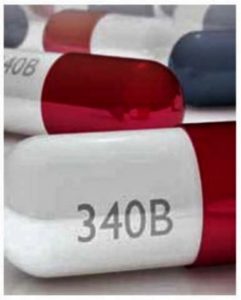
The dividing line between Senate Democrats and Republicans on the 340B drug pricing program was set on Thursday, with Democrats siding with the hospitals, saying the savings from the program is desperately needed for the poorest populations, while Republicans took the side of drugmakers, saying the program is being abused and needs to be reformed...But the hearing also put the spotlight on the lack of transparency from both the pharmaceutical and hospital industries, as neither side could agree to some basic statistics, such as what percent of the total drug spend in the US goes into the 340B program...reform and more oversight may still come...A study published in Health Affairs in 2014 found that 340B hospitals are expanding their base into communities that tend to be affluent and well-insured, which runs counter to the objectives of the program. The Alliance for Integrity and Reform of 340B, backed by the biopharma industry and other groups, also released a report that found in 2015, 61% of participants spent less on charity care compared to both 2014 and 2013 despite additional revenue received...
- The SEC Says Elizabeth Holmes’ Fraud Was Worse Than Anyone Thought (forbes.com)

Elizabeth Holmes was an even smoother scamster than anyone thought -- and she's apparently getting to keep her job...The SEC just charged the 34-year-old onetime billionaire with fraud related to claims she made about her blood-testing company, Theranos. To settle the charges, Holmes is giving up 18.9 million Theranos shares, losing voting control of the company, paying a $500,000 fine and will be barred from running a public company for ten years. She will, however, continue as the chief executive of Theranos, which under the fraudulent scheme described by the SEC raised $700 million...What emerges from the SEC's complaint is this: ...that Theranos’ sales were much lower than the company had led outsiders to believe. But the SEC puts a fine point on it: At a time when Theranos claimed it had annual sales of $100 million, sales were just $100,000...SEC says Holmes showed...(Walgreens) executives written evidence that Theranos would be able to run just about any blood test on its machines by the end of that year, using drops of blood taken from finger pricks instead of using needles. The next year, the pharmacy executives raised concerns with Holmes that this device might need to be approved by the FDA. But they missed the scale of her deception...Theranos miniLab was supposed to have been rolled out...the machine wasn't ready at all. That's when, (Sunny Balwani) Balwani and Holmes told their engineers to start using other companies' machines in unapproved ways to analyze finger-prick samples, the complaint says. Theranos allegedly never told the pharmacy executives...
- Participants in rogue herpes vaccine research take legal action (fiercepharma.com)

Three people injected with an unauthorized herpes vaccine by a Southern Illinois University researcher have filed suit against his company, demanding compensation for alleged adverse side effects from the experiments...SIU professor William Halford, who died in June, had injected Americans with his experimental herpes vaccine...in 2016 and 2013 without safety oversight that is routinely performed by the FDA or an institutional review board...The lawsuit, which was filed Friday in an Illinois circuit court, demands compensation from Halford’s company, Rational Vaccines, alleging his research violated U.S. and international laws aimed at protecting the rights of participants in experiments…Rational Vaccines has said it considers the 2016 trial a success—though it is unclear what data it used to support that claim...SIU has...acknowledged that Halford’s conduct violated university rules and U.S. laws but said that Halford hid his misconduct from the university.
- 5 ways to streamline prior authorization, improve outcomes (fiercehealthcare.com)2017 AMA Prior Authorization Physician Survey (ama-assn.org)
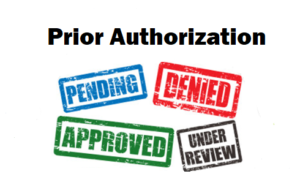
Physicians say they face long wait times for insurers to process prior authorizations and the delays can negatively impact patient outcomes...The American Medical Association surveyed 1,000 physicians, and 64% said they wait at least one business day for insurers to decide on prior authorization. Nearly one-third (30%) said they wait at least three business days for decisions...The vast majority of physicians surveyed said that lag time can have serious consequences for patients; 92% said the prior authorization process can lead to delays in access to care, and 78% said that waiting for a decision from insurers "sometimes, often or always" causes patients to abandon certain treatments entirely...The AMA survey illustrates a critical need to help patients have access to safe, timely and affordable care, while reducing administrative burdens that take away from patient care...Six major industry groups—including America's Health Insurance Plans and the AMA—joined forces to improve the prior authorization process. The groups agreed to five steps:
1. Reduce the number of healthcare professionals subject to prior authorization requirements based on their performance, adherence to evidence-based medical practices or participation in a value-based agreement with the health insurance provider.
2. Review the services and medications that require prior authorization on a regular basis and eliminate requirements for therapies that no longer warrant them.
3. Improve communication between health insurance providers, healthcare professionals and patients to minimize delays in care and ensure clear prior authorization requirements, rationale and changes.
4. Protect the continuity of care for patients on an ongoing active treatment or a stable treatment regimen when there are changes in coverage, insurance providers or prior authorization requirements.
5. Accelerate industry adoption of national electronic standards for prior authorization and improve transparency of formulary information and coverage restrictions at the point-of-care. - The biggest innovators in health care, according to Fast Company (advisory.com)

Fast Company has released its 2018 edition of its "World's Most Innovative Companies" list, which recognizes more than 350 enterprises, including dozens involved in health care...The latest list covers 36 categories and recognizes the 10 most innovative companies in each category, with an overall list of the top 50 most innovative companies curated from the category-specific lists. To compile the lists, more than three dozen Fast Company "editors, reporters, and contributors surveyed thousands of companies" to "identify the most notable innovations of the year, and trace their impact on businesses, industries, and the larger culture."
- In the publication's health care-specific category, the 10 most innovative companies are:
CVS Health
23andMe
Color
Veritas Genetics
Helix
Maven Clinic
Qventus
Glooko
Emocha Mobile Health
Dosist
- In the biotech category, the 10 most innovative companies are:
Novartis
OneOme
GE Healthcare
Syapse
Sophia Genetics
Spark Therapeutics
Biogen
Synthego
WuXi NextCo
Ginkgo Bioworks
- In the publication's health care-specific category, the 10 most innovative companies are:
- This Week in Managed Care: March 16, 2018 (ajmc.com)
Kelly Davio, This Week in Managed Care from the Managed Markets News Network
- Novartis blazes Big Pharma trail, striking deal with Canadian company to distribute medical marijuana products (fiercepharma.com)

In what may be the first foray by Big Pharma into the sale of medical marijuana products, Novartis has struck a deal with a Canadian company that sells medical cannabis products not only in its home country but also in Europe...Tilray announced today that it has a binding agreement with Sandoz Canada to be its exclusive supplier of “non-smokable/non-combustible medical cannabis products.”...While Canadian law only allows companies to mail their products directly to patients, the company said that “subject to future regulatory changes,” Sandoz Canada will wholesale and distribute the products to Canadian hospitals and pharmacies. It also calls for the Swiss company to use its expertise to educate pharmacists about the products and to help Tilray develop new products and dose forms...No financial details were provided, but a Tilray spokesperson told the Financial Post that Sandoz has not taken a financial stake in the company...
- A costly PBM trick: set lower copays for expensive brand-name drugs than for generics (statnews.com)
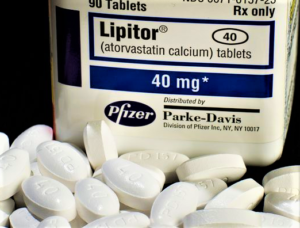
When the patent on a brand-name drug expires, and one or more generic versions enter the market, you’d expect consumers to pay less for the generic. That isn’t necessarily the case, thanks to the middlemen known as pharmacy benefit managers...Our research group, led by Khurram Nasir...wanted to figure out how much money had been spent on Lipitor...after generic atorvastatin became available...$2.1 billion could have been saved had Lipitor been replaced with generic atorvastatin...It turned out that Pfizer had partnered with pharmacy benefit managers to ensure that its more-expensive Lipitor had a lower copay than less-expensive generic atorvastatin...it boosted the overall cost of the drug...These shady practices haven’t gone unnoticed...If an employer serves as its own pharmacy benefit manager, it has all the incentive it needs to drive down the costs of drugs for its employees. So it’s no wonder that large employers such as Coca-Cola, Verizon, and IBM, which collectively spend $20 billion a year on health benefits, formed a coalition to devise means to buck the influence of pharmacy benefit managers...
- Pharmacy Week in Review: March 16, 2018 (pharmacytimes.com)
Nicole Crisano, PTNN. This weekly video program provides our readers with an in-depth review of the latest news, product approvals, FDA rulings and more.