
- CVS makes more than $66 billion bid for Aetna: sources (reuters.com)

U.S. pharmacy operator CVS Health Corp has made an offer to acquire No. 3 U.S. health insurer Aetna Inc for more than $200 per share, or over $66 billion...A deal would merge one of the nation’s largest pharmacy benefits managers and pharmacy operators with one of its oldest health insurers, whose far-reaching business ranges from employer healthcare to government plans nationwide...Aetna shares rose more than 11 percent, or $18.48, to $178.60, while CVS shares fell 3 percent, or $2.22, to $73.31...A tie-up with Aetna could give CVS more leverage in its price negotiations with drug makers. But it would also subject it to more antitrust scrutiny...The deal could also help counter pressure on CVS’s stock following speculation that Amazon.com Inc is preparing to enter the drug prescription market, using its vast e-commerce platform to take market share from traditional pharmacies...
- 2017 edition of Drugs of Abuse, A DEA Resource Guide (dea.gov)
- Gilead wins US approval for CAR-T cancer therapy (biopharmadive.com)
Gilead Sciences Inc….secured U.S. approval for its newly acquired CAR-T therapy, giving adult patients with a certain type of lymphoma and few other options a promising new treatment that offers the hope of remission for some...The regulatory OK...puts Gilead at the forefront of cancer cell therapy development and validates the biotech's decision to buy the drug's original developer, Kite Pharma Inc...Gilead will market the therapy under the brand name Yescarta (axicabatagene ciloleucel) at an annual cost of $373,000 — a price that underscores the affordability challenges presented by the personalized nature of CAR-T treatment…Throughout the development of Yescarta, Kite stayed neck and neck with the larger and well-resourced Novartis AG. While Novartis can claim the landmark of winning the first ever approval of a CAR-T therapy, Gilead's near $12 billion takeover of Kite is a worthy second prize.
- This Week in Managed Care: October 20, 2017 (ajmc.com)
Kelly Davio, welcome to This Week in Managed Care from the Managed Markets News Network
- U.S. to promote use of opioid alternatives to treat addiction (reuters.com)

The U.S. Food and Drug Administration plans to encourage widespread use among opioid addicts of less harmful opioid drugs such as methadone and buprenorphine, a radical shift in policy that could draw opposition from those in the addiction field who believe abstinence is the only effective treatment...FDA Commissioner Scott Gottlieb outlined a proposal under which every addict who suffers a non-fatal overdose would be treated with an opioid substitute, for long periods if necessary, or even for life...“I know this may make some people uncomfortable,” Gottlieb said...“FDA will join efforts to break the stigma associated with medications used for addiction treatment.”...The FDA, Gottlieb said, will issue guidance for drugmakers to promote the development of new addiction treatments and lay out the agency’s interest in “novel, non-abstinence-based” products...
- Walgreens to shutter 600 stores (bizjournals.com)Walgreens pulls off solid quarter, at time when pharmacy and retail are suffering (secure.marketwatch.com)
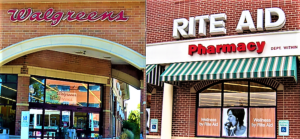
Walgreens said Wednesday that it will shutter 600 stores early next year following its $4.4 billion Rite Aid deal...The closures will be mostly Rite Aid stores, but may include some Walgreens locations...The company plans to shut down stores within a mile of another Walgreens or Rite Aid location. The closings will start next spring and will continue over an 18-month period...The move is expected to cost Walgreens $450 million, but should save the Deerfield, Illinois-based company $300 million yearly by 2020...In September, the Walgreens Boots Alliance received regulatory approval to buy 1,900 Rite Aid stores from the Pennsylvania-based drugstore chain. The deal will make Walgreens the country's largest retail pharmacy by store locations. Walgreens now has more than 13,200 stores worldwide...The company said it expects to complete integration of the acquired stores within three years at an estimated cost of approximately $750 million.
- Despite increased spending, orphan drugs still small piece of US medicines market (biopharmadive.com)
Orphan medicines account for only about 8% of total U.S. drug spending, new research shows, even as the number of rare disease drugs on the market has jumped sharply over the past five years..In 2016, the U.S. spent $36 billion on orphan indications of approved drugs — up nearly seven-fold from 2000...Both pharma and biotech alike have focused more investment in recent years into developing new drugs for rare diseases, lured by the prospect of greater pricing power and higher barriers to entry for competitors...While some orphan drugs command prices in the hundreds of thousands of dollars...the median annual cost across the board was $32,000. For the top 10 drugs by use, such as Roche's Gazyva (obinutuzumab), that figure dropped to just under $15,000.
- Navigating New FDA Guidance on Preapproval Payer (ajmc.com)

In light of recent guidance from the FDA on appropriate communications between payers and drug manufacturers prior to a drug’s approval, a panel of stakeholders at the Academy of Managed Care Pharmacy 2017 Nexus meeting...discussed how these new guidelines can raise as many questions as they answer.
Soumi Saha...background on the implications of the guidance...Payers and other healthcare decision makers need thorough healthcare economic information (HCEI) on a potential new drug’s budgetary impact and treatment population in order to plan and budget their resources...Saha pointed to surveys that found that 64% of payers perceived a gap between the information they needed and what they received, and 91% of manufacturers said it was difficult to have their HCEI materials approved under FDAM (Food and Drug Administration Modernization Act)...
Mark Gaydos...was not aware of any enforcement letters that had been sent by the FDA regarding formulary communications, and that it would have been difficult for the FDA’s Office of Prescription Drug Promotion to write such letters anyway, considering the lack of clarity in the rules...
Jay Jackson...provided more insight on how manufacturers are using the updated guidance to change how they generate HCEI. It is important for companies to establish standards on the scope of the data they will present, the scientific evidence supporting it, and how it should be presented, in a process he called “beginning with the end in mind.”...“I think we’re moving in the right direction,” Jackson said. “We’re not even 1 year into this, but I do think there’s increased knowledge of how to handle” HCEI both proactively and reactively....
Kat Wolf Khatchatourian...discussed her experiences with HCEI communications...Because formularies and rate filings are locked in by June for the next year, they cannot be adjusted to account for any additional products that are approved later on in the year. As such, plans are “perpetually playing catch-up with the innovation that’s coming to market.”...She called for additional legislation that “would improve both the timing and the quality of information that’s able to be exchanged and enable a safe harbor where people are not fearful” of sharing information...
- The U.S. Opioid Crisis Hits Tasmania’s Poppy Farmers (bloomberg.com)
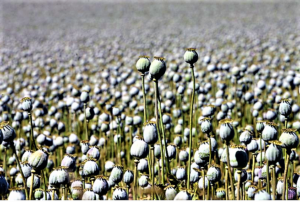
Australia provides half of the world’s legal supply of raw opiate, but demand and prices are tumbling...With the U.S. imposing stricter rules on the use of painkillers, demand for the raw material has tumbled. Poppy growers in Tasmania have responded by scaling back or giving up on the crop altogether. The state is the source of about half of global supply, thanks to a 1971 agreement with the Commonwealth of Australia that granted it a decades-long monopoly on poppy cultivation...Tasmanian farmers...are reeling from the impact of government and corporate efforts to stem the abuse of prescription painkillers and their illegal knockoffs. The volume of opioid-based medicines prescribed in the U.S. has dropped 28 percent since 2012 following moves by the Drug Enforcement Agency to tighten access...The prescription branded-opioid market is at its lowest point in almost a decade...Tasmania is facing more competition: Three states on the Australian mainland have eased restrictions on poppy growing in recent years...As they wait for a rebound in demand, Tasmania’s poppy farmers need to focus on becoming more efficient...Some growers have managed to boost their yields to an average of about 40 kilograms of active raw material per hectare, up from 25 kilograms five years ago...It is a really, really tough marketplace out there, and it doesn’t look like it’s improving...The only thing at the present time to make it viable is increasing productivity...
- Pharmacist’s ‘deadly’ choices sparked U.S. meningitis outbreak: prosecutors (reuters.com)

A federal prosecutor told jurors...that a Massachusetts pharmacist gambled with patients’ lives by making drugs in unsafe ways that led to a deadly 2012 fungal meningitis outbreak, but a defense lawyer said he was no murderer...Glenn Chin, a former supervisory pharmacist at New England Compounding Center, made drugs in filthy conditions, producing mold-tainted steroids in the process...Those steroids were shipped out to healthcare facilities nationally and then injected into patients, leading to an outbreak that sickened 778 people, including 76 people who died…“Make no mistake, Glenn Chin is not sitting in this court room because he was negligent or careless,”... “He is here because of his deliberate choices.”...Chin directed “massive corner cutting” in...NECC’s so-called clean rooms where the drugs were made, prioritizing production over cleaning and failing to properly test or sterilize drugs.