
- Pharmacy Week in Review: May 26, 2017 (pharmacytimes.com)

Nicole Crisano, PTNN. This weekly video program provides our readers with an in-depth review of the latest news, product approvals, FDA rulings and more.
- Amazon is hiring people to break into the multibillion-dollar pharmacy market (cnbc.com)

Each year, Amazon holds an annual meeting to discuss whether it should break into the pharmacy market, said a source familiar... This year, it is getting more serious and Amazon is looking to hire a general manager... Industry experts say this could be a multibillion market opportunity for the e-commerce company...
- Study: One-third of docs trust pharma content on HCP sites (mmm-online.com)

Only 34% of physicians find pharmaceutical content on HCP (healthcare professional)sites to be trustworthy, according to a new study by Decision Resources Group's Manhattan Research...We found that pharma is missing the mark when it comes to providing online content that physicians need in an easy-to-use way...DRG...surveyed 2,784 U.S. physicians in more than 26 specialties and found that only 27% of them viewed pharmaceutical websites as credible sources of professional information, compared to 77% of them who viewed third-party HCP-facing websites credible...62% of the physicians surveyed said that the information they get from drugmakers on third-party sites such as HCP sites and online journals “are always ads.”...What physicians need are resources for patient education, scientific information on drugs to help them make better treatment decisions, and continuing medical education, said Arnold. Seventy percent of physicians said it's crucial for drugmakers to provide educational resources rooted in science to gain their trust, yet half of them agree that no drugmakers are providing quality scientific online...
- G20 health ministers agree to tackle antibiotics resistance (reuters.com)

Health ministers of the G20 leading economies…agreed to work together to tackle issues such as a growing resistance to antibiotics and to start implementing national action plans by the end of 2018...Germany...said it was an "important breakthrough" that all nations had agreed to address the problem and work towards obligatory prescriptions for antibiotics...Saying that globalisation caused infectious diseases to spread more quickly than previously, the 20 nations also pledged to strengthen health systems and improve their ability to react to pandemics and other health risks..."By putting global health on the agenda of the G20 we affirm our role in strengthening the political support for existing initiatives and working to address the economic aspects of global health issues,"...
- No scandal here, say rare disease drugmakers, as pricing scrutiny lands on their doorstep (fiercepharma.com)

Rare disease drugmakers get that their typically high prices are under the lens these days—just like everyone else’s. But they don’t all necessarily agree that the scrutiny is fair...Shire CEO Flemming Ornskov...understands why the field has landed in the pricing spotlight, he doesn’t think it belongs there…list prices that would have flown just a couple years back have become unacceptable in the public eye. Rare-disease drugmakers’ go-to pricing justifications—that their meds are innovative and used by few patients, meaning they're not too big a hit on payers—are no longer getting it done...Gamida Cell...thinks Nicord—its candidate stem cell treatment for blood cancer patients—can "support a justification for a higher price,"…it’s the med’s cost-saving potential that will ultimately "dictate the pricing,"...
- European countries offer goodies in bid to win EMA after Brexit (fiercepharma.com)

Even before European officials present the groundwork for relocating the bloc’s drug regulator, a fight has emerged between countries vying for the economic lift and status that come with hosting the authority, using perks like child care as ammo...Some 20 countries in Europe hope to host the European Medicines Agency after the U.K.’s vote to leave the union last summer...And even though the EU hasn’t announced its official criteria for the move, the countries aren’t hesitating to make their case by showcasing local lifestyle perks and more...Countries in Europe are offering language lessons, local scenery and child care as they push to win the EMA, according to the news service. They’re seeking to attract an agency that could bring an economic lift worth an estimated €1 billion and employs about 900 experts.
- HHS Secretary Pushes to Cut FDA Appropriations, Replace With More Industry Fees (raps.org)
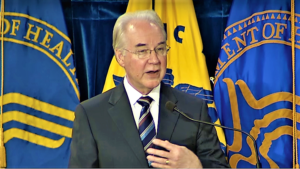
Secretary of Health and Human Services...Tom Price is continuing to push the Senate to further increase the industry fees paid to the US Food and Drug Administration...which would upend the agreed-to amounts negotiated by FDA and industry for the next five years, and allow for further cuts to the agency’s congressional appropriations...the Senate Health, Education, Labor & Pensions committee advanced a bill reauthorizing the user fee programs for prescription drug, medical device, generic drug and biosimilar industries without the additional fees that President Donald Trump requested in his budget blueprint for the next fiscal year...The fees included in the bill were what both sides negotiated for PDUFA VI, MDUFA IV, GDUFA II and BsUFA II...Price wrote in a letter...to Sen. Patty Murray, the ranking member of the HELP committee: "To ensure the FDA has the critical resources needed to keep pace with this field, the President's Budget Blueprint proposes to increase and restructure the medical product user fee programs at FDA to be 100 percent user fee supported programs, with no funding triggers that require budget authority financing."...
- Given second chance, doctor instead ‘poured poison’ into community by running pill mill (fiercehealthcare.com)

After running afoul of the state licensing board, an Alabama internist had a chance to turn his life around. Instead, he took to running a pill mill and sold drugs to addicted patients, including at least one who died of a methadone overdose just days after receiving a prescription from the doctor...Robert M. Ritchea, M.D, a 54-year-old doctor who practiced in Phenix City, was sentenced earlier this month to serve 10 years in prison for operating a pill mill through his medical practice and for money laundering…former patients testified that they made cash payments to Ritchea of at least $150 each month in exchange for office visits at his family medical practice and prescriptions to maintain their drug addiction...he wrote prescriptions for controlled substances...knowing that his patients did not actually need the drugs prescribed. He then laundered the proceeds of his drug dealing to essentially run his own pharmacy, buying hydromorphone and hydrocodone directly from a drug manufacturer and distributing the pills from his medical practice…
- The 340B Program Hits $16.2 Billion in 2016; Now 5% of U.S. Drug Market (drugchannels.net)

The 340B Drug Pricing Program’s explosive growth continues...discounted sales hit $16.2 billion in 2016. That’s a 34% increase over the 2015 figure. Consequently, the 340B program accounted for 5.0% of the total U.S. drug market in 2016...Covered entities are generating billions in untraceable profits from this fast-growing program. Hospitals, which make up the vast majority of 340B purchases, should be required to account clearly for the billions the program provides them...Some hospitals have published high-level descriptions of how they spend 340B funds, but none of the articles fully accounts for the billions of dollars in 340B profits. Much more transparency is required, because the dollars are very large and growing very quickly…Given the program's rapid growth and its channel distortions, Congress urgently needs to refocus the program on genuine safety-net providers and financially needy patients.
- Drugs approved with limited data aren’t always well-tested later (reuters.com)
New medicines that win U.S. marketing approval without conclusive evidence of their effectiveness aren't always proven to work after they go on sale, a recent research review suggests...Researchers focused on medicines approved for sale based on single pivotal trials or based on what's known as "surrogate markers," such as lab tests and signs of risk for disease such as cholesterol levels instead of true clinical outcomes like heart attacks or deaths. Many times no follow-up studies were published after these medicines went on sale, and when studies were published they often continued to rely on surrogate markers to suggest potential effectiveness...speeding up the approval process increases our collective uncertainty about drugs' benefits and safety...This exposes patients to risks - the risk that they are spending their resources on therapies that do not work as well as expected as well as the possibility that they are taking drugs that have underlying safety risks that have not yet been figured out… researchers examined published studies of 117 medicines approved for treating 123 medical conditions by the U.S. Food and Drug Administration...based on either a single pivotal trial or on trials that relied on surrogate endpoints...no follow-up studies were published for 43 of the 123 approved indications, or 35 percent...