
- Pharmacy Week in Review: April 28, 2017 (pharmacytimes.com)
Nicole Crisano, PTNN. This weekly video program provides our readers with an in-depth review of the latest news, product approvals, FDA rulings and more.
- In the debate over rising drug prices, both drugmakers and PBMs claim innocence (cnbc.com)
The battle over rising drug prices has become a full-blown he-said-she-said...Drug companies have pointed the finger at middlemen in the health-care system, saying they not only benefit from rising drug prices but contribute to their increases...Those middlemen — namely, pharmacy benefits managers (or PBMs) — have said the only parties responsible for drugs' list prices are the manufacturers...So who's right?...In a study released today, the PBM lobbying group, the Pharmaceutical Care Management Association, says an analysis it commissioned revealed no correlation between drug prices and rebates paid back to PBMs...The drug industry's lobby, the Pharmaceutical Research and Manufacturers of America...disagrees...
- Big Pharma faces $26.5B in losses this year as next big patent cliff looms, analyst says (fiercepharma.com)

With 18 branded drugs on the line, patent losses this year could jeopardize $26.5 billion in annual sales from Big Pharma, projected to be the biggest fall-off until at least 2025…Which companies are at risk? Roche, GlaxoSmithKline, Eli Lilly, Pfizer and AstraZeneca to name a few...This year's potential patent expiry damage is much more daunting than 2015 and 2016, when only four and nine meds from companies...lost exclusivity, respectively...Anticipated expirations for 2017 include Roche’s Rituxan, GSK’s Advair, Eli Lilly’s Humalog and Cialis, AstraZeneca’s Byetta, Pfizer’s Viagra and Merck’s Vytorin...the 2017 patent losses and associated sales declines will "continue to pressure growth" in the industry...about 45% of the sales at risk looking forward are for biologics, which will face biosimilar competition rather than generics..."erosion rates will be slower," but still "unpredictable.
- NASH: The next untapped pharma market gives investors many options (reuters.com)
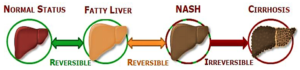
Large drugmakers with piles of cash are on the hunt for promising medicines being developed by small companies to treat NASH (non-alcoholic steatohepatitis), a progressive fatty liver disease poised to become the leading cause of liver transplants by 2020...The eventual market for the complex disease...is forecast to be $20 billion to $35 billion as populations with fatty diets increasingly fall victim to a condition with no approved treatments...Estimates for the prevalence of NASH in nations with fatty diets range from 5 to 20 percent of the population with up to 15 million potentially affected in the United States alone...Driven by the obesity and diabetes epidemics, the disease guarantees an enormous pool of patients for decades, making it a prime target for deals for promising therapies for NASH and its consequences - advanced fibrosis and liver-destroying cirrhosis…Drugmakers are taking a wide range of approaches to treat the complex disease, given multiple health issues among NASH patients that contribute to the liver damage, such as heart disease and diabetes...There are drugs targeting inflammation to prevent or reduce fibrotic scarring. Some address lipid regulation to reduce liver fat, while others attempt to directly halt or reverse fibrosis. And some companies are testing diabetes treatments to assess their ability to also improve NASH...The big sea change...is a fairly rapid acceptance of the fact that we're going to be seeking combination therapies since it's a disease that involves multiple pathways...whatever the mechanism is, it needs to yield decreased fibrosis...noting that progressing fibrosis is what ultimately causes serious health consequences...
- Hiding Data And Other Criticisms Of Big Pharma (forbes.com)
If you have been a part of the biopharmaceutical industry, you’ve heard these criticisms hundreds of times:
- The industry hides negative data.
- Clinical studies paid for by pharma companies usually yield positive results.
- Doctors paid by pharma companies are beholden to them and will skew data in the company’s favor.
- Companies prefer "me-too" drug programs because they lack innovation.
Critics commonly use these arguments as they promote damning views of an industry that is supposed to be doing important and valued drug R&D... two recent publications in the New England Journal of Medicine show the fallacy of these claims...Despite the exciting early clinical results, Pfizer announced on November 1, 2016 that it was ending its bococizumab program... This was a devastating result...and undoubtedly cost close to a billion dollars. Unfortunately, it is not uncommon for a large clinical trial to fail...two extensive publications appeared in the NEJM comprehensively explaining the bococizumab study designs and results. So much for hiding negative data...Publishing negative studies like this was not all that common in the past, as many publications only focused on breakthrough research. As can be seen in this example, a lot can be learned from negative studies.
- Meet the lawyer trying to pry drug pricing secrets out of Big Pharma (statnews.com)

He has a private jet, a pedigree of winning billion-dollar settlements, and the (sometimes grudging) respect of his adversaries. Now, he wants to become pharma’s latest headache...Class-action attorney Steve Berman is coming after a drug industry he says is "gouging" the American consumer. And his suits have the potential to crack the lid on the black box of drug pricing, shedding light on a secretive process that has sparked an escalating blame game between drug makers and the many middlemen in the US health care system...Berman sees the drug pricing system as a Rube Goldberg machine for extracting money from patients: Pharma sets a high price for a given medication, and then promises a big, undisclosed rebate to the pharmacy benefit managers who control which drugs get covered by insurers. As prices go up, so too do the secret rebates. Berman’s conclusion: The big guys get richer, and the patients pay the price...So he’s suing...
- U.S. Army can’t add a pricing safeguard to Sanofi’s Zika vaccine license, official says (fiercepharma.com)

Despite pushback from intellectual property activists...and high-profile politicians, a U.S. Army official dismissed concerns about a pending license transfer for a Zika vaccine candidate to pharma giant Sanofi...Responding to criticism of the proposed deal, the U.S. Army’s director of medical technology transfer at the Medical Research and Materiel Command, Barry Datlof, wrote...that the deal will comply with U.S. laws and will "be in the best interest of the U.S. government and the public…Originally developed by Army scientists, the immunization went into phase 1 testing with National Institutes of Health support. Sanofi joined the effort to prepare for phase 2 trials and to create a clinical development and regulatory strategy...KEI (Knowledge Ecology International )...started protesting the proposed license soon after the U.S. government disclosed the plan...Highlighting the extensive government funding for the program—$43 million so far, with the potential for more—KEI asked for pricing safeguards and argued that the license transfer would "not be legal" because it isn’t necessary to motivate Sanofi to develop the vaccine...Datlof said it’s not feasible for the Army to "define, implement and enforce 'affordable prices' or to set price controls for a potential vaccine that will require great investment and face high risk of failure."...the Army still plans to issue the license...
- University Vending Machine Offers Morning-After Pill (drugs.com)
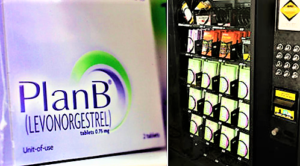
The morning-after pill is being sold in a vending machine at the University of California, Davis and many people support this type of availability...Along with condoms and pregnancy tests, the Wellness-To-Go Machine in a study lounge also dispenses the Plan B pill for $30 a box…It took economics major Parteek Singh nearly two years to get the vending machine into the lounge... Singh is getting calls from student across the country who want the same type of vending machine. "I want to see this on every college campus,"...
- FDA sends warnings letters to companies making cancer cure claims (drugstorenews.com)
The Food and Drug Administration...posted warning letters addressed to 14 U.S.-based companies allegedly illegally selling more than 65 products that fraudulently claim to prevent, diagnose, treat or cure cancer. The products are marketed and sold without FDA approval, most commonly on websites and social media platforms...Consumers should not use these or similar unproven products because they may be unsafe and could prevent a person from seeking an appropriate and potentially life-saving cancer diagnosis or treatment…The illegally sold products cited in the warning letters...include a variety of product types, such as pills, topical creams, ointments, oils, drops, syrups, teas and diagnostics (such as thermography devices). They include products marketed for use by humans or pets that make illegal, unproven claims regarding preventing, reversing or curing cancer; killing/inhibiting cancer cells or tumors; or other similar anti-cancer claims.
- 10 Reasons Merck Could Be the World’s Most Perfect Stock (fool.com)
The average investor has more than 5,000 publicly traded stocks on reputable U.S. exchanges to choose from. With that much hay in the barn, finding that needle can be quite difficult...But if you're looking for the world's most perfect stock, perhaps your search might end with pharmaceutical giant Merck. Since Jan. 1970, including splits, shares of Merck have risen by a brisk 4,320%! Though it might appear that its best days are in the rearview mirror after such large gains, there are plenty of reasons to believe it still has ample upside opportunity...Here are 10 reasons Merck just might be the world's most perfect stock.
- A leading cancer immunotherapy
- A long-tail hepatitis C opportunity
- Biosimilars
- Bolt-on acquisitions
- A premier pharmaceutical pipeline
- Tight cost controls
- Strong pricing power
- Steady growth in animal health
- Shareholder yield
- Valuation