
- Many Well-Known Hospitals Fail To Score High In Medicare Rankings (npr.org)
The federal government released its first overall hospital quality rating...slapping average or below average scores on many of the nation's best-known hospitals while awarding top scores to many unheralded ones....The Centers for Medicare & Medicaid Services rated 3,617 hospitals on a one- to five-star scale, angering the hospital industry, which has been pressing the Obama administration and Congress to block the ratings...Hospitals argue that the government's ratings will make teaching hospitals and other institutions that treat many tough cases look bad. They argue that their patients are often poorer and sicker when admitted, and so are more likely to suffer further complications or die, than at institutions where the patients aren't as sick...Rick Pollack, president of the American Hospital Association, called the new ratings confusing for patients and families..."We are especially troubled that the current ratings scheme unfairly penalizes teaching hospitals and those serving higher numbers of the poor."..."Hospitals cannot be rated like movies," Dr. Darrell Kirch, president of the Association of American Medical Colleges..."We are extremely concerned about the potential consequences for patients that could result from portraying an overly simplistic picture of hospital quality with a star-rating system that combines many complex factors and ignores the socio-demographic factors that have a real impact on health."
- The Radical Experiment That’s Changing the Way Big Pharma Innovates (fortune.com)

J&J has thrown open its R&D doors — to all comers. Will this uber-open-access strategy work? ...Just five years ago, one of the last places one would have looked for innovation at Johnson & Johnson was in its Merryfield Road lab in La Jolla, Calif...The R&D facility for the healthcare giant, No. 103 on Fortune’s Global 500 list, had become something of a scientific wasteland...These days, the gleaming, state-of-the-art space is teeming with entrepreneurial spirit and cutting-edge science. What’s odd, though, is that these researchers toiling away within J&J’s walls—and making use of J&J’s abundant resources—do not work for the company. Nor do the findings or the discoveries they produce there belong to J&J. Some of these drug scientists even receive funding from J&J’s competitors. As for the venerable, 130-year-old company that’s paying for all this largesse, it claims it wants nothing more out of the arrangement than for its tenants—all life science start-ups—to succeed.
- This startup is using tech to make animal testing in clinical trials more ethical (medcitynews.com)

Dog as man’s best friend...Now a small startup in Philadelphia is making the saying applicable to the pharmaceutical and drug development world...Drugs that are developed by pharmaceutical companies are...tested first in animals to evaluate their safety and how they interact with living tissue. But the typical testing method is to take a healthy animal, give them a certain disease, test the drug, therapy, or medical device, and then kill them...The One Health Company is trying something new by finding dogs (and cats) with naturally occurring diseases that are also present in humans, like bone cancer, and testing new drugs or therapies on them. The goal is two-fold: Provide pro-bono care for pet owners to heal their own pets, while facilitating bringing new drugs to market by collecting data for pharmaceutical companies...The...approach...is notably different. Pets remain with their families, diseases are never induced, and putting a pet down is never considered an option in any of their clinical trials. Families caring for their sick pets as they undergo these trials collect data, via smartphone, on their pets’ behavior and habits using proprietary clinical trial management software...
- Medical groups push to water down requirements for disclosing industry ties (statnews.com)S. 2978: Protect Continuing Physician Education and Patient Care Act (govtrack.us)OpenPayments (cms.gov)
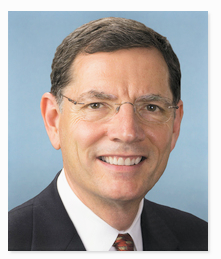
Senator John-Barrasso
Nearly 100 national and state medical societies from around the United States are backing a Senate bill (Protect Continuing Physician Education and Patient Care Act, (SB 2978) that would exempt drug and device makers from reporting payments made to doctors for receiving continuing medical education...sessions, medical journals, or textbooks. Among them are the American Medical Association and the American College of Cardiology...The move is the latest push in a long-running effort to roll back requirements for reporting such payments to a federal database, which tracks financial relationships between companies and physicians. Known as OpenPayments, the database was launched...in response to concerns that financial ties between drug firms and device makers and doctors may unduly influence medical practice and research. It was included in the Sunshine Act provision in the Affordable Care Act. A recent analysis found that payments can affect prescription rates...
- The best drug to fight Zika may already be approved and out there, study suggests (statnews.com)

Several teams of scientists are racing to develop a vaccine for the Zika virus. But what if a drug that already exists could stop an infection in its tracks?...According to new research, it’s not a totally crazy idea...A group of researchers has identified two dozen Food and Drug Administration-approved drugs that have shown some ability to block Zika from infecting human cells in the lab, according to a paper published...in the journal Cell Host & Microbe. Some of these drugs — which treat infections, cancers, and even depression— also showed potential to prevent infection in certain cells tied to fetal defects in pregnant women...the next steps in testing the drugs against Zika, and added that scientists should consider using some of the drugs together because they work in different ways...The candidate drugs don’t all share certain characteristics...While some have shown past hints that they can fight flaviviruses — the virus family that includes Zika — others had never before shown any antiviral ability, according to the study...
- State Department accused of interfering with efforts for affordable medicines (statnews.com)

The...Department of State is being accused of inappropriately interfering with efforts by the United Nations and two countries to ensure access to affordable medicines for poor people...In a...letter...dozens of patient advocacy groups (Public Citizen, Oxfam, National Physicians Alliance, AFL-CIO) charged that State Department officials questioned the premise of a UN panel devoted to exploring wider access, pressured the Colombian government not to sidestep the patent on a Novartis cancer drug, and pressed India to adopt policies that could result in higher drug prices and eliminate the production of lower-cost generics....they asked...Secretary of State John Kerry to detail "whether the State Department sees these incidents as coherent with US government policy and (to clarify) State Department commitments and position on the right of governments to use (World Trade Organization treaties) to protect public health and access to medicines."
- FDA enhances warnings on group of strong antibiotics (reuters.com)FDA updates warnings for fluoroquinolone antibiotics (fda.gov)

The...Food and Drug Administration has enhanced warnings of side effects of a group of strong antibiotics used to treat a variety of respiratory and urinary tract infections and limited their use to patients with no alternatives...fluoroquinolones include Johnson & Johnson's Levaquin, Bayer's Cipro extended-release tablets and Merck Inc's Avelox....FDA added a box warning to the antibiotics in July 2008 to inform users about the increased risk of tendinitis in which the tissue connecting muscle to bone becomes inflamed.
- New tools for assessing drug value haven’t caught on with payers — yet (statnews.com)

As prices for prescription drugs keep rising, several organizations have developed different ways to assess the value of new medicines based on such attributes as cost, quality of life, and effectiveness. But a new survey finds that even as health plans continue to criticize drug prices, they have not yet embraced these new tools...None of the 11 plans queried actively rely on these new methods and a majority do not expect to do so next year either, according to the survey conducted by Avalere Health...The tools are being developed by four groups — the American Society of Clinical Oncology, the Institute for Clinical and Economic Review, the National Comprehensive Care Network and Memorial Sloan Kettering Cancer Center...The plans are...anxious to get better comparative information on the value of different therapies, but are also concerned these tools are somewhat nascent and not robust enough...
- More than half of adults misuse medications, study finds (washingtonpost.com)

More than half of adults and 44 percent of children who were drug-tested by a national clinical laboratory last year misused their prescription medications, according to a study...by Quest Diagnostics...Misuse of medications can mean that patients were either taking too much, too little or none of their medications. It also can mean test results showed they were using other drugs that had not been prescribed, including illicit drugs -- as 45 percent of adults were doing...The rate of misuse identified by the study might skew higher than what would be found in the general U.S. population. Some patients were tested because their health providers determined there was a "high probability" of them mismanaging medications...The study also identified the drugs most often misused by patients depending on their age: amphetamines for youth 17 and under, but benzodiazepines and anti-anxiety medications for adults 25 and older, followed by opioid painkillers.
- Medicare safeguard overwhelmed by pricey drugs (toledoblade.com)
A safeguard for Medicare beneficiaries has become a way for drugmakers to get paid billions of dollars for pricey medications at taxpayer expense, government numbers show...The cost of Medicare’s “catastrophic” prescription coverage jumped by 85 percent in three years, from $27.7 billion in 2013 to $51.3 billion in 2015...Out of some 2,750 drugs covered by Medicare’s Part D benefit, two pills for hepatitis C infection — Harvoni (ledipasvir/sofosbuvir) and Sovaldi (sofosbuvir)— accounted for nearly $7.5 billion in catastrophic drug costs in 2015...The pharmaceutical industry questions the numbers, saying they overstate costs because they don’t factor in manufacturer rebates. However, rebates are not publicly disclosed...Medicare’s catastrophic coverage was originally designed to protect seniors with multiple chronic conditions from the cumulatively high costs of taking many different pills. Beneficiaries pay 5 percent after they have spent $4,850 of their own money. With some drugs now costing more than $1,000 per pill, that threshold can be crossed quickly...