
- Takeda says Ka-Pow! to IBD in new Marvel comics campaign (fiercepharma.com)Selling Side Effects: Pharma's Marketing Machine (drugwatch.com)

The latest Marvel-created superhero, Samarium, has the power to suit up instantly in magnetic and impenetrable full-body armor. But like most superheroes, he also has a secret. And in this Takeda Pharmaceuticals-sponsored comic, it’s inflammatory bowel disease...Takeda worked with the Crohn’s and Colitis Foundation of America and Marvel Custom Solutions to create its first-ever pharma company-sponsored superhero to shine a light on the many sufferers of IBD who hide their disease. The disease awareness campaign includes the graphic illustration series with IBD-suffering hero Samarium, as well as digital paid ads and social media shares...
- Pharma relying more on non-GAAP accounting and the SEC is noticing (fiercepharma.com)

Valeant Pharmaceuticals got chastised by the SEC this year for its use of non-GAAP (Generally Accepted Accounting Principles) accounting to make its performance look better than it might have actually been, one in a long list of issues that are dogging the company. But Valeant is far from the only pharma company playing a little loose with the rules and the trend is getting worse, even as investors and the SEC are watching more closely...GAAP accounting was developed so investors can get an apples-to-apples comparison of how companies are doing quarter to quarter and year after year. But some companies are not all that crazy that the rules make it harder to make themselves look good to investors. Companies have been using non-GAAP measurements, sometimes on individual line items, and the SEC has been taking note...the SEC updated guidance on the use of non-GAAP reporting, detailing how it should and--more importantly--shouldn’t be used...
- Drugmakers’ Pricing Power Remains Strong (wsj.com)

Pharmaceutical companies’ power to raise prices is firmly intact despite pushback from health insurers, scrutiny by U.S. lawmakers and anxiety about rising prescription drug spending...More than two-thirds of the 20 largestpharmaceutical companies said price increases boosted sales of some or most of their biggest products in the first quarter...Shares of many drugmakers have slumped this year, partly because of investors’ concerns that Congress could implement new price controls, or that public scrutiny would cause companies to voluntarily ease price increases...The upshot is that in a period of low inflation and sluggish economic growth, drugmakers’ power to raise prices still exceeds most other industries. And though it’s long been common for companies to gradually raise prices on drugs after launching them, the magnitude and frequency of the increases have grown in recent years...
- Pharmacy Week in Review: July 15, 2016 (pharmacytimes.com)
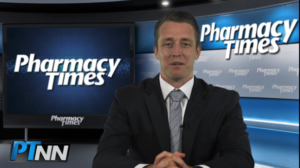
Mike Glaicar, Business Development: Pharmacy Times...(PTNN) This weekly video program provides our readers with an in-depth review of the latest news, product approvals, FDA rulings and more.
- Medicare fraud investigators wary of soaring compounded drug prices (medcitynews.com)

Government spending on compounded drugs that are handmade by retail pharmacists has skyrocketed, drawing the attention of federal investigators who are raising fraud and overbilling concerns...Spending on these medications in Medicare’s Part D program, for example, rose 56 percent last year, with some of the costliest products, including topical pain creams, priced at hundreds or thousands of dollars per tube. The federal workers’ compensation program has also seen a recent spike in spending...The spending jump, along with a sharp increase in the number of patients getting the compounded drugs "may indicate an emerging fraud trend,"...
- Missouri Law Protects Patients Against Ineffective Medications (pharmacytimes.com)

Patients in Missouri will no longer have to repeat ineffective medications... Step therapy is a cost-savings measure used by some insurers that requires patients to take different medications from what their health care provider prescribed before agreeing to cover the cost of the original medication... Missouri Governor Jay Nixon recently signed into law the "Step Therapy for Prescription Drugs" bill (HB 2029), which prohibits insurers from requiring patients to take medications they’ve already tried when they switch their coverage or change jobs, or if the medication is reclassified...Importantly, the law doesn’t ban the practice of step therapy altogether. It also doesn’t preclude insurers from having patients try a generic version of a medication. Rather, it prohibits insurers from going through step therapy more than once for a given medication...
- Gilead avoided nearly $10 billion in taxes last year thanks to tax dodges (statnews.com)
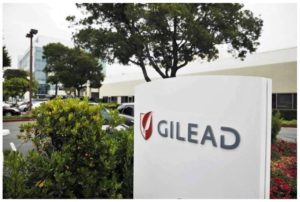
Thanks to a pair of pricey hepatitis C treatments, Gilead Sciences has become one of the world’s largest drug makers. Since 2013, revenues have tripled to more than $32 billion and profits grew sixfold, exceeding $18 billion. But beyond successful marketing of lifesaving medicines, the company has excelled in another way — using loopholes to avoid paying billions of dollars in taxes...By transferring certain key assets to Ireland, Gilead was able to take advantage of tax laws that allowed some US sales to be shifted overseas and yield a significantly lower tax rate. Those overseas profits, meanwhile, mushroomed to $28.5 billion, and Gilead was able to escape paying $9.7 billion in US taxes last year, according to a new report...
- Pfizer strikes second deal this year for drug production in Russia (fiercepharma.com)
Pfizer was a little behind some of its peers in establishing local manufacturing in Russia but it's on a roll now, having just announced its third deal in several years. It is hammering out an agreement with Russia’s NovaMedica for a new manufacturing plant...Construction will begin this year on a plant in Russia’s Kaluga region with the expectation that the plant will be producing drugs by 2020...Pfizer...not yet disclosing how big of an investment the New York company will make in the manufacturing facility...The Pfizer deal calls for NovaMedica to license technology for production of more than 30 products including treatments for cancer, inflammatory disease and fungal infections, it said. Most of the drugs are on Russia’s essential medicines list...
- 2016 national health spend to surpass $10K per person, total $2.7 trillion by 2025 (drugstorenews.com)

Between 2015 and 2025, according a new article in Health Affairs, growth in U.S. health spending is projected to increase about 5.8% on average — a number that surpasses growth in the gross domestic product by 1.3 percentage points. And in 2016...the...national health spending per capita will surpass $10,000 for the first time...Despite the cost per capita, aggregate national spending growth, Medicaid spending growth is expected to slow this year, to 5.3% from an average of 10.8% in 2014-2015, with an expected from in prescription spending growth to 4.9% from the 17.7% growth seen in 2015. Private payers will also see steady low spending growth of 4.9%, down from 5.1% in 2015. Medicare, on the other hand, is expected to see its spending growth rise this year to 5.2%, an increase from the 4.6% growth it saw last year...The report expects prescription drugs to have a smaller impact on health spending in the next 10 years than they did in 2014 and 2015, which it attributes to an expected drop in the number of approved new drugs, and the anticipated increase in availability of biosimilars.
- This Week in Managed Care: July 16, 2016 (ajmc.com)
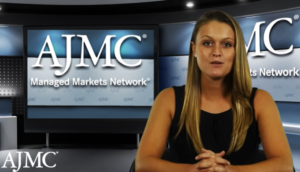
This Week in Managed Care...Cate Douglass with The American Journal of Managed Care.