
- Do Opioid Prescribing Guidelines Use Pseudoscience? (pharmacypodcast.com)
Today’s Pharmacy Podcast Show guest is Dr. Jeffrey Fudin. We’re talking about the March 30th 2016 article from Pain News Network: How Opioid Prescribing Guidelines Use Pseudoscience, By Michael Schatman and Jeffrey Fudin..., we address the issue of how governmental and managed care opioid guideline prescribing committees use the flawed concept of morphine-equivalent daily dose to arbitrarily place limits on the amount of opioids that a clinician "should" prescribe to any patient with chronic pain (podcast 20 min).
- Spending On Drugs Will Drop As Top Sellers Go Generic (forbes.com)

...IMS Health disclosed that total spending on prescription drugs in 2015 rose 12.2% to almost $425 billion. Since drug pricing continues to be a major topic of discussion...What is striking about the newly released data are the drugs Americans spend the most on... cholesterol-lowering drug Crestor, with sales of $6.3 billion...this will soon become moot as Crestor will lose patent protection and become a generic drug, an event that will likely drive down its cost by as much as 90%...rheumatoid arthritis drug, Amgen’s Enbrel, with U.S. sales of $6.6 billion last year. The FDA is now reviewing a biosimilar version of Enbrel which was filed by...Sandoz...Given that Zarxio was launched at a 15% discount to Neupogen, a similar discount could be anticipated for a biosimilar Enbrel...rheumatoid arthritis, Humira (adalimumab) from AbbVie . Many analysts believe that Humira’s $10.6 billion in 2015 revenue will be severely impacted by biosimilars being developed by Merck, Amgen, Pfizer and others...one might expect even larger discounts than 15%...the top drug with respect to spending in the, the hepatitis C drug Harvoni from Gilead, weighing in at $14.3 billion. It is unlikely that the sales of this drug will decrease any time soon. However, the use of hepatitis C drugs to cure this infection will reduce the incidence of liver cancer, thereby lowering overall costs to the healthcare system over the coming years...there will be new–and expensive–breakthrough drugs emerging from the pipelines of the biopharmaceutical industry. But let’s not lose sight of the fact that these same drugs that save lives or alleviate the suffering of millions, eventually will become a lot cheaper.
- Adapt Pharma launches Narcan Now app (drugstorenews.com)

Adapt Pharma, maker of Narcan (naloxone) Nasal Spray announced...the launch of its smartphone app Narcan Now. The app provides patients information about how to recognize the signs and symptoms of an opioid overdose, an instructional video and a three-step administration guide for Narcan Nasal Spray, as well as emergency services access...The app is available through the iTunes App Store for iOS devices and the Google Play store for Android devices.
- Express Scripts wrangles with small mail-order pharmacy (statnews.com)

A small mail-order pharmacy, which ships presorted packets of medicines to its customers, is waging a David-versus-Goliath battle with Express Scripts, the nation’s largest pharmacy benefits manager...PillPack has been part of the Express Scripts network of pharmacies...Recently...Express Scripts decided to cancel its contract with PillPack...PillPack chief executive, claims that Express Scripts is making this move because the company doesn’t want another mail-order pharmacy in its network to compete with its own mail order business...Express Scripts spokesman said the dispute with PillPack is purely about contract requirements...PillPack is "innovative and could be in our network, but hasn’t followed the rules and regulations." He argued that PillPack ships medicines to some states where it doesn’t have a pharmacy license; declared itself to be a retail pharmacy when it primarily does mail order business; and isn’t accredited by a national health care organization...PillPack is licensed across the continental United States, although it did encounter administrative problems in one state that have since been corrected...Express Scripts spokesman maintained that "we don’t see them as a threat. "We see them more as a collaborator especially in terms of patient adherence. But they have to follow the rules,"...
- Managers at Boots, the UK’s biggest pharmacy chain, have been pressuring their pharmacists to abuse Medicine Use Reviews, providing them to patients who do not need them or cannot use them, the Guardian reports. (ajp.com.au)

MURs are carried out by pharmacists, who offer patients health, diet and medicines management advice....The NHS pays £28 ($39) for each MUR (medication utilization review) carried out; MURs are capped at 400 per pharmacy to prevent abuse...Boots stores have been found to be using that number as a target to aim for, rather than a maximum...pharmacists...reported being pressured into conducting MURs whether patients needed them or not...With...big companies answering to shareholders before patients, there really is the risk of profits being the highest priority before patient care...It’s always a risk when we have a shareholder interest being first and foremost...restrictions in Australia to limit pharmacy ownership to pharmacists, they’re accountable to the public as they’re registered health professionals under a national scheme...Australian guidelines could offer protection to any pharmacists subject to similar pressure to provide services...We (pharmacists) have a responsibility, with taxpayer funds, that they’re used appropriately in targeting the right patients to get the best outcomes...Directing pharmacists to undertake, or be expected to deliver a certain number of reviews, irrespective of the suitability or eligibility of that patient, could possibly be considered incitement or directing unprofessional conduct under the national law...Boots makes it clear to staff that services should not be carried out ‘inappropriately’...All of its staff are ‘empowered’ to use their professional judgement to assess the appropriateness of offering services...
- California lawmaker wants to allow supervised heroin use (kolotv.com)

A lawmaker wants to allow California addicts to use heroin, crack and other drugs at supervised facilities to cut down on overdoses, joining several U.S. cities considering establishing the nation's first legal drug-injection sites...The proposal...comes as San Francisco, Seattle, New York City and Ithaca, New York, weigh ordinances to set up the facilities, citing the success of a site operating in Canada since 2003...law enforcement has opposed the move in California, saying it will worsen addiction. And lawmakers seemed reluctant to support it, postponing a committee vote...The bill from Democratic Assemblywoman Susan Talamantes Eggman would make it legal for local and state health departments to allow the use of controlled substances in clinics that would offer medical intervention...Supporters say the facilities would reduce deaths and transmissions of HIV and hepatitis C...
- Pharmacy Week in Review: April 15, 2016 (pharmacytimes.com)
Mike Glaicar, Business Development: Pharmacy Times...(PTNN) This weekly video program provides our readers with an in-depth review of the latest news, product approvals, FDA rulings and more.
- The FDA Wants Pharma to Ditch its Archaic Drug Making Process (fortune.com)

The old process is slow and prone to errors...The process of biopharmaceutical drug manufacturing is stuck in the past. And the Food and Drug Administration is now openly calling for drugmakers to spring it forward into the 21st century..."batch" manufacturing technique used by the industry to an archaic relic...batch manufacturing in pharma involves regular breaks between spurts of production. Continuous manufacturing is usually a persistent, unbroken process wherein production plants keep humming... continuous manufacturing is more reliable...the (FDA) agency’s pioneering decision last week to approve Johnson & Johnson biotech arm Janssen’s request to switch over from batch to continuous manufacturing for the production of the HIV drug Prezista. And now, regulators are declaring outright that other biopharma players should "consider similar efforts."
- Pfizer delay, alleged price gouging earns wrath of British watchdog (fiercepharma.com)
In case anyone thought it was just the U.S. where pharma has been accused of hiking prices, the U.K. has been quick to remind everyone it happens across the pond as well, after hitting Pfizer with a £10,000 ($14,100) penalty this week...What for? Technically, because it was late to submit documents demanded by the country’s Competition and Markets Authority --but in reality, this all revolves around one thing: pricing, and this is just the warm up act ahead of the watchdog’s bigger decision this fall--which could see Pfizer with a fine in the billions of pounds...in September of that year (2012) the drug (phenytoin sodium) lost its patent, and Pfizer sold it to Stevenage...while several other drugmakers also sold their generic versions. Cue a massive spending hike: the NHS paid £50 million for the drug in 2013, and £40 million in 2014. This left the pricing watchdog scratching its head: aren’t generics supposed to be cheaper?...The CMA is still sifting through all the documents and will come to a decision in August on whether Pfizer did abuse its market position. The maximum fine for this is a far more substantial 10% of its global turnover--which would work out as $4.89 billion based on last year’s revenues.
- Prices for brand-name drugs inch up about 3 percent in 2015 (statnews.com)
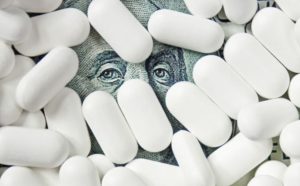
Even as overall spending on prescription medicines in the United States rose 8.5 percent last year, prices for brand-name drugs rose just 2.8 percent, which represents a steady decline from recent years...By way of comparison, brand-name drug prices rose 9.1 percent in 2012 and continued to rise over the past two years, although at a slower pace — 5.1 percent in 2014 and 4.9 percent in 2013...We’re seeing a significant slowdown in price growth on a net basis...the trend suggests that payers — pharmacy benefits managers and insurers — are having some success pushing back against rising prices, an issue that has caused national outrage and placed the pharmaceutical industry on the defensive...spending on specialty medicines — a fast-growing category that includes treatments for hepatitis C, oncology, and autoimmune diseases — doubled over the past five years. These medicines accounted for 70 percent of the overall increase in spending between 2010 and 2015...Demand was higher for therapies such as those for treating depression and diabetes, which registered about 10 percent increases, while there was a nearly 17 percent drop in the number of narcotic prescriptions dispensed.