
- WHO suspends TB drugs from big India supplier on quality fears (reuters.com)

World Health Organization has suspended the approval of tuberculosis drugs made by India's Svizera Labs, a major supplier to developing countries, following an investigation into standards...The United Nations agency, which acts as a drug watchdog in markets lacking robust local regulation, said on Friday it had suspended all TB products made at Svizera's Mumbai site because manufacturing standards and quality management were unreliable...It also said independent experts should retest batches of medicine already on the market and it might be necessary to recall supplies, depending on the outcome of those tests...The move is a fresh blow for India's pharmaceuticals industry, which supplies cheap generic medicines to countries worldwide but has been tarnished by a series of quality problems in recent years, denting confidence in its products...The WHO plays a critical role in monitoring drug quality in poorer countries through its Prequalification of Medicines Program, which ensures that treatments supplied by U.N. agencies such as UNICEF are of acceptable quality.
- Specialty Pharmacy Times – Health Policy Check-Up (pharmacypodcast.com)

Dan Steiber, Editor in Chief for Specialty Pharmacy Times, speaks to True North P.S. President, Ron Lanton. What is limited distribution and its effect on specialty? What are the risks in arrangements between specialty pharmacies and manufacturers? (podcast 44:12 min)
- Myths and Hysteria Surrounding the Use of Opioids for Non-cancer Pain (pharmacytimes.com)
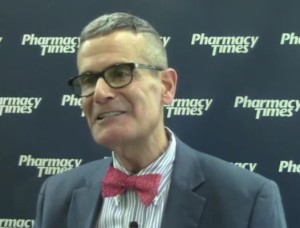
Jeffrey Fudin, PharmD, DAAPM, FCCP, FASHP, discusses and debunks the myths and hysteria surrounding the use of opioid therapy in treating non-cancer pain.
- Pharmacy Week in Review: March 18, 2016 (pharmacytimes.com)
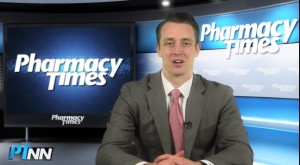
Mike Glaicar, Business Development: Pharmacy Times...(PTNN) This weekly video program provides our readers with an in-depth review of the latest news, product approvals, FDA rulings and more.
- Non-pharmacologic Treatment Options for Opioid-Induced Constipation (pharmacytimes.com)
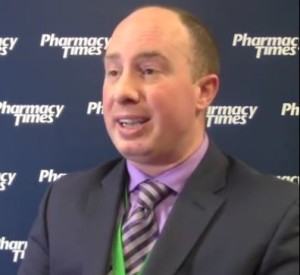
Daniel T. Abazia, PharmD, BCPS, discusses some of the non-pharmacologic treatment options that pharmacists can recommend to patients experiencing opioid-induced constipation.
- Welsh gov overrules NICE rejection of Celgene’s pancreatic cancer drug (pharmatimes.com)

Patients with pancreatic cancer living in Wales will no doubt welcome news that Celgene’s Abraxane will continue to be available on the National Health Service in the country, despite a decision by the National Institute for Health and Care Excellence to reject its use...NICE confirmed back in November that Celgene’s Abraxane (nab-paclitaxel) will not be routinely funded for use in combination with gemcitabine for treating pancreatic cancer on the NHS in England and Wales, claiming that the drug’s cost does not justify its benefit to patients...the Institute said while the Abraxane/gemcitabine combination was more effective than the latter drug alone, it resulted in more serious side effects, and also caused more adverse events than a gemcitabine/capecitabine regimen despite having similar effectiveness...in a rare move, the Welsh government (All Wales Medicines Strategy Group) has now stepped in to ensure continued access for metastatic pancreatic cancer patients in Wales, on the back of data from the MPACT (Metastatic Pancreatic Adenocarcinoma Clinical Trial) study, which showed an increase in median overall survival of 1.8 months with Abraxane in combination with gemcitabine, when compared to gemcitabine alone.
- Pricing Power – Big pharmacies are dismantling the industry that keeps US drug costs even sort-of under control (qz.com)
When US lawmakers convened a hearing last month to discuss the pricing of prescription drugs, it was the testimony of Martin Shkreli...that garnered the headlines. But the hearing also looked at an issue that...could make drugs more expensive for far more people…The impetus was October’s announcement from Walgreens...that it was buying Rite Aid...Critics said that would create a drugstore duopoly with CVS, the market leader. They didn’t, however, look as hard at another effect of the deal, which likely will bring about the final collapse of the industry tasked with keeping prescription-drug costs under control...Buried inside Rite Aid is a bundle of pharmacy benefit managers...Walgreens says that acquiring Rite Aid’s PBMs would help it compete with arch-rival CVS, which controls a large and extremely profitable PBM called Caremark...combining pharmacies and PBMs under one roof creates a conflict of interest. It can restrict patients’ access to certain prescription drugs, and can prevent independent drugstores from competing fairly for new customers...As "competition decreases,"..."prices are going to increase. That’s what we’re finding now." If Walgreens successfully acquires Rite Aid and its PBMs, one of the industry’s last remaining constraints on drug prices will disappear.
- Doctors taking a shine to biosimilars as they get experience with them (fiercepharma.com)

Three years ago, doctors in Europe displayed grave doubts about using biosimilars instead of branded biologics on their patients. But after a couple of years of experience with a biosimilar of Merck's Remicade (infliximab) from Hospira and Celltrion, a new report finds doctors are much more responsive to the biologic copies...The survey of European Crohn's and Colitis Organization members was released Friday at ECCO's 11th Congress in Amsterdam. It found that 44.4% of physicians taking the survey considered the Remicade biosimilar, a mAb, interchangeable with the original product...The key advantage of using biosimilars is to save money...while...their key concern with using them is immunogenicity...The survey results are potentially promising for drugmakers taking biosimilars to the U.S. market which is just now opening up but offers the biggest payoff. Citigroup analysts estimate innovative biologics will lose $110 billion in sales to copycats by 2025.
- Stress, Burnout, & Career Management in Pharmacy (pharmacypodcast.com)

Erin Albert, Pharm, LLC, CEO and Career Coach (podcast 26:12 min)
- How Medicare Part B ‘Value-Based Pricing’ Would Work (realclearhealth.com)Obama proposal to revamp Medicare Part B faces more opposition (statnews.com)
...Centers for Medicare & Medicaid Services spends $20 billion a year for drugs under Part B, which are those given in doctors’ offices and hospital outpatient centers. Many cancer treatments are provided that way, as are some treatments for rheumatoid arthritis, macular degeneration...Under a proposed rule, different methods would be tried in selected geographic areas over a five-year test period. Some of these experiments would begin this year, with others added in 2017...Dubbed "value-based pricing," such largely unproven ideas are the latest tactics being tried to slow growth in prescription drug spending amid rising public alarm about drug prices...The goal is to test whether alternative approaches will lead to better value...There is no perfect payment system, they all have upsides and downsides...What we don’t want to do is create a world where doctors only prescribe the cheapest stuff even if not in the interest of the patient...Here are four concepts the government is investigating:
- Cut drug reimbursements for doctors and outpatient hospital centers.
- Level payments.
- Tie payments to effectiveness.
- Cut patients’ out-of-pocket costs.