
- Sullivan University College of Pharmacy opens pharmacy camp for high school students (drugstorenews.com)
Sullivan University College of Pharmacy plans to hold its inaugural Pharmacy Camp for high school students in the classes of 2016, 2017 and 2018 who are interested in pursuing a career in pharmacy. The deadline to apply is April 18...Students will be able to stay on campus and experience the world of pharmacy and college...through classroom and lab activities...The Pharmacy Camp will enable students to experience the true reality, excitement and opportunities of attending college and pursuing a career in pharmacy...
- Physician Jailed for Taking Drug Industry Kickbacks (medscape.com)
An Illinois-based psychiatrist has been sentenced to 9 months in federal prison and ordered to pay nearly $600,000 for accepting hundreds of thousands of dollars in pharmaceutical industry kickbacks...Michael J. Reinstein, MD, was convicted of accepting payments from industry in the form of consulting fees, entertainment, and all-expense-paid vacations in exchange for prescribing and promoting first the brand-name version and then the generic version of the antipsychotic clozapine to thousands of indigent elderly patients in Chicago-area nursing homes and hospitals...In addition to the 9-month sentence, ordered by US District Judge Sharon Johnson Coleman, Dr Reinstein was ordered to forfeit $592,000 and perform 120 hours of community service following his release from federal prison...Dr Reinstein fully cooperated with the government in its ongoing investigation into healthcare practices in the Chicago area...In recognition of this cooperation...sentence was reduced to 9 months in a federal prison.
- Why CMS’s Crazy Plan to Remake Medicare Part B Won’t Work (drugchannels.net) Community Oncology Alliance’s letter to Secretary Burwell, HHS (blog2.communityoncology.org)Health-Care Providers Aim to Fight Medicare Drug Plan (wsj.com)
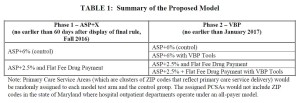
In an amazing display of bureaucratic hubris, the Centers for Medicare & Medicaid Services has proposed a mandatory, real-world experiment with provider reimbursement under the Medicare Part B program…CMS wants to reduce reimbursement for buy-and-bill drugs—but for only half of the country's providers. The other half will retain current reimbursement levels. After five years, CMS will see what happened…the proposal so overreaches that it will face enormous opposition and has little chance of being implemented…CMS’s proposed…Payment Model and the glaring methodological flaw that could end up raising drug costs…CMS wants to go after the buy-and-bill system’s theoretically…incentive for physicians to prescribe more-expensive drugs. For pricey specialty drugs, even a low single-digit markup over ASP can generate substantial dollar profits for a provider…These practices are for-profit private businesses. They will surely attempt to optimize against the CMS Phase I proposal by, for example, strategically directing patients to certain locations based on the cost of therapy and expected reimbursement…CMS even claims that its Phase I proposed model is “budget neutral.” This conclusion is based on the false assumption that there will be no behavior change in response to the study…CMS also ignores the possibility that patients will be shifted to higher-cost sites of care, including hospital outpatient departments…We are already seeing similarly brutal opposition to CMS’s latest brainstorm.
- Swiss and Indian regulators trying to determine how fake Harvoni reached Israel (in-pharmatechnologist.com)
The Swiss importer that supplied fake Harvoni to Israel has named the Indian manufacturer from which it bought the drug and is cooperating with an investigation say regulators...The knockoff versions of Gilead's $1,350-a-pill hepatitis C drug seized by Israeli authorities were supplied by a Swiss trading firm, which sourced them from a manufacturer in India according to...Swissmedic...Under the Swiss Federal Act on Medicinal Products and Medical Devices, Swissmedic can neither name the Swiss trader nor contact any other customers to which it may have supplied Harvoni until the investigation is completed...Similar investigations have taken up to two years...Gilead licensed rights to manufacture and distribute pills...Harvoni...to...Indian companies Cadila Healthcare, Cipla, Hetero Labs, Ranbaxy Laboratories, Sequent Scientific and Strides Arcolab...
- Rebranded LexisNexis Risk Solutions in the Pharmacy market helps leverage big data (drugstorenews.com)
LexisNexis Risk Solutions, a leading provider of data, analytics and technology, on Monday announced the rebranding of Health Market Science, its most recent acquisition, as LexisNexis Risk Solutions in the Pharmacy market. The rebranding initiative reflects the organization’s commitment to combine its industry-leading public records footprint and prescriber data, leveraging analytics and big data technology in the pharmacy space...Over the last four years...we have...achieved – a very specific course for growth within the health care data analytics market, and the pharmacy space has been a top priority since day one...We are pleased to have partnered with all of the major retail pharmacy chains and the majority of the Pharmacy Benefit Managers...In a market with an increasingly stringent and complex regulatory environment, pharmacies without the ability to perform real-time compliance checks put themselves at risk. By combining the referential database with the company’s public records footprint, analytics and big data technology, LexisNexis Risk Solutions can offer a continuum of prescriber data assets, analytics and services that allow pharmacy customers to remain compliant.
- Drug diversion: Collaboration is key to detection, control (drugtopics.modernmedicine.com)
Diversion of controlled substances in the hospital setting can be detected with relative ease using current auditing software. But to confirm and correct diversion calls for close collaboration between pharmacy and nursing...The risks of diversions are not only to our patients, but to our employees and our institutions...Detecting diversion and addressing the problem calls for a collaborative process, with buy-in and investment from all stakeholders. Diversion is not just a pharmacy issue...Uncovering drug diversion clearly needs nursing support...the cost of diversion is more than just the dollar value. There is the erosion of reputation. The perception that diversion is easy at an institution is likely to lead to greater diversion...
- Valeant slashes financial outlook; investors flee ‘a broken company’ (statnews.com)
After years of enviable growth and brash moves, Valeant Pharmaceuticals appears to be succumbing to a broken business model...The beleaguered drug maker held a lengthy and much-anticipated briefing...for investors, and the news wasn’t pretty — the company cut its 2016 revenues and earnings forecast more than expected and disclosed weakness in areas of its business that caught investors by surprise. Particularly disturbing is the possibility that Valeant is in danger of defaulting on some of its debt...Valeant stock plunged 48 percent during the day on huge trading volume, continuing a slide that began last fall amid accusations by short sellers that the company had improperly booked revenue and used a specialty pharmacy to manipulate insurance reimbursements for key products. Even before the conference call ended, some Wall Street analysts recommended that investors flee.
- McKesson Falls After Saying It Will Cut 1,600 Jobs in U.S. (bloomberg.com)
McKesson Corp. shares fell after the drug distributor said Wednesday night that it will fire 1,600 people, or about 4 percent of its U.S. workforce, to cut costs after losing some key customers...shares dropped 3.5 percent to $150.53...lost 32 percent in the past 12 months...The company began a strategic review...and determined that reductions to our workforce would be necessary to align our cost structure with our business needs...McKesson’s business has been hurt by the expiration of a contract with Optum...and changes in contracts with Omnicare Inc...and Target Corp...The company has been making acquisitions to boost growth. McKesson purchased Rexall Health, Canada’s No. 2 drugstore chain, for $2.23 billion in early March, and bought two oncology companies in February for $1.2 billion.
- ICD-10 to get 5,500 new codes, including ones for face, hand transplants, CMS says (healthcareitnews.com)
CMS said it plans to add about 1,900 diagnosis codes and 3,651 hospital inpatient procedure codes to the coding system…On Oct. 1, the Centers for Medicare and Medicaid Services will add another 5,500 codes to the ICD-10 diagnostic library, officials announced…The addition will come exactly one year after ICD-10, with its nearly 70,000 billable codes, replaced the dated, and much more compact, ICD-9 code set… The new and revised ICD-10-CM (Clinical Modification) and ICD-10 PCS (Procedure Coding System) codes will be included in the hospital inpatient prospective payment system proposed rule for fiscal 2017…
- Rattled by drug price increases, hospitals seek ways to stay on guard (washingtonpost.com)

Doctors at the University Hospitals of Cleveland see an immediately recognizable symbol pop up alongside certain drugs when they sign in online these days to prescribe medications for patients: $$$$$...The dollar signs, affixed by hospital administrators, carry a not-so-subtle message: Think twice before using this drug. Pick an alternative if possible...The Zagat-like approach is just one of the strategies hospitals nationwide are using to try to counter drug costs. It was inspired...by... the University Hospitals system’s vice president of pharmacy services, who saw unexpected price hikes wreak havoc on his budget last year...The industry...notes that drug spending accounts for only about 10 percent of the country’s health-care costs and that published list prices do not reflect the steep discounts and rebates that companies may offer. Hospitals generally purchase drugs from wholesalers at costs below the list price, although wholesale prices are subject to increases...Hospital officials insist that even when sudden price increases occur, patients receive access to the medicines they need. But the unpredictable increases wedge their institutions financially...They can’t immediately pass on the cost if a drug gets more expensive because reimbursement rates for certain procedures already have been set by Medicare and private insurers. That means sharply higher prices can lead to losses..."I want drug companies to make money. I need them to make money, or I don’t have any ammo..."But there has to be a balance, a middle ground. If this keeps happening . . . it’s only a matter of time before we get to a point where we have to choose less desirable medications than what’s out there."