
- Endo to declare Opana ER addiction risks to settle opioid probe by NY (fiercepharma.com)

States across the country have been chasing painkiller makers, alleging all kinds of bad behavior in the sales and marketing of opioids. Now one of those cases has stuck, with Endo agreeing to not soft-pedal the risks of taking Opana ER (oxymorphone), or oversell its crush resistance as conditions of settling an investigation in New York...Endo Health Solutions also agreed to pay $200,000 and take a variety of steps to make sure doctors understand the addiction risks to their patients. The company will also stop marketing to and report any physicians they think might be improperly prescribing the opioid...the AG's (Attorney General Eric Schneiderman) investigation focused on Opana ER, which he said had become the drug of choice among many abusers...the investigation found that Endo "improperly marketed Opana ER as designed to be crush resistant," providing a "false sense of security to health care providers and their patients," even though Endo's own studies showed the drug could be crushed and ground up...
- Shortages threaten patients in Libya’s Benghazi: minister (reuters.com)

Acute shortages of medicines, equipment and staff are putting patients at risk in Libya's battle-scarred eastern city of Benghazi...there was no money in Libya's health budget for 2016 and urged world powers to release funds frozen abroad, saying a fraction of that money could finance medical care "for years to come"...there was an urgent need for mobile clinics and trauma kits, as well as basic equipment such as gloves and gauze...A shortage of blood bags meant people trying to give blood had not been able to...Many foreign medical staff left more than a year ago, and there was a "desperate need for doctors and nurses," he said. The city has fewer than 700 hospital beds... the international community had been waiting for the long-delayed approval of a U.N.-backed unity government to release frozen funds...WHO representative Syed Jaffer Hussain said a U.N. appeal for $50 million for basic and emergency healthcare this year had generated pledges of just $2 million.
- Another of AmerisourceBergen’s Pharmedium facilities cited by FDA (fiercepharmamanufacturing.com)Form FDA 483 Inspectional Observations (fda.gov)
Drug distributor AmerisourceBergen has pledged to set the bar high on quality at Pharmedium Healthcare Holdings, the compounding pharmacy company for which it laid out $2.6 billion. The challenges, however, keep mounting as FDA inspections continue to note issues at its manufacturing facilities...FDA posted another Form 483 for a Pharmedium compounding facility last week, this one at the company's headquarters in Lake Forest, IL. It followed an inspection in November that turned up half a dozen observations. In the past year, the FDA has issued Form 483 observations at Pharmedium facilities in Texas, Mississippi, New Jersey and Tennessee, as well as at its Illinois headquarters...inspectors noted...that the Chicago-area facility had released 16 lots of products that were out of spec for potency and purity. They also noted that results from stability testing were not used in determining expiration dates.
- IBM’s Cancer Moonshot: Using Computer Science To Battle Tumors (forbes.com)

IBM is launching a cancer initiative...teamed up with Stanford University, San Francisco State University and two UC schools—San Francisco and Berkeley—to spearhead the application of a new discipline it calls "cellular engineering" to oncology research...The idea behind cellular engineering is to scrutinize cell "morphology," or the shape and structure of cells, to get to the root of what causes tumors. Understanding that process could lead to new ways of detecting and controlling the disease, says Simone Bianco, an Italian physicist...at the IBM Almaden Research Center...I asked Bianco to explain how IBM is lending its know-how to cancer research. Here is an edited excerpt from our conversation.
- What is cellular engineering and how can it be applied to cancer?
- Once you gather information about what’s happening on a cellular level in cancer, how can it be used?
- What will IBM’s academic partners bring to this effort?
- Are there other uses for cellular engineering beyond cancer?
- Pharmacy Week in Review: March 4, 2016 (pharmacytimes.com)
Mike Glaicar, Business Development: Pharmacy Times...(PTNN) This weekly video program provides our readers with an in-depth review of the latest news, product approvals, FDA rulings and more.
- The Technician’s Evolving Responsibilities in Care Transitions (pharmacytimes.com)
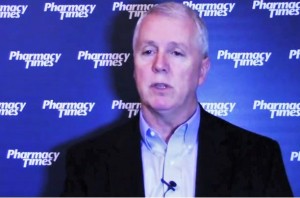
Neil Williams, PharmD, CPP, Clinical Pharmacist Coordinator for Community Care of North Carolina, discusses how the responsibilities assumed by pharmacy technicians during care transitions will continue to evolve.
- Medicare Project Helps Put Pharmacists in Primary Care (ashp.org)
An ongoing Medicare demonstration program with a medication management component shows some hope of reducing healthcare costs through the use of team-based primary care services...An analysis of first-year data from the Comprehensive Primary Care Initiative...found that the cost savings to Medicare nearly equaled the $141 million in care-management incentives paid to the participating practice sites...Each participating site receives per-member-per-month payments from CMS and other payers...Among the initiative's requirements are that all participating sites implement one or more primary care strategies—comprehensive medication management, integrated behavioral health services, or patient self-management support services—as part of CPCI's focus on population health...CMS's implementation guidance for CPCI participants recommends that practices focusing on medication management include a clinical pharmacist on the healthcare team...the pharmacist should be involved in patient care either directly or by performing chart reviews and making therapy recommendations...pharmacist should also help the practice identify patients who are at high risk for poor health outcomes and would benefit from medication management. And...the pharmacist should participate in care team meetings and help develop processes to improve medication use and safety..."It's an exciting time to be in primary care because there's so much experimentation going on," Smith (Marie Smith, assistant dean...at the University of Connecticut School of Pharmacy) said. "The new payment mechanisms, I think, are going to open up tremendous opportunities for pharmacists."
- ADA Issues Recs for Management of Diabetes in Primary Care (physiciansbriefing.com)Diagnosis and Management of Diabetes: Synopsis of the 2016 American Diabetes Association Standards of Medical Care in Diabetes (annals.org)
New recommendations have been developed for diabetes, focusing on areas of importance for primary care providers...a systematic review to revise or clarify recommendations for diabetes diagnosis and management for primary care providers, based on new evidence. The recommendations were rated and reviewed, and approved by the American Diabetes Association Board of Directors. Feedback from the larger clinical community was incorporated...The researchers summarized the ADA standards in eight areas of importance to primary care providers: diagnosis, glycemic targets, medical management, hypoglycemia, cardiovascular risk factor management, microvascular disease screening and management, and inpatient diabetes management. An individualized approach was recommended for each area, with self-monitoring emphasized as a key component of care...
- Diplomat launches pharmacy tech certification program (drugstorenews.com)

Diplomat Pharmacy announced Thursday that the Michigan Board of Pharmacy approved the company to offer a pharmacy technician training program with on-site exams. The program, which is offered exclusively to Diplomat employees, allows employees who complete it and the exam to be considered for state licensure..."The need for licensed pharmacy technicians is growing tremendously in Michigan," Diplomat’s education and training manager, Stephanie LaPointe, said. “Having a program at Diplomat that focuses on specialty pharmacy helps to ensure that the individuals serving in technician roles are appropriately supporting the specialty patient experience.“...“Through this training program, Diplomat will continue to support its pharmacy staff professionally and provide the best customer care to our patients by becoming experts in their field,” LaPointe said.
- Study: $3B will be wasted on unused portion of cancer drugs (cnbc.com)Overspending driven by oversized single dose vials of cancer drugs (bmj.com)
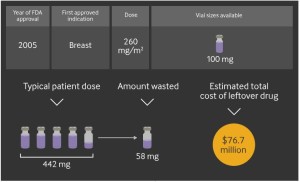
High prices for cancer medicines aren't the only reason they cost insurers and patients so much...Waste pads the bill…because infused cancer drugs are distributed in...vials that usually contain more medicine than most patients need. Most of the time that excess is thrown out, even though it's perfectly good — and worth hundreds or thousands of dollars...Researchers...estimate that wasted cancer medicine in the U.S. this year will add up to nearly $3 billion in excess costs...cancer medicines are one of the highest-priced, fastest-growing drug categories...study...in BMJ...details how drugmakers, hospitals and cancer doctors make money on unused cancer medicine. It focuses on the top 20 drugs for multiple cancer types packaged in single-dose vials and for which the dose depends on the patient's weight, finding that 1 percent to 33 percent of those 20 cancer drugs, on average, remains in vials after each dose is administered...The researchers say regulators could require manufacturers to supply multiple vial-size options, and the FDA and other federal health agencies need to reconcile their disparate guidelines on vial size and when leftover medicine from one vial can be given to another patient. Currently, sharing generally is only allowed within six hours of when the vial is opened to ensure the medicine's sterility.