
- With drug costs rising, it’s time for pharma companies to open their books (statnews.com) Budget of the United States Government, Fiscal Year 2017 (whitehouse.gov)

For years, drug makers have argued that the rising prices of prescription medicines reflect, in part, the rising costs of discovery and development...Buried inside the White House budget proposal released last week is language (on page 62) that would require drug makers to publicly disclose various data, including research and development costs. The administration hopes to use the information as part of a plan to negotiate lower prices for the Medicare drug program, known as Part D...Obama joins a growing list of lawmakers seeking transparency in order to understand drug pricing...From California to Massachusetts, state legislators have proposed bills that would force drug companies to open their books so the public can see how much is spent to develop, manufacture, and market new medicines. Just last month, New York Governor Andrew Cuomo included a disclosure demand in his own state budget proposal...Whether these efforts will succeed is unclear. Drug makers have been lobbying aggressively to defeat the bills and, indeed, in many states the legislation has stalled.
- Indonesia clears decks for foreign API manufacturers

The administration of Indonesian President Joko Widodo has cleared the decks for foreign firms to own 100% of active pharmaceutical ingredient operations....Indonesia's three largest pharmaceutical companies are the biggest importers of raw materials and the change is expected to help them meet soaring demand as the country widens access to medical insurance...The change in foreign investment restrictions could help reduce the reliance on importing raw materials used to make drugs...domestic industry needs investments of more than $1 billion to cut dependence on imports of APIs and related raw materials...
- Solving the Puzzle of High Cost Specialty Drugs (specialtypharmacytimes.com)

Jon Hamrick, executive vice president, Biotech and Specialty Services at Therigy LLC, discusses the implications of rising drug costs on specialty pharmacy.
- Burwell says HHS is considering ‘march-in’ on skyrocketing drug prices (fiercepharma.com)

Last month, a group of lawmakers urged the National Institutes of Health and the U.S. Department of Health and Human Services to take "extraordinary" action to fight rising drug prices. HHS Secretary Sylvia Burwell responded this week that her agency got the lawmakers' message and is considering rolling out new guidelines to counter skyrocketing prices...The...letter from Doggett and his colleagues asked HHS to issue guidelines for "march-in rights" to address "price gouging" by pharma companies. March-in-rights give the agency the power to skirt patent protections for pricey meds developed with federal funding, effectively opening them up to generic competition...HHS has never used this tactic since the law was enacted in 1980, contending that it is an "extraordinary remedy" that should only be rolled out in extreme situations...Congressional reps contend that the recent price hikes, some of which have run to 5,000%, constitute immediate grounds for action by the agency. "Too many families and providers are facing an extraordinary challenge from unreasonably priced pharmaceuticals" and "too many drugs are not 'available to the public on reasonable terms," the lawmakers said in their letter.
- Recipharm commits $45M to counteract fake drugs (fiercecro.com)

Contract drugmaker Recipharm is promising to spend $45 million (€40 million) over the next three years to improve drug traceability in an effort to comply with new regulations and combat the rise of fake medicines...The money will go toward new coding and serialization technologies...an investment that will allow the company to better tag drug products with identifiable markers that can help prevent counterfeiting. The move comes on the heels of the EU Falsified Medicines Directive, which will require new measures in drug manufacturing starting in 2019, according to the company...Recipharm already implements track-and-trace procedures in Asia and is now expanding its efforts in Europe to help clients on the continent prepare for the new standards...
- Zika update: Vaccine race swells, PaxVax CEO on how to stop ‘chasing epidemics’
As the Zika virus continues to spread, more biotechs are announcing their Zika vaccine programs. Meriden,.. Protein Sciences,..GeoVax Labs and.. PaxVax are the latest...Getting caught off-guard by epidemics like this has happened time and time again. And "chasing" outbreaks instead of anticipating them rarely results in a vaccine being developed in time. Witness the most recent Ebola epidemic: Merck's experimental vaccine, the furthest along in a crowded field, won't be submitted for regulatory approval until 2017, more than two years after the outbreak started...we had known about Ebola for decades...Companies got a head start in 2014 from partly developed candidates that had been shelved away. It is not so with Zika. "Almost everyone is pretty much starting from scratch...To avoid this and have programs in place before an outbreak hits...governments and nongovernmental organizations...should create economic incentives for companies to make vaccines for neglected diseases like Zika...the FDA's priority review voucher system, in which a company developing a vaccine for a neglected tropical disease receives a transferable voucher for expedited FDA review. Malaria and dengue have been on the list of neglected diseases for years, but Zika is not yet on the list
- Drug development crisis linked to bad technology choices, experts argue (worldpharmanews.com)When Quality Beats Quantity: Decision Theory, Drug Discovery, and the Reproducibility Crisis (journals.plos.org)
The search for new medicines is becoming unsustainably expensive despite huge technological advances because researchers are using the wrong methods, experts say. They say drug discovery should focus on 'validity' - how well the results of experiments predict results in sick people. Instead, it has focused on methods that are easy to industrialize or methods that are academically fashionable...Jack Scannell...and...Jim Bosley approach drug discovery using mathematical tools that are used by economists to study decision making. They show that the chance of discovering an effective drug is surprisingly sensitive to the validity of the experimental methods. Small changes in validity can have a bigger effect than running 10 or even 100 times more experiments...There is a nasty puzzle at the heart of modern biomedical research. On one hand, the technologies that people think are important have become hundreds, thousands, or even billions of times cheaper. On the other hand, it costs nearly 100 times more to bring a drug to market today than it did in 1950. New drugs can be very expensive, yet the industry is closing labs and firing scientists. Our work goes some way towards explaining the puzzle. Governments, companies, and charities should focus on identifying and funding predictive methods, even if they don't match current scientific fashion...
- Genes, bugs and radiation: WHO backs new weapons in Zika fight (reuters.com)Brazil reports more cases of microcephaly under investigation (reuters.com)FDA recommends ban on blood collections from Zika-affected areas (reuters.com)Zika vaccine shows promise in mice, lifting maker Inovio (reuters.com)

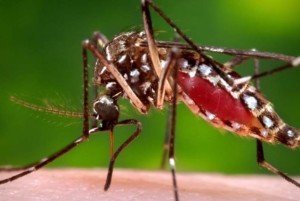
Aedes aegypti
Countries battling the Zika virus should consider new ways to curb disease-carrying mosquitoes, including testing the release of genetically modified insects and bacteria that stop their eggs hatching...Given the magnitude of the Zika crisis, WHO encourages affected countries and their partners to boost the use of both old and new approaches to mosquito control as the most immediate line of defence...WHO also highlighted the potential of releasing sterile irradiated male mosquitoes, a technique that has been developed at the United Nations’ International Atomic Energy Agency...Fighting the infection at source by eliminating the Aedes aegypti mosquitoes responsible for transmission is moving up the public health agenda, especially as the same insects also spread dengue, chikungunya and yellow fever...An alternative approach uses Wolbachia bacteria, which do not infect humans but cause the eggs of females that mate with infected males to fail to hatch. Mosquitoes carrying Wolbachia have been shown to reduce mosquitoes' ability to transmit dengue...
- What’s China doing to be innovative in pharma, biotech? (medcitynews.com)
The question of whether China can innovate in science and technology is one that is often debated and remarked upon. Having read so many (Western) opinions about China’s ability to innovate, I was interested in what I could learn from talking with leaders at R&D-intensive organizations in China. How do they characterize their own innovation abilities?...Conventional wisdom here in the U.S. has long been that China doesn’t innovate. After all, a lot of products in China are very familiar-looking (and I’m not even talking about blatant intellectual property violations – just good old-fashioned "me too" competition)...No one innovates for the sake of it. We innovate when adequate solutions to our problems don’t already exist, and when someone has already solved a similar problem, we borrow...the test of whether China can innovate can’t be answered from what it has achieved while still following modern economies...but rather by what it does when it is in the leading group. As China joins the global community, the time is rapidly running out when it can easily source innovations from outside – and will have to prove that it can innovate from within...
- Dreaded U.S. FDA Form 483s in the spotlight in China (fiercepharmaasia.com)

While much of the news in recent months on warnings issued by the Food and Drug Administration centered on alerts issued to Indian pharmaceutical manfacturers, active pharmaceutical ingredient and drug manufacturers in China have also received their own set of alerts under the FDA's Form 483 regime, according to a report by the Regulatory Affairs Professionals Society... 41 pharmaceutical manufacturing sites in China and 5 in Hong Kong are currently included on the agency's import alert list and are banned from shipping drugs to the United States, compared to the 42 sites listed as banned in India...RAPS found that in 2015 more than 80 Form 483s were issued to Chinese manufacturers after 132 inspections...the FDA conducted 203 inspections at Indian facilities...Some of the findings of the FDA reports include data manipulation at several companies where computer files were altered or deleted, missing logbooks, contamination issues and other serious failures in good manufacturing practices...