
- GPhA speaks out on generics labeling, access (drugstorenews.com)
…the Generic Pharmaceutical Association released statements related to the current state of generics, specifically proposed changes to rules regulating labels on generic drugs from the Food and Drug Administration, as well as steps it believe lawmakers should take to ensure affordable medication access…
- …accessibility, the organization recommended that lawmakers should encourage the FDA to review the approximately 3,800 generic drug applications awaiting action in a timely manner.
- …wider use of generics among low-income Medicare beneficiaries, which it estimates could save $17.7 billion over the course of 10 years.
- …passing the FAST Generics Act, which it says will keep drug companies from using Risk Evaluation and Mitigation Strategies to keep generics from hitting the market…
- …called for a repeal of a Medicaid rebate increase for generic drugs included in this year’s budget agreement.
- … regulations concerning labeling of generics, as the organization says currently, branded and generic drugs have the same label, but a proposed change to generic labeling requirements would require manufacturers to update labels without frist (sic) getting FDA approval…proposed the Expedited Agency Review (EAR), which relies on the FDA to review new safety information and take action on label changes.
- … EAR suggests time parameters for the FDA to take action and encourages the adoption of e-labeling for real time information sharing rather than continuing the reliance on paper label changes that take months or years to adopt.
- Direct-to-consumer advertising makes doctors and patients stronger partners (catalyst.phrma.org)
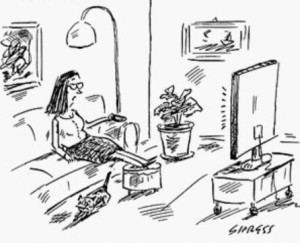
"Ask your doctor if talking a pill to solve all your problems is right for you."
The New York Times’ editorial board is right when it notes that direct-to-consumer pharmaceutical advertising helps “educate and inform patients about drugs their doctors might not mention, encourage discussions between doctors and patients, and can help patients take more responsibility for their own health care.”.. DTC advertising is designed to provide scientifically-accurate information to patients so that they are better informed about their health care and treatment options – and there is never any requirement or obligation for physicians to prescribe a particular medication…Beyond increasing patient awareness of disease (including undiagnosed conditions) and available treatments, DTC advertising has been found to increase awareness of the benefits and risks of new medicines and encourage appropriate use of medicines. In addition, such advertising encourages patients to visit their doctors’ offices for important doctor-patient conversations about health that might otherwise not take place.
- How Big Pharma Could Lose the War on Disease (bloombergview.com)
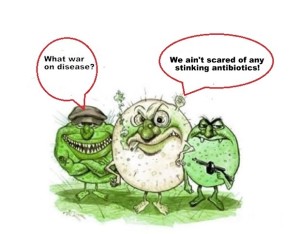
The planned merger of pharmaceutical giant Pfizer with competitor Allergan, aimed in large part at cutting the combined company's tax bill, illustrates a troubling trend in the industry: Firms are focused more on pursuing near-term profits than on the difficult, longer-term research needed to develop truly groundbreaking new drugs. This is unfortunate, because disease may be making a comeback…the accelerating spread of multi-drug-resistant bacterial infections. There are now more than two million cases each year in the U.S. alone. Last month, scientists announced that they had found evidence, in farm animals in China, that genes for antibiotic resistance are being transferred directly among different bacteria -- a trick (horizontal gene transfer) that will allow the resistance to spread more quickly than ever before…The pharmaceutical industry's reshaping doesn’t bode well for humanity's ability to respond. Almost all antibiotics in use today were discovered between 1940 and 1960. Research progress since then has been almost nil.
- As outrage over prices grows, public sours on the drug industry (statnews.com)The Controversy over Rising Drug Prices:The Public’s Views (cdn1.sph.harvard.edu)Why the U.S. Pays More Than Other Countries for Drugs (finance.yahoo.com)

A new poll…Harvard T.H. Chan School of Public Health found significant skepticism about one of the drug industry’s most prevalent talking points. Almost two-thirds of Americans said they did not believe that Medicare negotiating with drug companies to lower prices would lead to fewer medicines being developed. And a majority — 55 percent — believes that even outright price controls wouldn’t slow the flow of new drugs…but the findings suggest that Americans reject a key counterargument the industry makes whenever the specter of government action on drug costs comes up: The current system, while imperfect, allows drug companies to create breakthrough lifesaving medications. They warn that any major changes, particularly more government involvement, could hamper that… poll points to several reasons underlying the public’s attitude…
- New OIG Report Shows Hospitals’ Huge 340B Profits from Medicare-Paid Cancer Drugs (drugchannels.net)Part B Payments for 340B-Purchased Drugs (oig.hhs.gov)
..Office of Inspector General (OIG) has just released another eye-opening report on the 340B drug discount program: Part B Payments For 340B-Purchased Drugs.…The report documents how 340B-eligible hospital outpatient departments earn tremendous profits from the Medicare Part B program…OIG focuses on how the Medicare program could save money by sharing in these mega-profits. As usual, we don’t know if needy patients are benefiting from hospitals’ excess Medicare 340B profits. The OIG even reminds us three times in its report: “The 340B statute does not restrict how covered entities may use these funds.” Unfortunately, the Health Resources and Services Administration’s recent Omnibus Guidance didn’t bother to require that hospitals use 340B funds help the neediest patients access valuable medicines. Money, so they say, is the root of all evil today.
- Two-factor authentication on the rise, small hospitals fall short, ONC says (healthcareitnews.com)

Only half of small urban hospitals have two-factor authentication capability…Fewer than half of U.S. hospitals support an infrastructure capable of two-factor authentication, The Office of the National Coordinator for Health IT reported…while 35 percent of critical access hospitals and 40 percent of small rural hospitals report the lowest levels of capability…Two-factor authentication requires users to give at least one other form of identification beyond username and password to get access to electronically protected information, such as a PIN and fingerprint or voice recognition…The process is a low-cost, effective way to meet HIPAA standards, but not enough hospitals have implemented it into their cybersecurity plans…cybersecurity experts assert reported levels of adoption are still drastically low, given the steady rise in healthcare data breaches and the increase in hackers targeting the healthcare industry…Some states are above the bar on establishing two-factor authentication. Ohio raked at the top with 93 percent adoption..Vermont, with 83 percent…Delaware, with 81 percent…On the other hand, Montana, with 19 percent, North Dakota, with 23 percent, and Maine, with 26 percent, saw the lowest percentages…
- How marijuana promoters bypass the law — and the public good (drugtopics.modernmedicine.com)
In California…the “Compassionate Use Act,” too many of us remained quiet about the claims being made by people attempting to promote marijuana for their own agendas…The public approved the use of marijuana for seriously ill Californians to obtain and use marijuana for medical purposes, when recommended by a physician who has determined that the person’s health would benefit from the use of marijuana…There was no need for any placebo-controlled, randomized, FDA–approved study to be conducted — just the physician’s recommendation…The public has been duped by individuals whose main goal is to promote the legalization of marijuana… Keith Stoup, legal counsel for the National Organization for the Reform of Marijuana Laws, was quoted as saying, “We will use [medical marijuana] as a red herring, to give marijuana a good name.”…“in California, marijuana has been de facto legalized under the guise of medical marijuana.”…more than 23 states has approved marijuana for “medical” purposes, and four states and Washington, D.C., have allowed its recreational use, with taxation. To date, this social experiment has met with devastating consequences…Depending on when you graduated from pharmacy school, you pledged an oath. Whether you will abide by that oath to stay educated about pharmaceuticals and be a voice for appropriate drug use is up to you, but the public is relying on you to hold up your end of your oath.
- DOJ antitrust unit subpoenas Mylan over pricing of doxycycline (reuters.com)

The antitrust division of the U.S. Department of Justice has subpoenaed Mylan N.V. for information relating to the marketing, pricing and sale of its generic doxycycline antibiotic products…Department of Justice has sought information on any communication with competitors about the anti-bacterial products, the company said in a regulatory filing, adding it would cooperate with the federal agency…drugmakers have been under increased pressure this year from the government, insurers and corporations over steep increases in the prices of generic drugs, which have dragged on shares in the sector… There are many forms of doxycyline made by more than a dozen companies, including Valeant Pharmaceuticals International, Allergan, and Hikma Pharmaceuticals, according to the U.S. Food & Drug Administration's database.
- Eli Lilly’s Swiss lab closure worries animal rights group (reuters.com)
Eli Lilly's plan to close a Swiss laboratory that conducts tests and experiments on live animals has caused concerns by a local animal welfare group over the fate of the facility's hundreds of dogs, cats and livestock…company said…it was working to secure new owners for many of the animals as its Elanco animal health company may shut the research center in the Swiss town of Saint-Aubin…Julika Fitzi, a veterinarian and lawyer who works with the group Swiss Animal Protection, worries many may be killed…the laboratory houses about 350 dogs, 170 cats, 280 sheep, cattle and pigs and about 200 mice, figures that Eli Lilly didn't confirm…The expected closure comes as Eli Lilly looks to concentrate some of its Swiss research activities in Basel following its acquisition of the animal health business of Novartis earlier this year…Elanco's spokeswoman…said on Thursday the company will make a final decision on the Saint-Aubin research site later this month…if it is closed the company's primary plan for so-called "companion animals" such as cats and dogs would be "transfer of ownership to other facilities and employee pet owners."
- Q&A: J&J’s Alissa Hsu Lynch talks about partnering with retailers on health and wellness (drugstorenews.com)
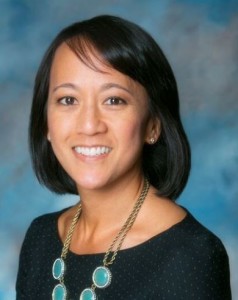
Alissa Hsu Lynch, VP Sales Strategy, Johnson & Johnson
Drug Store News recently had an opportunity to sit down with Alissa Hsu Lynch, VP sales strategy, operations and global capabilities at Johnson & Johnson Consumer to discuss how J&J is optimizing its health-and-wellness position in retail. Hsu Lynch leads the strategic development of key retail initiatives across J&J's $6 billion portfolio of consumer brands…
- How is J&J delivering value within the health-and-wellness space to its retailer customers?
- What core consumer segments do you see as key to your health-and-wellness strategy?
- How is the Affordable Care Act affecting your growth plans?
- How is technology changing the way you engage with patients and consumers?
- How are you aligning your company’s assets to match the go-to market strategy of large integrated retail healthcare providers?
- What key insight do you want your retail partners to know about the future of health care?