
- Safer use of medicines by preventing medication errors (ema.europa.eu)Medication errors (ema.europa.eu)Recommendations on medication errors (ema.europa.eu)

European Medicines Agency has published a good practice guide on medication errors to improve the reporting, evaluation and prevention of medication errors by regulatory authorities and pharmaceutical industry throughout the EU…The…guide on medication errors published today complements the guideline on good pharmacovigilance practices…It consists of two parts:
- details how suspected adverse reactions that are caused by medication errors should be recorded, coded, reported and assessed. The goal is to improve reporting and to learn from medication errors for the benefit of public health.
- clarifies key principles of risk management planning in relation to medication errors. It describes the main sources and types of medication errors and proposes options to minimise the risk of medication errors throughout the lifespan of a medicine.
- Data: Tax inversions still going strong as M&A weakens (cnbc.com)
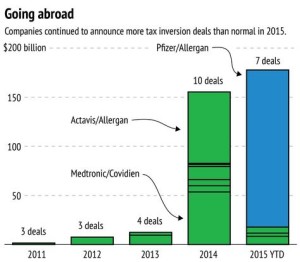
Pfizer's record-setting proposed purchase of Allergan for about $160 billion will not only be the biggest health-care sector deal ever, it will also be one of the largest tax inversions in recent history…Tax inversions...are frowned upon by politicians and the Treasury Department. But efforts to penalize companies for making such deals seem to be falling flat…Tax inversions are a better deal for companies that already have substantial sales abroad, or (like pharmaceuticals) rely on high-margin businesses based on intellectual property…while inversions have continued at an unusually high rate, overall merger and acquisition activity has been slowing…By value, U.S. inversion deals accounted for about 4 percent of global M&A activity in 2014 and 2015 — up from 2 percent or less in the three years before that…It remains to be seen whether Treasury Department rules meant to prevent tax inversions will have an impact. The regulations do not apply to the Pfizer deal, which will result in a company with about 56 percent ownership in the U.S. — the rules only apply to companies with 60 percent or higher.
- If TV’s everywhere, then where does pharma need to be? (fiercepharmamarketing.com)

Everyday Health, Inc., a…provider of digital health marketing and communications solutions, and Videology, a…software provider for converged TV and video advertising…announced the launch of TVRx, a solution for pharmaceutical and health-oriented marketers to target relevant health audiences across television and digital video. The…partnership combines Everyday Health's…audience reach and analytics…with Videology's…platform for planning, executing and measuring video campaigns across any screen…"Television remains a staple for advertisers in the health vertical. However, as the industry focuses on smaller patient populations and consumer viewing fragments across multiple screens, the ability to reach the right audiences with relevant messaging has become more difficult,"…"TVRx addresses this challenge by enabling advertisers to find the right audience - regardless of viewing screen - and achieve a desired marketing outcome…"TVRx takes everything that is great about TV and incorporates the enhanced targeting and measurement capabilities of digital, to provide the most sophisticated targeting and ROI measurement across both linear TV and digital video.
- Prices Are Hardly Going Up at All (bloomberg.com)

Price tags on branded drugs are still rising at more than 10 percent…For all the recent backlash to drug price increases that have incited politicians' anger and roiled markets, a curious thing happened in the third quarter: Prices for generic drugs, which make up 85 percent of prescriptions, hardly increased at all…inflation among generic drugs dropping from 4 percent two years ago to zero. Prices of more expensive brand-name drugs have been increasing at more than 10 percent a year…Fewer drugs are losing patent protection, so there aren't as many new generic versions hitting the market as there were a few years go. At the same time, consolidation among generic manufacturers has slowed, limiting their ability to raise prices...Food and Drug Administration has accelerated its process for approving new generic versions. All these things influence how many manufacturers are making a particular copycat drug and what they can charge for it.
- Prices are skyrocketing for skin creams and pills (statnews.com)Changes in Retail Prices of Prescription Dermatologic Drugs From 2009 to 2015 (archderm.jamanetwork.com)
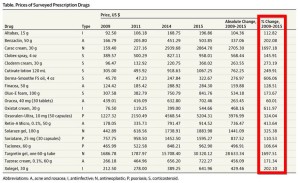
You may need a thick skin to withstand the rising cost of some dermatology medicines…A new study finds that prices of some widely prescribed creams and pills for skin conditions rose rapidly between 2009 and 2015. Of the 19 brand-name medicines analyzed, the retail prices of seven more than quadrupled…Prices for some generic drugs also rose considerably. Between 2011 and 2014, there was a mean increase of 279 percent, although prices for a few drugs remained largely unchanged…“The prices have skyrocketed with no justification,”…“This is a manifestation of anarchy pricing, which is what you get when you don’t have a competitive free market or competent government actions to protect patients,”...
- Turing reneges on drug price cut, rival’s version sells well (washingtonpost.com)Shkreli Says Price Increases for Turing Drug Don't Matter (bloomberg.com)

Martin Shkreli, CEO ,Turing Pharmaceuticals
After weeks of criticism from patients, doctors and other drugmakers for hiking a life-saving medicine to more than 50 times its former price, Turing Pharmaceuticals is reneging on its pledge to cut the $750-per-pill price…the…company is reducing what it charges hospitals, by up to 50 percent, for…Daraprim (pyrimethamine). Most patients’ co-payments will be capped at $10 or less a month. But insurers will be stuck with the bulk of the $750 tab. That drives up future treatment and insurance costs…Daraprim…patent expired decades ago. It is the preferred treatment for…toxoplasmosis, which mainly threatens people with weak immune systems…Carlos del Rio, chairman of the HIV Medicine Association, called Turing’s changes “just window dressing.”…Turing’s move comes after a pharmacy that compounds prescription drugs for individual patients, Imprimis Pharmaceuticals, started selling a custom-made version for 99 cents per capsule…Del Rio noted that while hospitals treat many patients initially, most are then treated at home for a couple of months, so the lower hospital price doesn’t help…Imprimis chief executive…said…that orders are pouring in for its version of Daraprim from doctors, and the company has dispensed more than 2,500 capsules since Oct. 22.
- CDC calls for increased PrEP awareness for high-risk patients (drugstorenews.com)Daily Pill Can Prevent HIV (cdc.gov)
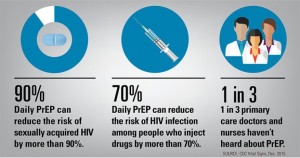
New data from the Centers for Disease Control and Prevention has the organization urging providers to education themselves about the potential of pre-exposure prophylaxis drugs (PrEP) that can significantly reduce the risk of contracting HIV…Though the once-daily pill —which was approved by the Food and Drug Administration in 2013 and marketed as Truvada (tenofovir/embtricitabine) — can reduce risk of HIV transmission through sexual contact by 90% and the risk among injected drug users by 70%, new information shows that one-in-three primary care doctors and nurses haven’t heard of PrEP…“PrEP isn’t reaching many people who could benefit from it, and many providers remain unaware…“With about 40,000 HIV infections newly diagnosed each year in the U.S., we need to use all available prevention strategies.”
- Pharmacy Week in Review: November 24, 2015 (pharmacytimes.com)
Mike Glaicar, Business Development: Pharmacy Times...(PTNN) This weekly video program highlights the latest in pharmacy news, product news, and more. (video)
- Why you should avoid hospitals on weekends and holidays (vox.com)
Hospitals have worse outcomes on weekends and holidays — but it's not clear why…The effect that weekends and holidays can have on patient care remains contentious, despite extensive research on the subject…Some studies have found that patients with a variety of health conditions tend to face a slightly greater risk of death if they're admitted to a hospital during the weekend instead of during the week. But the evidence here remains mixed…hospital care is different during holidays and weekends, and perhaps slightly lower quality. The health professionals who get stuck working these hours tend have less seniority and experience. And the staffing might be thinner. That might explain the poorer health outcomes…which can cause delays and hassles for patients and doctors…those with less urgent problems end up waiting a lot longer. It also makes doctors' jobs more difficult.
- Obamacare to blame for soaring drug costs: AEI (cnbc.com)
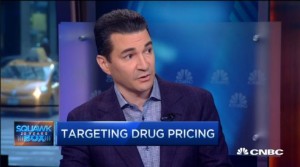
Americans concerned about not being able to afford life-saving treatments should not blame drug companies for high prices…Dr. Scott Gottlieb…told CNBC's "Squawk Box" there's not really a drug cost problem in the U.S., except for a small subset of specialty drugs that cost a lot but are providing a lot of benefit…"What we have is an under-insurance problem," he said. "People are now under-insured, especially for catastrophic drugs if they get a disease like cancer or something like that because of these new [narrow] formulary designs…popularized by the Affordable Care Act."..."If the drug is not on your [Obamacare] formulary list, you have no co-insurance. You're completely on your own,"…"Since these plans are the predominant structures in Obamacare, they're starting to migrate into commercial plans" in the workplace…