
- White House reaction to AGN/PFE deal (video.cnbc.com)Pfizer's 'holiday' gift (video.cnbc.com)Pfizer to buy Allergan for $363 per share (video.cnbc.com)Pfizer and Allergan to create the world’s largest drug maker (statnews.com)Pfizer-Allergan deal: A boon to shareholders, a blow to R&D (statnews.com)Inside Pfizer's $160B Allergan Merger (forbes.com)With veteran job-choppers Pfizer and Allergan joining hands, how many layoffs are in the cards? (fiercepharma.com)
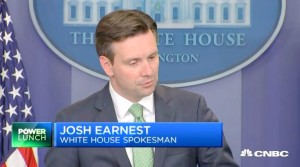
CNBC's Eamon Javers reports on the White House and Democratic Presidential Candidate Hillary Clinton's reaction to the Pfizer-Allergan deal.
- Want to Lead the Profession of Pharmacy? Embrace Change (pharmacytimes.com)

The altMBA is all about change… it…made me aware of how slowly the profession of pharmacy evolves. Candidly, it moves at a glacial pace. We are slow, if not staunchly opposed, to change in pharmacy in many ways. I believe this resistance to change could be a detriment to the profession if we let it…When tackling change, we must start with ourselves...I want to share with you some ways you can manage and even promote positive change within the profession of pharmacy, and hopefully turn our professional...around into the 21st century…We desperately need more change agents in our profession...The world is just changing too quickly, and pharmacy as a profession must keep up with the pace of change…Here are a few ways to promote and embrace change:
- Dare to be the first.
- Stop waiting for permission.
- Choose yourself.
- Realize that not all ideas will stick.
- Realize a “no” today does not mean a “no” tomorrow
- Be a change champion.
- Celebrate failure.
- Just ship it.
Pharmacists must drive the positive change within the profession…We have a choice: either be the change, or wait for the change to happen to us via outside forces. Own it, or it will own you.
- Experts foresee big premium increases for Medicare drug plan (hosted.ap.org)

…many seniors are facing sharply higher premiums for Medicare's popular prescription drug program (Part D). The reason: rising drug costs have overtaken a long stretch of stable premiums…"Premiums are going up. Deductibles are going up,"…Government spending on the program also has risen significantly, driven by pricey new drugs, notably for hepatitis C infection. The cost for the hepatitis drugs in the Medicare program is expected to be $9.2 billion this year, a near doubling from 2014. Because of the prescription program's financial structure, taxpayers cover most of the cost for expensive medications. Three out of four adults infected with hepatitis C are baby boomers…Indicators signal rising costs across the program. Among them:
- independent estimates…show increasing premiums for stand-alone drug plans. The average premium will rise from $36.68 to $41.46 per month next year, or 13 percent…biggest increase since 2009.
- maximum deductible for prescription coverage will rise by $40, to $360…biggest increase in the deductible since the inception of Part D in 2006.
- taxpayer expenditures for the "catastrophic" portion of the benefit - in which beneficiaries with high drug bills pay only 5 percent of the cost - will rise by $4.5 billion in 2016, an increase of more than 14 percent. Spending for catastrophic coverage has doubled in just a short time, from $15.5 billion in 2012 to an estimated $31.2 billion this year.
The analyses...seemingly at odds with the message coming from the Obama administration, which estimates that drug premiums will remain stable in 2016, averaging $32.50 a month.
- Pfizer and Allergan to approve $150B merger (cnbc.com)
Pfizer was due to secure formal board approval on Sunday for its acquisition of Botox maker Allergan for more than $150 billion, making it the healthcare sector's largest deal ever...The deal would involve Pfizer paying with 11.3 of its shares for each Allergan share...There will also be a small cash component, accounting for less than 10 percent of the value of the deal...Pfizer's Chief Executive Ian Read…will be CEO of the combined company, with Allergan's CEO Brent Saunders…serving in a very senior role focused on operations and the integration…It would be the biggest merger of the year, topping beer maker Anheuser-Busch InBev's proposed $107 billion takeover of SABMiller Plc. And it would realize Read's longtime ambition of an "inversion" deal that would get Pfizer out from under the 35 percent U.S. corporate tax rate, among the world's highest. The tax rate in Ireland is 12.5 percent…U.S. Treasury last year, and again last week, updated its rules on inversions to make it harder for companies to avoid U.S taxes by moving overseas. But experts have said these moves would do little to prevent Pfizer from inverting.
- How Pharmacists Can Encourage Prescribers to Adopt E-Prescribing (pharmacytimes.com)Getting Started with EPCS (getepcs.com)
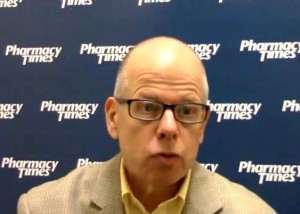
Ken Whittemore Jr, Surescript's senior vice president of professional and regulatory affairs, talks about some ways independent pharmacists could encourage local prescribers to adopt e-prescribing of controlled substances.
- How Pharmacies Can Maintain Business Continuity During a Disaster (pharmacytimes.com)
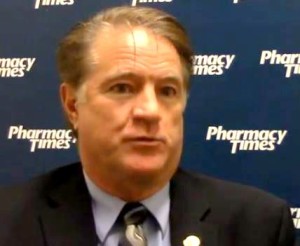
Donnie Calhoun, RPh, PD, National Community Pharmacists Association Foundation vice president, discusses how pharmacists can maintain business continuity during a natural disaster or other emergencies.
- Sanofi whistleblower lawsuit kicks into higher gear (cnbc.com)
A whistleblowing former paralegal at drug giant Sanofi is now claiming she was aware of "many instances" where Sanofi lawyers destroyed documents to avoid turning them over to opponents in prior legal cases…Ex-Sanofi paralegal Diane Ponte's new allegation comes in an affidavit she filed in her pending lawsuit against the company...claims she learned of an alleged scheme at Sanofi to pay more than $30 million in kickbacks to promote the company's diabetes drugs. The suit came a year after the France-based drug company already agreed to pay more than $100 million to the U.S. federal government to settle other claims related to alleged kickbacks to doctors, and seven months after Sanofi agreed to pay a nearly $40 million fine in Germany in connection with two employees who were convicted there of paying bribes to boost drug sales.
- Sustainable Business Models that Expand the Role of the Pharmacist (pharmacytimes.com)
Bryan Ziegler, PharmD, executive director of Kennedy Pharmacy Innovation Center, gives some examples of sustainable business models that can expand the role of the pharmacist.
- Big Pharma Learns to Share (bloomberg.com)

AstraZeneca and Sanofi announced a first-of-its-kind deal…to share more than 200,000 chemical compounds in an effort to speed up drug development. This is encouraging for a highly competitive industry, averse to sharing a piece of gum without a royalty fee tied to breath freshness, let alone compound libraries that were once prized possessions. No money will change hands. Each firm can develop molecules in the other's library with no future obligation…It's a good first step, and may even speed up drug development. Other competitors should follow suit, and hopefully think even bigger.
- A Head Fake From the Taxman (bloomberg.com)
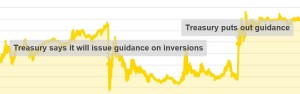
Allergan shareholders got all riled up for nothing…Shares of the Botox maker sank 2.8 percent on Thursday as fears that the U.S. Treasury Department was about to get tougher on inversions outweighed the news that Pfizer was preparing a nearly $200 billion bid for the company. The department's new guidelines -- announced after the market close -- turned out not to be such a body blow after all…the proposed changes just fine tune the steps already taken by the Treasury last year to make it harder and less appealing for companies to use acquisitions that move their legal address abroad for tax benefits. There was nothing groundbreaking -- and most importantly, nothing that should significantly derail a Pfizer inversion…Cue Allergan shares making up their losses and then some on Friday…The latest guidelines do make it incrementally harder to structure inversions and remove some economic benefits, but the handicaps only apply to transactions in which the U.S. company's investors wind up with between 60 percent and 80 percent of the combined entity. Pfizer already knew that was dangerous territory; those were the types of inversions targeted by the Treasury last year. By structuring its Allergan purchase as an all-stock deal with a high premium, Pfizer could be able to skirt the tougher rules.