
- 5 High-Paying Countries for Pharmacists (pharmacytimes.com)

US pharmacists moving abroad, beware. You may have to take a pay cut, considering that pharmacists in the United States tend to receive higher salaries than their counterparts in other countries...See how the United States ranks against some other high-paying countries for pharmacists below: (average salary)
- United States - $107,000 to $118,000
- Switzerland - $83,600
- Canada - $80,700
- United Kingdom - $57,000 to $53,300
- Germany - $44,800
- NCPA Digest: Adherence, Diversified Revenue Critical for Community Pharmacies (ncpanet.org)
…independent community pharmacies are essential to patients and particularly those in underserved inner city and rural areas…These innovative small business owners are defining the future of pharmacy… the challenges of declining, even negative, revenue from prescription drug reimbursement…underscores the urgency with which community pharmacy owners must address two areas.
- improve patient adherence to make your pharmacy indispensable to payers who are under increasing pressure to demonstrate success in that area.
- take advantage of every opportunity to diversify pharmacy revenue streams beyond prescription drug payments.
- This Drugmaker Suffered the Consequences of Price Increases (bloomberg.com)

...drugmaker Mallinckrodt Plc spent $1.3 billion to buy a company that sold an injectable form of acetaminophen… the new owner more than doubled the price of the drug, called Ofirmev. Revenue from the medication shot up… hospitals were able to fight back by seeking other options, cutting into Mallinckrodt’s projected sales growth… Mallinckrodt earnings report Aug. 4 that sent shares down 14 percent in a single day, their worst drop on record...stock has slid an additional 38 percent… Ofirmev demand is starting to turn a corner after hitting a low point earlier this year…revenue from the drug will decline year-over-year until the second half of fiscal 2016..Mallinckrodt’s experience underscores the risk for drugmakers that increase prices on medicine that doctors and health-care providers are already accustomed to using. As expenses mount, customers will look for alternatives, no matter how popular or useful the product.
- U.S. prescription opioid misuse and deaths increase (reuters.com)
The proportion of people reporting use of prescription opioids for reasons other than medical necessity fell between 2003 and 2013, but use disorders and overdose deaths increased…rate of nonmedical use of opioids – not using a prescription as directed, or using a prescription that was written for someone else – fell from 5.4 to 4.9 percent…the rate of use disorders rose from 0.6 to 0.9 percent… more patients are experiencing…progression from initial opioid use to frequent use…Drug overdose deaths involving prescription opioids increased from 4.5 to 7.8 per 100,000 people.. These numbers could come down if we reduce inappropriate opioid prescribing and use and develop new treatments for pain that are safer…
- Who’s Up Next? More Pharma Companies Expected To Settle Foreign Bribery Cases (forbes.com)

Now that Bristol-Myers Squibb has settled its foreign bribery case with the US government, speculation has turned to which pharma company will be next…Department of Justice will being putting a bigger squeeze on companies…the department is adding to the resources devoted to investigating foreign bribery cases and is focusing on large-value, high-impact matters…Glaxo is a leading example. It paid the largest healthcare fraud settlement ever – $3 billion – to the US in 2012 to resolve criminal and civil allegations of improper marketing practices...Glaxo’s Chinese subsidiary paid nearly $500 million to China after a court found the local subsidiary guilty of bribing healthcare officials. Glaxo is likely to pay millions more to settle bribery charges as both US and UK regulators are investigating the drugmaker’s practices in China, Poland, Jordan and Lebanon.
- USDA awards first manufacturing contracts for bird flu vaccine stockpile (reuters.com)

Department of Agriculture…said it has awarded contracts to two drug companies to manufacture doses of avian influenza vaccine for poultry, in preparation for the potential return of the fast-spreading avian influenza virus later this year…The two contracted firms - Iowa-based Harrisvaccines, and France-based Ceva Corp. - will manufacture an undisclosed number of vaccine doses…The agency's Animal and Plant Health Inspection Service has not approved the use of an avian influenza vaccine in birds, and has not made a decision whether to use such vaccines in a future outbreak..
- As U.S. insurers aim to get bigger, hospitals eye health plan entry (reuters.com)
As U.S. health insurers chart an unprecedented consolidation of the industry, hospitals are taking a fresh look at becoming insurers themselves to keep more of their patients' healthcare dollars in house… some hospitals are concerned about the impact of this consolidation in their local markets, and are considering offering their own insurance plans… Many hospital systems have also been buying up individual doctor practices, as well as rehabilitation and skilled nursing facilities, which give them a broader network of services…Among for-profit hospital operators, Tenet Healthcare Corp operates six health plans…
- Indian drug retailers protest against e-pharmacies (reuters.com)Chemists all over India on strike today (timesofindia.indiatimes.com)
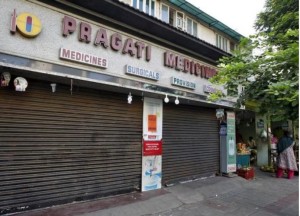
Indian drug retailers shut up shop for the day on Wednesday to protest against the country's growing online pharmacy industry, and threatened to close indefinitely if the federal government did not shut down e-pharmacies…nationwide protest was widely supported, with as many as 850,000 chemists closing their doors, leaving patients waiting in long queues at any pharmacies that were open…Drug retailers are worried…"It is a matter of our livelihoods, we must be prepared for a fight," said pharmacist Satish Vij, who traveled from northern Haryana state to take part in a protest in New Delhi, where about 1,000 people, mostly pharmacists, wore black arm bands, held placards and shouted slogans against e-pharmacies.
- India battles big pharma over cough syrup abuse, reducing supplies (reuters.com)
Indian regulators are privately pressuring major drug firms to better police how they sell popular codeine-based cough syrups to tackle smuggling and addiction, a move that is reducing supplies of a medicine doctors say is an effective treatment…India's Cipla stopped making the product last year owing to regulatory demands, and Abbott Laboratories and Pfizer have had to reduce batch sizes...Regulators want to make it easier for law enforcement agencies to track cough syrup abuse in the country and bottles smuggled to neighboring Bangladesh...Abuse is... common in Bangladesh. At a treatment center…tales abound of ruined careers and family struggles. A 40-year-old former banker at the Bangladesh Rehabilitation and Assistance Center for Addicts said his addiction was so bad he felt he loved cough syrup more than his four-year-old son.
- D.E.A. Effort to Curb Painkiller Abuse Falls Short at Pharmacies (nytimes.com)DEA’S Prescription Drug Take-Back Effort-- A Big Success (dea.gov)
When the Drug Enforcement Administration announced last year that pharmacies nationwide could accept and destroy customers’ unwanted prescription drugs, experts in substance abuse called it a significant step toward easing the painkiller and heroin epidemic…the response has been insignificant…about 1 percent of American pharmacies have set up disposal programs, with none of those belonging to the two largest chains, CVS and Walgreens, which have balked at the cost and security risks… at least eight states, including New York, have laws that forbid pharmacies to take back controlled substances…D.E.A. has held 10 so-called take-back days — with the latest on Sept. 26 — these have collected 2,400 tons of pills, limited research suggests that the vast majority are non-controlled medications…