
- Cyberattacks on health systems on the rise (drugstorenews.com)81% Of Healthcare Organizations Have Been Compromised By Cyber-Attacks In Past 2 Years: KPMG Survey (kpmg.com)

As many as eight-in-10 health care executives say that their organizations have been compromised by at least one malware, botnet or other cyber-attack during the past two years, and only half feel that they are adequately prepared in preventing attacks…
- Can Sprout’s Addyi shrug off serious side effects? These blockbusters did (fiercepharmamarketing.com)
Female libido drug Addyi from Sprout stirred up its fair share of controversy last week with its FDA green light, which came despite serious potential side effects such as severe drowsiness, nausea and dizziness. But if it can succeed despite those side effect worries, it certainly wouldn't be the first drug to do so......Advair, Fosamax, Epogen, Gilenya, Tecfidera
- Clinical Inertia’s Effect on Diabetes Management (pharmacytimes.com)
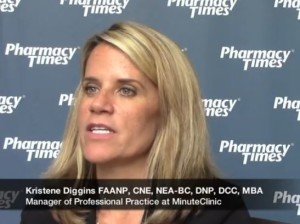
Kristene Diggins, MBA, manager of professional practice at MinuteClinic, discusses what pharmacists should know about clinical inertia, and its effects on diabetes. (video)
- Touro College of Pharmacy Students Win Top Awards at National Pharmaceutical Association Conference (pharmacytimes.com)

Student leaders from Touro College of Pharmacy walked away with numerous top awards and scholarships at the conclusion of the 2015 Student National Pharmaceutical Association national conference held in July in Orlando, Florida.
- Olawonuola Abiona
- Basirat Adeyemi
- Justice Kwansa
- Sefa Kploanyi
- Frequency of and risk factors for medication errors by pharmacists during order verification in a tertiary care medical center (ajhp.org)
American Journal of Health-System Pharmacy - Abstract
Purpose The frequency of and risk factors for medication errors by pharmacists during order verification in a tertiary care medical center were reviewed.
Conclusion An increase in the number of orders verified per shift was associated with an increased rate of pharmacist errors during order verification in a tertiary care medical center.
- Nine Explanations For Why The FDA Is Approving Almost Every New Drug Application (forbes.com)The drug development and approval process is about much more than the final “okay” (catalyst.phrma.org)
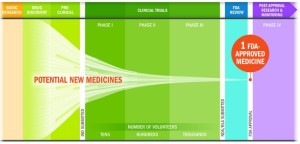
..Food and Drug Administration, which once approved as few as 40% of new drugs submitted by industry, has been on a green-light-almost-everything jag, approving 89% of drug applications. What’s more, a closer look showed an even higher approval rate. This year so far, 96% of new molecular entities.. – that have been submitted to the FDA have reached the market. For anyone who was watching the FDA a decade ago, that’s just shocking. Good or bad, it’s a radical change...there are a lot of factors that explain why the FDA approval rate is suddenly so high,..
- The approval rate is much lower, because only 12% of drugs that enter clinical trials reach the market.
- Drug companies are better at research, and they are simply producing better drugs.
- Drug companies are picking areas where the chances of approval are higher.
- The FDA is doing a better job communicating with companies.
- The FDA has more power to restrict the use of an approved drug than it used to.
- The FDA is taking a risk by taking strong stands against drug approvals right now.
- The FDA is without a permanent commissioner.
- It’s just random chance.
- In the current political environment, the agency is approving drugs it shouldn’t.
- 5 Most Lucrative Retail Pharmacies in Rx Revenues (pharmacytimes.com)
Prescription revenues provide insight on the power of top retail pharmacy businesses.If you’re curious to know how the retail pharmacy giants stack up against one another on prescription sales, here are the top 5 pharmacy chains based on 2014 figures:
- CVS Health $48 billion in Rx revenues, $88.4 billion in pharmacy services revenue
- Walgreens $49 billion
- Express Scripts $38 billion
- Walmart $18.8 billion
- Rite Aid $18 billion
- What’s Behind Walmart’s Pharmacy Profit Warning? (drugchannels.net)

Wal-Mart Stores surprised everyone by highlighting reduced profits from its pharmacy business. In corporate-speak, these were called "headwinds from pharmacy reimbursements" on its quarterly and annual earnings. Investors took note, especially since Walmart usually discloses nothing about its pharmacy business. Walmart didn’t provide many details about what caused the margin reduction, but I believe two factors played a key role:
- lower margins from newly insured consumers (compared with cash-pay consumers)
- Walmart’s aggressive participation in preferred networks
- Generic Drug Sponsors Will Get Status Reports– But Only For Old ANDAs (pharmamedtechbi.com)
FDA is ready to restore some informal communications for generic drugs, but only for applications not covered by the newly implemented user fee action dates…applicants with pending ANDAs (abbreviated new drug application) that are not covered by user-fee goals will have the right to a status report under a new policy …governing communications with ANDA applicants in response to widespread criticism from the generic industry about the loss of interaction that followed enactment of the Generic Drug User Fee law..
- AstraZeneca uses snails and overstuffed luggage to push OIC awareness–and its branded solution (fiercepharmamarketing.com)
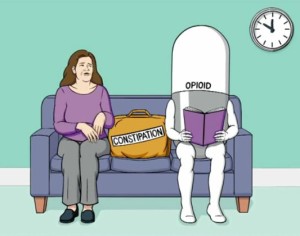
No one wants to talk about constipation. Except AstraZeneca. On national television. To the tune of almost $10 million in media spending… AZ's new TV campaign around OIC, or opioid-induced constipation, has two parts…One is a general awareness…The other effort is branded advertising for Movantik (naloxegol)…