
- Emergency room off Las Vegas Strip makes waves with new business model (reviewjournal.com)
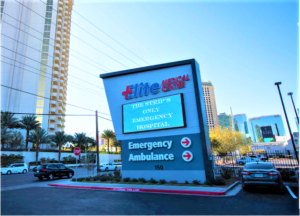
Just like any full-service emergency room, Elite Medical Center treats a range of urgent medical problems, from headaches to heart attacks. But unlike at the other ERs in Southern Nevada, you’ll generally pay more for your care...That’s because the facility doesn’t contract with any insurer. So if you break a bone or your child has an earache and you go there, you’ll be paying for out-of-network care...Elite is licensed as a hospital by the state, but experts say it is operating similarly to free-standing emergency rooms that have become common recently in other states. It is the only unaccredited hospital in Clark County that provides emergency care but doesn’t contract with insurers...There’s no license for a free-standing ER in Nevada, though hospitals are allowed to open satellite emergency rooms that provide care at other locations....State law doesn’t mandate that these facilities be accredited by the federal Centers for Medicare or Medicaid Services or accept any insurance, private or public...“We don’t think that’s appropriate,” said Bill Welch, president and CEO of the Nevada Hospital Association, which represents UMC and 65 other medical facilities statewide. “We think that Elite Medical Center, if they want to operate as a hospital in the state, that they should operate as a CMS-certified center and they should be accredited and Medicare-participating. Without those things, we’re concerned.”
- More than two dozen companies required to submit reports on diabetes drug costs have not complied (thenevadaindependent.com)
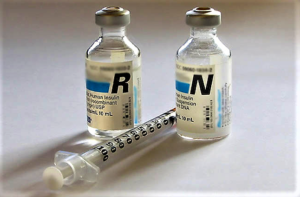
Nearly 40 drug companies and pharmacy benefit managers submitted reports to the state detailing the costs associated with manufacturing and selling essential diabetes drugs by this month’s deadline, though almost as many have yet to report...27 drug companies identified as manufacturers of essential diabetes drugs have yet to report to the state. Scott Jones, manager of the Primary Care and Health Workforce Development Office, said in an email that the state will be reaching out to those companies to inform them of the law and obtain the required reports. (If they refuse, the state is allowed by law to impose a fine of $5,000 a day.)...
- Walgreens pays $269.2 million to settle U.S. civil fraud lawsuits (reuters.com)
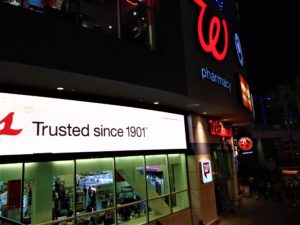
Walgreens Boots Alliance Inc will pay $269.2 million to settle two whistleblower lawsuits accusing it of civil fraud for overbilling federal healthcare programs over a decade, the U.S. Department of Justice said...The pharmacy chain will pay $209.2 million to resolve claims it improperly billed Medicare, Medicaid and other federal programs from 2006 to 2017 for hundreds of thousands of insulin pens it dispensed to patients it knew did not need them...Walgreens will also pay $60 million to resolve claims it overcharged Medicaid from 2008 to 2017 by failing to disclose and charge the discount drug prices it offered the public through its Prescription Savings Club program...Two pharmacists filed the original complaint concerning the insulin pens in July 2015. A copy of that complaint could not immediately be obtained on Tuesday...Marc Baker, who worked for Walgreens for a decade as a pharmacy manager in Florida, filed the original complaint concerning the drug price discounts in January 2012.
- State receives first reports on diabetes drug costs; questions remain over what will be publicly disclosed (thenevadaindependent.com)
Nearly 20 drug manufacturers and pharmacy benefit managers submitted reports to the state detailing the costs of manufacturing and distributing diabetes drugs in advance of a Tuesday deadline, and state officials continue to comb through others received this week as they prepare to undertake their first examination of the factors contributing to the costs of treating Nevadans with diabetes...drug companies and PBMs...,insurers and pharmacies — were required to submit reports to the state explaining the costs associated with essential diabetes drugs and, for some, why the costs of those drugs increased significantly over the prior year...The new law additionally requires the state to compile an annual report analyzing the information it receives from drug companies and PBMs in aggregate to explain the factors contributing to the costs of treating diabetes...
- EDITORIAL: Transparency and holding down health care costs (reviewjournal.com)

Under a new federal regulation that went on the books at the start of the year, hospitals are required to post online the prices of services offered. Not surprisingly, some facilities aren’t eager to comply and are attempting to undermine the point of the new requirement...This lack of transparency eliminates a vital competitive pressure on doctors and hospitals that might help control costs. Meanwhile, patients are forced to navigate a confusing mélange of bills and insurance notices after the fact...In what other segment of the marketplace would average consumers accept an arrangement in which they purchase a service or product without knowing their financial obligation?...the new regulation is at least “pushing hospitals to think more about consumerism.” That’s a good thing — even if the new transparency regulations will require further tweaking to ensure consumers get the information in plain English.
- January 25 Pharmacy Week in Review: Drug Marketing May be Linked to Opioid Deaths, Seasonal Flu Activity Remains Elevated (pharmacytimes.com)
Nicole Grassano, PTNN, Pharmacy Week in Review, this weekly video program provides our readers with an in-depth review of the latest news, product approvals, FDA rulings and more.
- Study links opioid epidemic to painkiller marketing (reuters.com)Association of Pharmaceutical Industry Marketing of Opioid Products With Mortality From Opioid-Related Overdoses (jamanetwork.com)
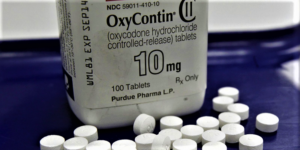
Researchers are reporting a link between doctor-targeted marketing of opioid products and the increase in U.S. deaths from overdoses...In a county-by-county analysis, they found that when drug companies increased their opioid marketing budgets by just $5.29 per 1,000 population, the number of opioid prescriptions written by doctors went up by 82 percent and the opioid death rate was 9 percent higher a year later...“It really doesn’t take much marketing to increase the number of deaths,” lead author Dr. Scott Hadland...Jordan Trecki of the U.S. Drug Enforcement Administration warns that the new analysis only addresses part of the problem...“As the opioid epidemic grows, it is evolving beyond prescription medications and heroin to involve illicitly produced fentanyl, fentanyl-related substances and other opioids, either alone or in combination,”...
- The 5 Most Addictive Drugs (newsmax.com)

Addiction is more common than people realize. There are approximately 22 million people in the United States over the age of 12 with an addiction, according to The National Survey on Drug Use and Health...Almost 80 percent of individuals who struggle from a substance abuse disorder in 2014 also struggled with an alcohol use disorder. And a shocking report recently published by the National Safety Council says that Americans are more likely to die of an opioid overdose than in an automobile crash...“Drug misuse and abuse are major health problems,” said Dr. David Nutt, a British psychiatrist who set out to find which are the most addictive and dangerous drugs. His purpose was to pave the pathway for more effective ways to develop drug policies...In a study published in the Lancet, Nutt and his colleagues rated the addictiveness and harmfulness of popular drugs, based on how pleasurable a substance was, how much psychological dependence it induced, and how physically dependent it made its users.
- Heroin
- Cocaine
- Nicotine
- Barbiturates
- Alcohol - This Week in Managed Care: January 25, 2019 (ajmc.com)
Laura Joszt, Managing Editor at The American Journal of Managed Care. Welcome to This Week in Managed Care from the Managed Markets News Network
- European and UK pharma industry call for action as parliament rejects Brexit deal (pharmaceutical-technology.com)

The European and UK pharma industry have called for preparations to ensure that patients will have access to their medications in case of a no-deal Brexit by 30 March 2019...The call follows parliament’s rejection of Prime Minister Theresa May’s Brexit withdrawal plan...the European Federation of Pharmaceutical Industries and Associations highlighted ‘real, tangible and immediate threats’ to patients and public health in the UK as well as the EU...“Now is the time for policy makers in the UK and the EU to put politics aside and put measures in place to prevent patients being harmed by the consequences of Brexit...“In particular from disruption to the supply of medicines including from transport delays at the border and where the development, manufacture, packaging, safety testing and regulation of the medicine no longer benefits from mutual recognition.”