
- FDA to call out drugmaker misuse of citizen petitions (biopharmadive.com)

Gottlieb has made speeding generics to market one feature of his tenure, with some harsh warnings to pharmas not playing by the rules...One tactic used by drugmakers is using the FDA citizen petition process, created to allow individuals and community groups to make requests for changes to health policy. Pharma companies have been using this route to counter the impact of the Drug Price Competition and Patent Term Restoration Act...citizen petitions have rarely delayed specific generic drug approvals, there's no doubt that the process requirements associated with 505(q) petitions can add to resource burdens on the generic drug review process and the FDA's regulatory decision making...This increased burden on the FDA can take resources away from the daily work of application review...The FDA will now publish the factors it will consider to determine whether to allow the petition through. If the agency determines a petition has been set up with the primary purpose of delaying the approval of a generic drug application, it will look to deny it and explicitly note the reason...effectively naming and shaming the company in question. The FDA will also consider referring the company to the Federal Trade Commission, which oversees anticompetitive business practices...
- Banner Health, Ascension executives join hundreds of hospital CEOs defending 340B program (fiercehealthcare.com)
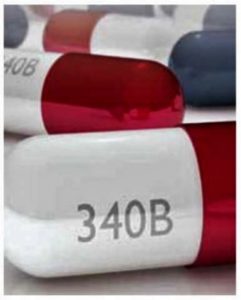
CEOs from more than 700 hospitals sent a letter to congressional leaders...calling on them to protect the 340B drug discount program, among them Banner Desert Medical Center...The 340B program requires drugmakers to provide discounted drugs to hospitals, health centers, and other healthcare providers that serve disproportionate numbers of low-income and rural patients...But the program has been under increased scrutiny after enjoying years of bipartisan popularity, including three expansions in Congress. Critics argue that hospitals are taking advantage of the discounts to line their wallets and are snapping up oncology providers to boost the number of pricey specialty drugs they can prescribe under the program...the letter said the group is concerned cuts to the 340B program would increase the prices of need and existing drugs...In our larger disproportionate share hospitals, the program enables us to provide a wider range of comprehensive services to people who are uninsured and traditionally underserved—services that would need to be scaled back along with any 340B reductions...For our more rural critical access hospitals, cuts to 340B would threaten the only places for people in the communities to get their care in the first place...
- FDA Warns of Dosing Errors With Compounded Injectables (raps.org)

The Food and Drug Administration last week warned that differences in how drugmakers and compounders label the strength of injectable drugs may lead to dangerous dosing errors..."Conventional manufacturers label their injectable products with the strength per total volume as the primary and prominent expression of strength on the label, whereas some compounders label their injectable products differently,"...For small volume parenteral drugs and biologics, FDA recommends that strength per total volume be the primary and most prominent expression of strength, followed by strength per milliliter enclosed by parentheses...two recent MedWatch reports cited medication errors that led to patients overdosing on compounded injectables that featured strength per milliliter more prominently on the labels than the strength per total volume...Such mix-ups could be avoided...if compounders were to follow the same labeling conventions as traditional drugmakers, though FDA does not review the labels of compounded drugs before they are sold.
- This Week in Managed Care: September 28, 2018 (ajmc.com)

Laura Joszt, Managing Editor at The American Journal of Managed Care. Welcome to This Week in Managed Care from the Managed Markets News Network
- This Week in Managed Care: October 5, 2018 (ajmc.com)

Laura Joszt, Managing Editor at The American Journal of Managed Care. Welcome to This Week in Managed Care from the Managed Markets News Network
- New Law To Force Payments Disclosure by Drug and Device Manufacturers to Non-Physician Providers (ptcommunity.com)

Sunshine Law Will be Expanded to Include Nurse Practitioners, Physician Assistants, Nurse-Midwives, and Others...Congress is expected to finalize within days a new law to expand transparency surrounding payment to non-physician providers. Beginning in 2020, pharmaceutical and medical device companies must disclose payments made to those providers for speaking or consulting, as they must do now with physicians...In many states, nurse practitioners, physician assistants, and other non-physician health professionals account for a substantial number of prescriptions—often including prescription opioids.” The law also applies to clinical nurse specialists, nurse-anesthetists, and nurse-midwives...Without full transparency, pharmaceutical companies can operate under the cover of darkness, possibly using gifts and payments to influence the prescribing practices of medical professionals like nurse practitioners and physician assistants...
- Brazilian court strips Gilead of its patent for Hepatitis C drug Sovaldi (pharmaceutical-technology.com)

A judge from the 21st Federalist Court of Brasilia has ruled to invalidate US biopharma company Gilead’s exclusivity patent for Sovaldi (sofosbuvir)...Hepatitis C is a major public health issue in Brazil; it has been estimated by Brazilian academics that 1.5 million people in the country were chronically infected with the virus in 2014...A centre-left, environmentalist presidential candidate for the upcoming election, Marina Silva, filed a popular action analysis complaint to the court arguing that Gilead’s patent for Sovaldi should be overturned in order to reduce costs for patients...The patent was granted in 2015 by the National Institute of Industrial Property...Silva and her running mate Eduardo Jorge claim the INPI made the decision without the consent of the National Agency of Sanitary Surveillance, meaning Brazil’s national interest was not adequately recognised in the decision...
- October 5 Pharmacy Week in Review: 2018 Next Generation Pharmacist Awards, Vaccines for Health Care Professionals (pharmacytimes.com)

Nicole Grassano, PTNN, Pharmacy Week in Review, this weekly video program provides our readers with an in-depth review of the latest news, product approvals, FDA rulings and more.
- AmerisourceBergen to pay $625 million in U.S. civil fraud settlement (reuters.com)

AmerisourceBergen Corp...will pay $625 million to resolve civil fraud charges over the sale of syringes containing drugs for cancer patients, double billing, and providing kickbacks to doctors...The settlement...boosts AmerisourceBergen’s total payout to $885 million over its repackaging and distribution of pre-filled syringes that were not approved by the Food and Drug Administration...AmerisourceBergen admitted that from January 2001 to January 2014, its Medical Initiatives Inc pharmacy unit in Alabama shipped millions of syringes for patients undergoing chemotherapy that contained drugs prepared in an unsterile environment...Authorities said AmerisourceBergen would harvest “overfill” from the original vials of such drugs as Aloxi, Anzemet, Kytril and generic Kytril, Neupogen and Procrit...That enabled the company to create more doses than it bought, and generate at least $99.6 million of extra profit...
- New REMS for Immediate-Release Opioids in Outpatient Settings – Training for Pharmacists and Nurses, Not Just Prescribers (ptcommunity.com)
The FDA has approved a final Opioid Analgesic Risk Evaluation and Mitigation Strategy (REMS) that includes several measures to help better communicate the serious risks about the use of opioid pain medications to patients and health care professionals. This expanded REMS, for the first time...
- ….applies to immediate-release (IR) opioid analgesics intended for use in an outpatient setting. The new REMS also applies to the extended-release and long-acting (ER/LA) opioid analgesics…
- ….training be made available to health care providers who are involved in the management of patients with pain (e.g., nurses and pharmacists), and not only to prescribers.
- ...education cover broader information about appropriate pain management, including alternatives to opioids for the treatment of pain.
- ...new product labeling containing information about the health care provider education available through the new REMS.
- ,,,the agency has approved the new FDA Opioid Analgesic REMS Education Blueprint for Health Care Providers Involved in the Treatment and Monitoring of Patients with Pain (Blueprint). This includes updated educational content.