
- August 10 Pharmacy Week in Review: National Immunization Awareness Month, Bilingual Clinical Service for Diabetes Outcomes (pharmacytimes.com)

Nicole Grassano, PTNN, Pharmacy Week in Review, this weekly video program provides our readers with an in-depth review of the latest news, product approvals, FDA rulings and more.
- China drug scandals highlight risks to global supply chain (cnbc.com)

The drug safety scandals...have underlined the risks to international consumers posed by weak oversight in China, the world's largest supplier of active pharmaceutical ingredients...The European Medicines Agency and the US Food and Drug Administration issued alerts over a cancer-causing ingredient used in a blood pressure medication, supplied by Chinese company Zhejiang Huahai, resulting in a recall of affected drugs...Then Beijing announced that hundreds of thousands of substandard vaccine doses had been sold in China, prompting a public outcry. Senior executives were arrested at the pharma company, Changsheng Biotech, which was also accused by authorities of forging data during the production of rabies vaccines...China is home to thousands of API producers, with exports worth $29bn last year...its producers supply ingredients for generic drugmakers such as Teva Pharmaceutical and multinationals including Johnson & Johnson and Novartis. About 80 percent of APIs used in the US come from China and India…Warnings to Chinese companies published by the FDA and EMA in recent years show that dozens have violated standards, mainly relating to record-keeping during the manufacturing process. In several cases the exporters shipped large volumes of product before the infractions were discovered...
- Opioid Lawsuit Links Counties in Fight Against Big Pharma (bloomberg.com)

Mike Papantonio, senior partner at Levin Papantonio, discusses a class-action lawsuit against pharmaceutical companies over the U.S. opioid crisis. He speaks with Bloomberg's Kevin Cirilli on "Bloomberg Markets: Balance of Power." (Source: Bloomberg)
- FDA seals loophole that allowed some drugmakers to avoid pediatric clinical trials (medcitynews.com)

PREA loophole had allowed companies to receive orphan drug designations for diseases common in adults...The Food and Drug Administration moved...to close a loophole that had inadvertently excused some drugmakers from having to conduct clinical trials in children for drugs to treat diseases that commonly affect adults...the FDA announced that it had finalized a draft guidance...intended to close a loophole in the Pediatric Research Equity Act that allowed drug companies making medicines for non-orphan diseases in adults – meaning those affecting more than 200,000 patients – to get pediatric subpopulation designation. Consequently, companies were exempt from conducting the clinical trials in children that PREA would normally have required...“Addressing the inadequate testing of drugs in pediatric populations has been a priority for the FDA, the medical community and Congress and has led to important laws to ensure this important, vulnerable population is not overlooked,” FDA Commissioner Scott Gottlieb said...
- FDA Anticipates Need for Expanding National Drug Code, Calls for Industry Input (raps.org)

The Food and Drug Administration announced...it plans to hold a public discussion on expanding the National Drug Code format and the impact on industry...FDA currently assigns 10-digit NDCs for the purposes of identifying drugs in the country and the format is comprised of three codes regarding the labeler, the product and the package...“FDA anticipates that it will run out of 5-digit labeler codes in approximately 15 years,” the agency wrote in the notice on the 5 November public hearing. “FDA will begin assigning 6-digit labeler codes at some point in the future due to exhaustion of 5-digit labeler codes.”...Prior to implementing the new formats for longer configurations, FDA officials will seek feedback from meeting participants on the potential impact on companies’ bottom line and drug safety, as well as “issues associated with the current lack of NDC uniformity in the marketplace.”
- Antianxiety drugs — often more deadly than opioids — are fueling the next drug crisis in US (cnbc.com)

Today more than 40 million adults in the United States suffer from anxiety, and it is the most common mental illness in the United States...Overdose deaths involving benzodiazepines — such as Xanax, Librium, Valium and Ativan, drugs commonly used to treat anxiety, phobias, panic attacks, seizures and insomnia — have quadrupled between 2002 and 2015...The trend is being fueled by a 67 percent rise in prescriptions...The market for...(benzodiazepines)...is expected to reach $3.8 billion in the U.S. by 2020...many mental health experts are sounding the alarm, claiming that benzodiazepine addiction is an epidemic as frightening and serious as the opioid crisis...
- This Week in Managed Care: August 3, 2018 (ajmc.com)

Laura Joszt, Managing Editor at The American Journal of Managed Care. Welcome to This Week in Managed Care from the Managed Markets News Network
- Brexit Guidance: MHRA Outlines What to Expect (raps.org)

The UK’s Medicines & Healthcare products Regulatory Agency...explained what pharmaceutical and medical device companies can expect during the period that the Brexit agreement is implemented...During the implementation period, which will end in December 2020, pharmaceutical firms will be able to continue UK batch release testing and Qualified Person certification in the UK, which will be recognized by the EU and vice versa, MHRA said...But one of the setbacks is that for medicines, the UK will not have voting rights in EMA and EU committees during the implementation period, MHRA said...“Marketing authorisation holders and qualified persons for pharmacovigilance will continue to be able to be based in the UK and access EU markets. There will be continued mutual recognition of manufacturing and distribution licences, as well as associated inspections such as good manufacturing practice (GMP),” the regulator added.
- Physician numbers are on the rise, though Nevada still well below the national average (thenevadaindependent.com)Physician Workforce in Nevada 2018 Edition (med.unr.edu)
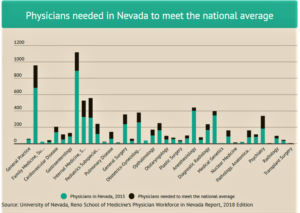
The report, released by the school’s Office of Statewide Initiatives last week, found that the state has added 1,789 physicians over the last decade, a 31.7 percent increase, but because of population growth, the number of physicians per 100,000 Nevadans only grew by about 10 percent. And, when accounting for roughly 50 percent growth in the number of licensed but inactive physicians — meaning those who are retired, semi-retired, temporarily not in practice or otherwise not active — there was actually only a 1.7 percent increase in active physicians over the last decade...“treading water effect”...“There’s so much demand for health care in general so it’s part of a broader workforce problem in that they’re struggling with nurses now, struggling in mental and behavioral health,”...“You throw on top of that population growth, it makes it very difficult.”
- August 3 Pharmacy Week in Review: FDA Approves Drug to Treat Schizophrenia, HIV Therapy Study Yields Positive Results (pharmacytimes.com)

Nicole Grassano, PTNN, Pharmacy Week in Review, this weekly video program provides our readers with an in-depth review of the latest news, product approvals, FDA rulings and more.