
- NHS has started planning for Brexit no deal (reuters.com)BMA votes to oppose Brexit “as a whole” and calls for public final say on deal (bmj.com)
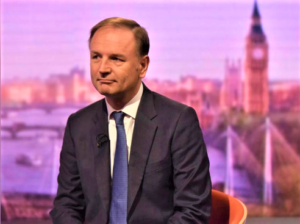
Simon Stevens, chief executive of the National Health Service
Britain’s public health service has started “significant planning” to ensure medicines are still supplied to patients if the government fails to negotiate a Brexit deal with the European Union, its head said on Sunday...Simon Stevens, chief executive of the National Health Service, said Britain’s health department was working with pharmaceutical companies to make sure there will be no breakdown in supply if there is no deal with the EU...The EU warned Britain again last week that time was running out for Prime Minister Theresa May to negotiate a deal and stop the country from crashing out of the bloc...
- This Week in Managed Care: June 29, 2018 (ajmc.com)
Laura Joszt, Managing Editor at The American Journal of Managed Care. Welcome to This Week in Managed Care from the Managed Markets News Network
- China lectures United States on opioid crisis – China hits back after its suppliers blamed (channel4000.com)
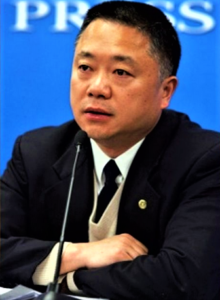
Liu Yuejin, deputy head of China’s National Narcotics Commission
A top official in China's drug control agency has hit back at accusations that Chinese suppliers are fueling the ongoing opioid crisis in the United States, arguing that Washington should pay more attention to domestic factors before pointing fingers at others..."It's common knowledge that most new psychoactive substances have been designed in laboratories in the United States and Europe, and their deep-processing and consumption also mostly take place there," said Liu Yuejin, deputy chief of China's National Narcotics Control Commission..."The US should adopt a comprehensive and balanced strategy to reduce and suppress the huge demand in the country for fentanyl and other similar drugs as soon as possible," said Liu, whose comments coincided with the release of China's annual drug situation report.
- Australia Relaxes Oversight on Some Low Risk Drugs, Devices (raps.org)

The Australian government has endorsed several regulatory activities aimed at reducing the Therapeutic Goods Administration’s oversight on a range of low risk pharmaceuticals and medical devices...The consultation was released as part of the government’s response to TGA’s Review of Medicines and Medical Devices Regulation, identifying ways in which to improve patient access by reducing unnecessary costs associated with entering the Australian market...the government called on TGA to examine whether the regulatory oversight applied to a range of products that represent a very low safety risk too consumers was consistent with the principles of best practice regulation, and further whether there were any opportunities for streamlining or simplifying current regulatory requirements for these products...TGA...also implemented specific criteria last week to aid industry in identifying comparable overseas regulators and a process for work-sharing on drug applications using COR reports.
- Controversial Medicaid Policy Change Proposal Being Amended After Public Feedback (ktvn.com)
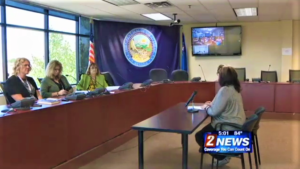
A policy change proposal that could affect Medicaid's behavioral health patients drew plenty of public opposition...The policy would require prior authorization for Neurotherapy and Psychotherapy Medicaid patients to demonstrate medical necessity before they receive treatment...The Department of Health and Human Services and the Division of Health Care Financing and Policy held a workshop to hear feedback from the public about their proposal. The department says they are now revising this policy proposal, after hearing those concerns...Officials said this policy would help both the most vulnerable patients as well as the administrative staff; but opponents strongly disagreed...
- June 29 Pharmacy Week in Review: National HIV Testing Day, Epstein-Barr Virus Infection Linked With Multiple Sclerosis, (pharmacytimes.com)

Nicole Grassano, PTNN, Pharmacy Week in Review, this weekly video program provides our readers with an in-depth review of the latest news, product approvals, FDA rulings and more.
- Audit: Licensing boards ignoring directive on salaries, some paying above statutory caps (thenevadaindependent.com)
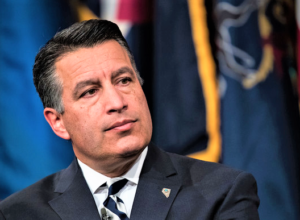
Gov. Brian Sandoval
More than half of Nevada occupational licensing boards aren’t following a 2010 directive to keep their salaries in line with state employees, and another 12 percent are paying salaries above caps set in state law...A report presented...to members of the state’s executive audit committee — composed of the governor, lieutenant governor, attorney general, secretary of state, treasurer and controller — detailed various oversight issues with the state’s nearly three dozen occupational licensing boards on everything from executive compensation to inconsistencies in how boards manage their finances...The audit — and the somewhat testy responses from several licensing boards — underlined a consistent pressure between the semi-autonomous regulatory bodies and the governor’s office, which is nominally in charge of regulating them...The audit reported that at least four of the boards — Pharmacy, Medical, Contractors and Accountancy — paid out salaries above the limit set in state law, which caps most salaries for state employees at 95 percent of the governor’s annual $149,753 salary...The boards presented a variety of reasons for paying their executive directors above the limit set in law. The State Board of Pharmacy wrote in a response to the audit that the salary figure included contributions to the state’s retirement fund and pointed to conflicting language in state law that gave the board the ability to determine the executive director’s salary...The audit suggested that boards were overpaying executive directors between $28,000 and $59,000 on average compared to similar positions for state employees...
- Big Pharma abandons lawsuit over Nevada’s insulin pricing transparency law after state approves trade secret protection regulations (thenevadaindependent.com)Nevada Addresses SB 539’s Most Significant Flaws (phrma.org)
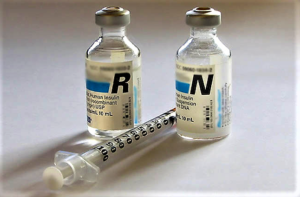
Two national drug lobbying organizations dropped a lawsuit Thursday challenging the constitutionality of Nevada’s first-in-the-nation insulin pricing transparency law a little less than a month after the state approved regulations allowing drug companies to protect certain information they turn over to the state from public disclosure...Attorneys representing two associations and the state agreed in a joint court filing that the newly adopted regulations resolve drug companies’ concerns that the new law would require manufacturers of diabetes drugs to disclose trade secret-protected information in conflict with federal law and in violation of the U.S. Constitution. The decision to abandon a legal fight comes nine months after the Pharmaceutical Researchers and Manufacturers of America and the Biotechnology Innovation Organization challenged the law in U.S. District Court.
- U.S. Health Regulators OK Marijuana-Based Drug for Seizures (ktvn.com)

The Food and Drug Administration approved the medication, called Epidiolex (cannabidiol), to treat two rare forms of epilepsy (Lennox-Gastaut Syndrome and Dravet Syndrome) that begin in childhood. But it's not quite medical marijuana...British drugmaker GW Pharmaceuticals studied the drug in more than 500 children and adults with hard-to-treat seizures, overcoming numerous legal hurdles that have long stymied research into cannabis...FDA officials said the drug reduced seizures when combined with older epilepsy drugs...The FDA has previously approved synthetic versions of another cannabis ingredient for medical use, including severe weight loss in patients with HIV...Epidiolex is essentially a pharmaceutical-grade version CBD oil, which some parents already use to treat children with epilepsy. CBD is one of more than 100 chemicals found in marijuana...it doesn't contain THC, the ingredient that gives marijuana its mind-altering effect...Physicians say it's important to have a consistent, government-regulated version...
- Pharmaceutical sales reps gave monetary compensation to two in five Nevada doctors they lobbied, report finds (thenevadaindependent.com)Senate Bill 539 Report: Compensation and Samples Distributed by Pharmaceutical Sales Representatives in Nevada (dhhs.nv.gov)
Two in five Nevada physicians lobbied by pharmaceutical sales representatives in the last three months of 2017 received monetary compensation, according to a report released earlier this month by the Department of Health and Human Services...The department found that 42 percent of doctors, or 396 physicians, identified in reports made to the state received some amount of monetary compensation from pharmaceutical reps between October and December, while 58 percent only received samples. But the report is also telling in what it is unable to say, with only about half of the states’ 2,572 active pharmaceutical reps detailing their doctor lobbying activities and only 13 percent of submitted reports containing enough information to tie the data back to licensed Nevada physicians...Of the small percentage of data it was able to collect and analyze, the state identified a total of 954 doctors that either received direct compensation, samples or both from pharmaceutical sales representatives, with 396 of them receiving direct compensation. (Nevada had a little under 6,000 active physicians as of March 2018.)...The report is the first formal product released as a result of Nevada’s new drug pricing transparency law. The state will be required to compile another report after it receives certain data related to the costs and profits associated with manufacturing and selling so-called essential diabetes drugs from drug manufacturers and pharmacy benefit managers, who are the middlemen in the drug pricing process...The drug lobby is continuing to challenge the constitutionality of those reporting requirements in U.S. District Court after final regulations were approved last month.