
- Pot amnesty boxes greet travelers at Las Vegas airport (reviewjournal.com)
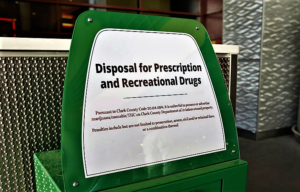
Drug-toting travelers now have a place to trash their stash before boarding a flight at McCarran International Airport...Green metal bins have popped up at the nation’s eighth-busiest airport, creating a safe space for airline passengers to dispose of marijuana before boarding a flight...Even though recreational marijuana is legal in Nevada, the drug is banned inside Clark County’s network of airports and security checkpoints operated by the Transportation Security Administration...About 20 “amnesty boxes” were installed over the past week outside high-traffic areas of McCarran, Henderson Executive and North Las Vegas airports, bearing a sign citing the local law that prohibits pot within airport property...The move comes after Clark County’s Board of Commissioners banned marijuana possession and advertising on airport property as a way to comply with existing federal laws...
- FDA’s Scott Gottlieb wants to use funding boost to create a Center of Excellence on Digital Health (fiercehealthcare.com)

Scott Gottlieb, M.D., Commissioner of Food and Drugs
The Food and Drug Administration plans to use a proposed $400 million boost in federal funding to focus on a range of innovative approaches to speed the approval of new medical devices and create a new center that would support digital health oversight and address cybersecurity concerns...FDA Commissioner Scott Gottlieb, announced...That would include specific carve-outs planned for a new Center of Excellence on Digital Health and furthering the agency’s ability to use EHR data to evaluate medical devices...The Center for Excellence on Digital Health would oversee a revamped regulatory paradigm created through the FDA’s new software precertification program launched with nine companies in September. But the center would also create a cybersecurity unit to “enhance its ability to coordinate device-specific responses to cybersecurity vulnerabilities and incidents.” Over the past several years, medical device cybersecurity has emerged as particular concern for industry and regulators...Gottlieb also highlighted an expanded effort to integrate real world data into pre-market and post-market reviews of drugs and medical devices. The additional funding would allow FDA to develop analytic tools and pull real-time data out of EHRs associated with at least 10 million individuals across a range of healthcare settings...“Toward these ends, an expanded use of natural language processing for the assessment of information submitted to the agency would be developed in an effort to markedly speed recognition and remediation of emerging safety concerns,” he said. “The effort would cover a broad range of medical products, including drugs, biologics and medical devices.”
- Pharmacy Week in Review: February 16, 2018 (pharmacytimes.com)

Nicole Crisano, PTNN. This weekly video program provides our readers with an in-depth review of the latest news, product approvals, FDA rulings and more.
- Minnesota renews push for tax on prescription opioids (reuters.com)
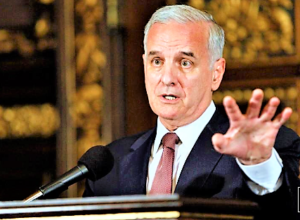
Minnesota Governor Mark Dayton...announced a renewed legislative proposal to tax prescription opioid pills to help fund treatment...Minnesota is one of at least 13 states to have considered an opioid tax in recent years to help pay for the fallout from the United States’ opioid epidemic, although none have passed, according to the National Conference of State Legislatures...Dayton’s proposal would levy a one-cent tax on drugmakers for each milligram of active ingredient in a prescription pain pill, generating an estimated $20 million a year for prevention, policing, emergency response and treatment...
- Nevada breaks with UNLV health clinic over patient conditions (reviewjournal.com)
Nevada health officials confirmed...they cut ties with UNLV’s mental health clinic, after...the university continued placing mentally ill clients in an unlicensed home previously closed by the state because of filthy conditions...“We weren’t satisfied with their response in terms of assurance that people were placed in homes that were credentialed and that were safe,” said Richard Whitley, director at the Nevada Department of Health and Human Services. “I did not see a sense of urgency demonstrated by (Mojave Mental Health) to ensure that people were placed in appropriate environments.”...The contract termination comes after...Mojave placed at least seven men with severe mental illness inside an unlicensed home at 724 N. Ninth Street a year after the state shut it down. The men were living in tiny rooms filled with trash, broken glass, rodents, expired medication and rotten food. The state shut down the home again this month...On Feb. 9 the state served Mojave, a subsidiary of the UNLV School of Medicine, a 30-day termination notice. The state will relocate Mojave patients who are living in noncertified homes...Roughly 210 patients will be affected, though it’s unclear how many will have to move...
- Nevada State Board of Pharmacy News January 2018 (bop.nv.gov)

- Reappointment of Jason Penrod
- A New Era for Compounding Inspections
- Senate Bill 59 Makes Changes in Reporting to the Nevada PMP
- PMP Data Submission Accuracy Data
National Pharmacy Compliance News First Quarter 2018
- FDA Draft Guidance Addresses Delayed Enforcement of DSCSA Requirements for Product Identifiers
- Amount of Prescribed Opioids Remains High, Reports CDC
- AMA Opioid Task Force Encourages Co-Prescribing Naloxone to At-Risk Patients
- Opioid Addiction Medications Should Not Be Withheld From Patients Taking Benzodiazepines or CNS Depressants
- New Study Shows Substantial Variation in the Availability of Pharmacies Across the Country
- Consent Decree Entered Against Outsourcing Facility Isomeric Pharmacy Solutions
- FDA Issues Warning on Alcohol Pads or Benzalkonium Chloride Antiseptic Towelettes Made by Foshan
- Drug industry scrambles after rare loss in budget deal (thehill.com)

Pharmaceutical companies are pushing to repeal or roll back a provision in last week’s budget deal that delivered a rare loss to their industry...A provision included in the budget deal approved...raised the share of costs that drug companies have to pick up as part of closing the “donut hole,” a gap in drug coverage for Medicare Part D beneficiaries...Drug companies are quickly mobilizing to try and undo the change, or at least roll it back in some fashion. The most likely avenue is the long-term government funding bill that Congress is expected to pass in March, the lobbyists said...The budget deal raised the share of costs in the donut hole that drug companies have to pick up from 50 percent to 70 percent. The drug companies are pushing proposals that would put the share at 60 percent or even lower, sources say...The change in the budget deal would not go very far in reducing drug costs for patients, though it does impose some new costs on drug companies. The proposal was not championed by groups that want action to lower drug prices.
- DEA, Dutch law enforcement continue attack on dark web drug sales (dea.gov)

The United States Drug Enforcement Administration and Dutch law enforcement officials...announced sustained action against drug trafficking on the dark web, following last summer’s significant market takedowns of AlphaBay and takeover and subsequent takedown of the Hansa market. DEA continued to partner with the National Police of the Netherlands...to identify individuals who purchase drugs on the dark web and to further disrupt dangerous drug trafficking. Further examination of the Hansa Market data revealed illicit drug purchase information identifying U.S. and Dutch individuals, resulting in numerous face-to-face doorstep visits by police to suspected opioid buyers throughout the U.S. and the Netherlands...AlphaBay operated as a hidden service on the “Tor” network, and utilized cryptocurrencies including Bitcoin, Monero and Ethereum in order to hide the locations of its underlying servers and the identities of its administrators, moderators, and users. Based on law enforcement’s investigation of AlphaBay, authorities believe the site was also used to launder hundreds of millions of dollars deriving from illegal transactions on the website...the Hansa Market, another prominent dark web market...was used to facilitate the sale of illegal drugs, toxic chemicals, malware, counterfeit identification documents, and illegal services. The administrators of Hansa Market, along with its thousands of vendors and users, also attempted to mask their identities to avoid prosecution through the use of Tor and digital currency.
- This Week in Managed Care: February 16, 2018 (ajmc.com)

Laura Joszt, assistant managing editor at The American Journal of Managed Care. Welcome to This Week in Managed Care from the Managed Markets News Network
- Fake meds on trial: EU report weighs up Member State punishment (in-pharmatechnologist.com)

Diverging penalties in EU Member States for the falsification of medicines raise concerns for organised crime, says Medicines for Europe...The European Commission has submitted a report detailing the application of penalties for those involved in the production and circulation of falsified medicines to the European Parliament on the request of the Falsified Medicines Directive (2011/62/EU)...While the Commission said measures taken by Member States are “satisfactory”, it has called for their strict enforcement...“…penalties are only effective if they are well-enforced,”...“I urge all EU countries to make sure that criminals falsifying medicines are punished.”...A lack of data regarding illegal activity in Member States makes it challenging to determine the effectiveness of national penalties...According to the report, all Member States deem at least some activities relating to the falsification of medicinal products a criminal offence. However just 21 EU countries enforce criminal penalties for the manufacture, distribution, brokering, import, export and sale at a distance of falsified medicines...