
- Justice Department requests more information on CVS-Aetna merger (cnbc.com)

Trump administration regulators are not ready to sign off on CVS Health's $69 billion deal to acquire Aetna...The Department of Justice asked the firms to provide more information on Thursday, just as the 30 day waiting period under Hart Scott Rodino Act expired...So far, the Trump administration has shown it's not receptive to vertical integration deals...The DOJ's second notice request extends the waiting period on the CVS-Aetna deal for another 30 days. In the meantime, the firms have scheduled shareholder votes to approve the deal for March 20th.
- This Week in Managed Care: February 2, 2018 (ajmc.com)

Laura Joszt, assistant managing editor at The American Journal of Managed Care. Welcome to This Week in Managed Care from the Managed Markets News Network
- FDA asks drugmakers to limit amount of opioid drug in packaging (reuters.com)
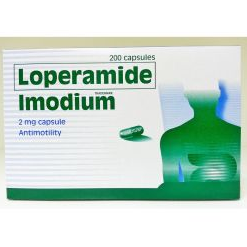
...Food and Drug Administration is asking manufacturers of a common opioid medicine to change the way the drug is packaged, as part of efforts to deter its abuse amid an opioid epidemic...The FDA said...it sent letters to manufacturers of diarrhea medicine loperamide, asking them to ensure that packages contain only a limited amount of the drug that is appropriate for use for short-term diarrhea...The agency wants to eliminate the large bottles in which loperamide is often sold because the abuse of the drug requires such large quantities.
- US FDA to take risk-based approach to biomanufacturing inspections (in-pharmatechnologist.com)
A risk-based approach to inspection regulations could result in increased audits of more complex manufacturing sites, the FDA says...The final rule...revises time of inspection requirements and removes the duties of inspector requirements, both contained in section 600 of the Code of Federal Regulations (entitled ‘Biological Products: General’)...It will affect how often the Food and Drug Administration is inspecting certain facilities and implement a risk-based schedule replacing...the biennial inspection requirement for drug and biological product establishments required in the Federal Food Drug and Cosmetic Act and aligning the requirements with 2012’s Food and Drug Administration Safety and Innovation Act ...“This change clarifies the FDA’s flexibility under FDASIA to inspect facilities either more or less frequently, according to the potential risk the establishment’s operations present, without diminishing public health protections,”...According to Commissioner Scott Gottlieb, the ruling is part of efforts to modernise the FDA’s regulations, remove inefficient policies and reduce costs.
- ‘Ostracized and criticized’ Indian CRO hits US FDA with $50m lawsuit (in-pharmatechnologist.com)

Semler Research Center says the US FDA caused the “complete annihilation” of its business after regulators rejected bioanalytical studies on the back of data integrity concerns...In April 2016, the US Food and Drug Administration issued Semler Research Center an ‘Untitled Letter’ stating evidence it had found of data manipulation in a number of bioanalytical studies during an inspection of its facility in Bangalore, India...The Agency then sent a notice to drug sponsors that bioavailability/bioequivalence studies conducted by the contract research organisation would need to be repeated...Semler filed a lawsuit against the FDA, the United States Department Of Health And Human Services and the United States Of America – along with various individuals – for total damages of approximately $50m...The firm claims the FDA’s actions were in violation of the Fifth Amendment, interfered with economic advantages and intentionally inflicted financial distress on the company.
- Pharmacy Week in Review: February 2, 2018 (pharmacytimes.com)

Nicole Crisano, PTNN. This weekly video program provides our readers with an in-depth review of the latest news, product approvals, FDA rulings and more.
- Accused of stealing Teva secrets, Apotex CEO exits abruptly even as founder’s death ruled homicide (fiercepharma.com)

The turmoil at Canada’s largest homegrown pharma company, generics maker Apotex, continues with the resignation of CEO Jeremy Desai even as the company deals with the fallout from the murders of the company’s founder...The resignation of Desai comes six months after Teva filed a lawsuit against him and Apotex claiming that for two years Desai received copies of Teva trade secrets from his girlfriend, Barinder Sandhu, who before her 2016 departure was Teva’s chief of regulatory affairs for its American generics business...Separately, Toronto police...announced that they were investigating the strangulation deaths of 75-year-old Apotex founder Barry Sherman and his 70-year-old wife, Honey, as a targeted double murder...The Canadian billionaire was known to be litigious and was involved in a number of legal battles...
- Pharmacist tied to U.S. meningitis outbreak gets eight years in prison (reuters.com)

A Massachusetts pharmacist was sentenced...to eight years in prison after being convicted on racketeering and fraud charges stemming from his role in a 2012 fungal meningitis outbreak that killed 76 people and sickened hundreds more...Glenn Chin, the former supervisory pharmacist at New England Compounding Center, was convicted by a federal jury in Boston in October but was cleared of second-degree murder charges, which would have exposed him to a maximum prison sentence of life...Prosecutors had asked U.S. District Judge Richard Stearns to sentence Chin...to 35 years in prison for overseeing the dispensing of substandard drugs made in filthy conditions at the now-defunct...NECC...Prosecutors said those drugs included mold-tainted steroids...that were then injected into patients, harming at least 793 people in 20 different states...
- Report: Medicare Part B Payment Hikes Could Offset 340B Cuts for Many Hospitals (ptcommunity.com)
...some dispute...findings on the controversial cuts...Increased reimbursements under Medicare Part B overall could offset potential losses for hospitals under changes to the 340B discount program, according to a new analysis...consulting firm Avalere Health analyzed hospital-level data from the Centers for Medicare and Medicaid Services on reimbursements in 2017 and 2018 and found that 85% of hospitals would receive higher Part B payouts that would minimize the reductions from cuts to 340B discounts...CMS finalized changes to 340B in November, changing its payment rate to 22.5% less than the list price for medication. Previously, it had paid up to 6% more than the list price under the program, and the cuts could equal $1.6 billion in lost payments...Rural hospitals would especially benefit from CMS’ increased Part B payouts, according to Avalere, as those facilities will net an average increase of 2.7%. Urban hospitals will see a 1.4% net increase...The 340B program wasn’t always controversial, but in recent years lawmakers and pharmaceutical companies have expressed concern that too many hospitals have enrolled, taking advantage of the program’s discounts. A study...suggests that hospitals have snapped up physician practices in areas like oncology to boost their 340B discounts but don’t often invest those savings in improving care for low-income patients.
- FDA Releases 2018 Compounding Policy Priorities Plan (iacprx.org)
The Food & Drug Administration has released a 2018 Compounding Policy Priorities Plan...FDA also issued a final guidance on mixing, diluting, or repackaging biological products, which describes the conditions under which the agency does not intend to take action when certain biological products are mixed, diluted, or repackaged in a manner not described in their approved labeling. According to FDA, "These policies are intended to minimize public health risks, while preserving access to these products for patients who have a medical need for them."