
- Big pharma is getting ready to spend tax reform dollars on big deals (investing.com)

There's a lot of anticipation for big-ticket pharmaceutical mergers and acquisitions to take off in 2018...That's in large part because of the tax reform that passed in 2017, which frees up cash companies have overseas and lowers the corporate tax rate..."We'd love to use the cash to buy and partner to expand our pipeline...There's a potential for another round of change within the pharmaceutical sector, given there's this much money overseas and that's got a chance to be repatriated...Cash waiting to be used...It's something that's on company's radars...especially as they think of ways to use that repatriated cash. Other options besides acquiring companies with new medications in the works include share repurchasing programs, increasing dividends, and in some cases paying down debt...But the changes that tax reform brings doesn't necessarily mean there's going to be an across-the-board flood of new deals, since some major pharmaceutical companies aren't based in the US to begin with.
- Ohio takes steps toward resolution of opioid litigation (pharmacist.com)

Ohio Attorney General Mike DeWine reports the state has begun settlement talks with opioid-makers it has sued alleging illegal marketing, and will meet with a federal judge urging settlement of hundreds of similar suits, in early steps toward resolution of the litigation. DeWine's staff held separate settlement discussions with Johnson & Johnson and Teva Pharmaceutical Industries..."We outlined with them where we feel Ohio needs help—in prevention, education and treatment, as well as the huge problem we’re having with our foster-care system because so many of the parents are addicted," says DeWine. Teva said in a statement, "We appreciate the opportunity to meet with representatives of the Ohio AG’s office to discuss this important public health issue." Johnson & Johnson said: "While we consider the specifics of our discussions with state attorneys general to be confidential, we continue to maintain that allegations made in lawsuits against our company are baseless and unsubstantiated. ... At the same time we recognize that opioid abuse and addiction are serious public health issues that must be addressed...we look forward to being a part of the ongoing dialogue."
- Venezuela $5 Billion In Debt To Pharmaceutical Companies Offers Gold, Diamonds For Medicine (ibtimes.com)

The cash-strapped government of Venezuela offered to trade gold, diamonds and coltan, a rare metal used in cell phones, to pharmaceutical companies the country owes $5 billion in exchange for medicine...Venezuela’s health minister Luis López offered several pharmaceutical companies the goods as an alternative payment for medicine to help stock the bare shelves of the country’s hospitals. Venezuela is $5 billion in arrears to pharmaceutical companies. Tito López who heads, Venezuela’s Pharmaceutical Industry Chamber told the paper that up to 95 percent of medicines available in the country three years ago are no longer there...It’s unclear whether any pharmaceutical company accepted the offer...The attempt at bartering for medicine showcased the dismal economic situation in Venezuela that could be up to $150 billion in debt. Financial mismanagement and a drop in oil prices, a commodity the country relied on, have led to the humanitarian crisis the country now finds itself in. The country also faces U.S. financial sanctions because of the country’s restrictive communist government which the U.S. has called corrupt.
- Australia to permit medicinal cannabis exports in bid to capture lucrative market (reuters.com)
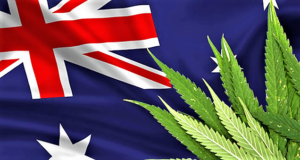
Australia said on Thursday it planned to become the fourth country in the world to legalise medicinal marijuana exports in a bid to score a piece of the estimated $55 billion global market...Cannabis cultivation in Australia is still relatively small, as recreational use remains illegal. But the government hopes domestic medicinal use, legalised last year, and exports will rapidly boost production...“Our goal is very clear: to give farmers and producers the best shot at being the world’s number one exporter of medicinal cannabis,” Health Minister Greg Hunt told reporters in Melbourne...Shares in the more than a dozen Australian cannabis producers listed on the local exchange soared after the announcement...The Australian government’s proposal needs to pass federal parliament when it returns to session in February. The country’s main opposition Labor Party has signalled it would support the move.
- Nevada doctors voice concerns over opioid law implementation (ktvn.com)
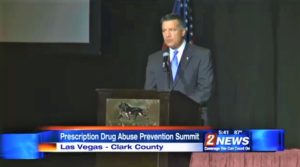
Nevada's new opioid prescription law is only days old but doctors already are worried about how it might be implemented...physicians, lawyers and others expressed concerns this week to the state medical and dental boards over draft disciplinary rules for doctors who write improper prescriptions for pain medications...Under the proposed rules, doctors who violate the new law five times would lose their licenses. The threshold on losing a license would be reduced to three violations by 2020...Several doctors who attended the meeting say the proposed rules don't specify the exact conduct that could lead to penalties or the loss of medical licenses...The doctors voiced concerns that they could be punished for relatively minor mistakes or employee errors.
- Pharmacy Week in Review: January 12, 2018 (pharmacytimes.com)

Nicole Crisano, PTNN. This weekly video program provides our readers with an in-depth review of the latest news, product approvals, FDA rulings and more.
- Trump’s pick to head HHS balks at having government negotiate drug prices (cnbc.com)
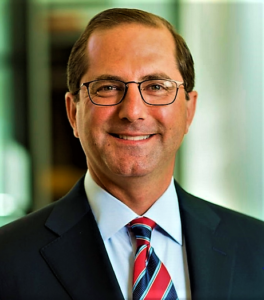
Alex Azar, Secretary of Health and Human Services,
While President Donald Trump has repeatedly expressed support for allowing the government to negotiate drug prices, his pick to head the U.S. Health and Human Services Department, Alex Azar, says he doesn't think it would be the magic bullet that would bring costs down..."Where we can do so that preserves innovation, that preserves access for patients, I want anything that's going to help us with drug pricing…I think that we should be looking at those approaches," said Azar..."If the government is the purchaser, let's say for instance, we are going to be buying (drugs) as part of the opioid crisis program, and we're directly buying that and supplying it out to states and first responders, there's absolutely nothing wrong with the government negotiating that,"...But when it comes to allowing the Medicare program to negotiate drug prices, that's where Azar splits with Trump. Under current law, private Medicare Part D drug plans administered by insurers do negotiate drug discounts, but the traditional Medicare program is prohibited from doing so...
- Judge deals setback to Cherokee Nation lawsuit over opioids (reuters.com)
A federal judge in Oklahoma has dealt a blow to a Cherokee Nation lawsuit seeking to stop the flow of addictive opioid painkillers in its territory by issuing a preliminary injunction to prevent the case from being heard in tribal court...District Judge Terence Kern ruled the tribal court lacked jurisdiction because the lawsuit involving six wholesale drug distributors and pharmacy operators does not directly concern tribal self-government...“While noting Defendants’ (Cherokee Nation‘s) evidence of the harm opioid abuse has caused to individual tribal members and families, and costs borne by the tribe, the Court cannot plausibly find that such harm is ‘catastrophic for tribal self-government’,” Kern said...The Cherokee Nation in April 2017 became the first major Native American tribe to seek redress in tribal court from wholesale drug distributors and pharmacy operators...The tribe said the highly addictive painkillers were saturating its territory and contributing to violence, delinquency and mortality...The companies said the lawsuit attempted to civilly enforce a federal statute, the Controlled Substances Act, under the guise of the tribe’s statutory and common law...
- Drug Charity Sues U.S. Over Restrictions on Donor Communications (ptcommunity.com)

DOJ is investigating drug-makers’ financial support of patient-assistance charities...A U.S. charity offering assistance to patients for their out-of-pocket drug costs has sued the federal government over restrictions on its ability to communicate with drug-makers who donate to it...The charity, Patient Services, Inc., filed the lawsuit in federal court in Richmond, Virginia. It comes amid a Justice Department investigation into drug-makers’ financial support of patient-assistance charities...Drug-makers are prohibited from subsidizing copayments for patients enrolled in Medicare, but they may donate to nonprofits providing copay assistance as long as the charities are independent. Amid increased attention to rising drug prices, concern has arisen that drug-makers’ donations to such charities may be contributing to price inflation.
- Pharmacy Week in Review: January 5, 2018 (pharmacytimes.com)

Nicole Crisano, PTNN. This weekly video program provides our readers with an in-depth review of the latest news, product approvals, FDA rulings and more.