
- Pharmacy Week in Review: August 25, 2017 (pharmacytimes.com)

Nicole Crisano, PTNN. This weekly video program provides our readers with an in-depth review of the latest news, product approvals, FDA rulings and more.
- This Week in Managed Care: August 18, 2017 (ajmc.com)
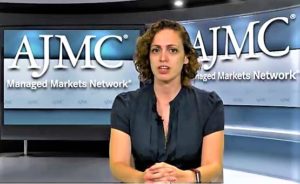
Laura Joszt, assistant managing editor at The American Journal of Managed Care. Welcome to This Week in Managed Care from the Managed Markets News Network
- Mylan, U.S. finalize $465 million EpiPen settlement (reuters.com)Sen. Grassley says Mylan's $465 million Epi-Pen settlement 'shortchanges' taxpayers (cnbc.com)
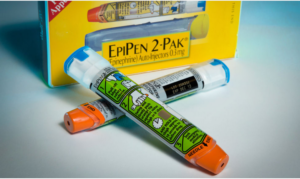
Mylan NV…has finalized a $465 million settlement resolving U.S. Justice Department claims it overcharged the government for its EpiPen emergency allergy treatment, which became the center of a firestorm over price increases...The U.S. Attorney's Office in Massachusetts...announced the accord, which was soon after criticized by some congressional members as being too easy on the drugmaker. It came 10 months after Mylan said it had reached a deal...The settlement resolved claims that Mylan avoided higher rebates to state Medicaid programs by misclassifying EpiPen as a generic product, even though it was marketed and priced as a brand-name product...Under the deal, Mylan did not admit wrongdoing. It will reclassify EpiPen and pay the rebate applicable to its new classification as of April 1, 2017...The deal followed a False Claims Act whistleblower lawsuit filed by French rival Sanofi SA in 2016, two years after it first raised the matter with authorities...Sanofi, which formerly marketed a rival product called Auvi-Q, will receive nearly $38.8 million as a reward from the government...
- Flimsy evidence behind many FDA approvals (reuters.com)
Many drugs granted accelerated approval by the U.S. Food and Drug Administration lack clear evidence of safety and effectiveness, and the same is true for most high-risk medical devices, according to two new reports in the Journal of the American Medical Association...The Accelerated Approval pathway makes potentially promising investigational medicines available for use before the usual amount of data has been collected to confirm their effectiveness and safety…Drugs granted Accelerated Approval should be rigorously evaluated using convincing patient-centered clinical outcomes in rigorous studies...we have found numerous situations in which required confirmatory studies with rigorous designs and outcomes are not pursued or are not completed in a timely fashion, and in these cases, we are concerned that regulators appear to accept data that would not otherwise meet FDA standards...For standard approval, the FDA generally requires gold-standard randomized controlled trials that demonstrate a drug’s safety and effectiveness. Fourteen (out 22 analyzed) of these accelerated approvals, however, were exclusively based on less-rigorous trials.
- FDA Details Plans for More Efficient Inspections, Facility Evaluations
The US Food and Drug Administration's Center for Drug Evaluation and Research and Office of Regulatory Affairs will soon launch an effort to streamline the two offices' inspection and facility evaluation efforts...CDER Director Janet Woodcock and Associate Commissioner for Regulatory Affairs Melinda Plaisier said it is vital that the two offices quickly implement the plan in order to meet commitments under the recently reauthorized user fee agreements, specifically citing the agency's promise to communicate final inspection classifications to generic drugmakers within 90 days of an inspection beginning in October 2018...We plan to operationalize the plan in the fall of 2017 for nearly all human drugs...FDA details the plan—which includes specific operating models for pre- and post-approval inspections, surveillance inspections and for-cause inspections—in a 20-page white paper obtained by Focus entitled Integration of FDA Facility Evaluation and Inspection Program for Human Drugs: A Concept of Operations...
- Pharmacy Week in Review: August 18, 2017 (pharmacytimes.com)

Nicole Crisano, PTNN. This weekly video program provides our readers with an in-depth review of the latest news, product approvals, FDA rulings and more.
- What should happen next on healthcare reform? Northern Nevada leaders weigh in (rgj.com)

- Repeal without solid replacement puts Nevada lives at risk - Tony Slonim, president and CEO of Renown Health
- Health care is about people not politics - Sharon Chamberlain, CEO of Northern Nevada HOPES
- Keep vaccines accessible and affordable - Heidi Parker, Executive Director of Immunize Nevada
- Protect Medicaid, seek single-payer long-term - Charles Duarte, CEO of Community Health Alliance
- Maintain funding so hospitals can serve everyone - Helen Lidholm, CEO of Saint Mary’s Health Network
- Weak patient admissions to bug hospital operators through 2018 (reuters.com)
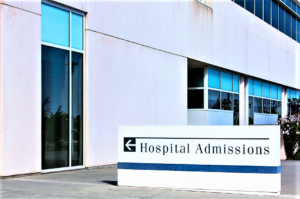
Weak patient admissions that plagued U.S. hospital operators in the June quarter are likely to persist through 2018, as patients fret about soaring out-of-pocket costs and the future of Obamacare remains uncertain...Companies including HCA Healthcare Inc, the largest for-profit hospital operator, and Tenet Healthcare Corp have reported dismal quarterly results and cut their forecasts for the year...High-deductible health plans - which shift initial medical costs to patients, but have lower monthly premiums - are becoming popular, resulting in patients pushing back non-emergency surgeries.
- Bill to allow imported drugs from Canada aims to create competition (mmm-online.com)

As lawmakers grapple with addressing sky-high drug prices, the debate around allowing importation of lower-priced versions of the same branded medications from Canada has again cropped up in policy circles…Sen. Bernie Sanders has been a major advocate...introducing the Affordable and Safe Prescription Drug Importation Act...bill would create a legal pathway for U.S. pharmacies to import lower-priced versions of branded medications from Canada and possibly other countries...The Congressional Budget Office has estimated that Sanders' bill would save the U.S. federal government nearly $7 billion over the next decade. But a number of influential stakeholders, including drugmakers and former FDA commissioners, have expressed concern about whether the legislation would increase safety risks...Sanders' bill...would require HHS to allow wholesalers, pharmacies, and individuals to import prescription drugs manufactured at FDA-inspected facilities that are operated by licensed companies in Canada. In the policy statement, the senator said that Canadian pharmaceutical manufacturing standards are comparable to U.S. regulations…
- Nevada gets $1.2M grant to fight opioid problem (reviewjournal.com)

Nevada will get another $1.2 million in federal grants to fight the opioid epidemic in the state...Gov. Brian Sandoval announced the new funding...It comes on top of $8.24 million in previous opioid-related grants the state has received...The grants will help the state implement a new state law and the recommendations of last year’s Prescription Drug Abuse Summit. The law put in place prescribing protocols for health care providers for controlled substances that are painkillers...Grants awarded to Nevada:
- Centers for Disease Control and Prevention Prescription Drug Overdose: Prevention for States. The grant is focused on state-level interventions for preventing prescription drug abuse. The state Division of Public and Behavioral Health will get an additional $789,182 on Sept. 1. The state’s initial amount was $369,450.
- Centers for Disease Control and Prevention Enhanced State Surveillance of Opioid-Involved Morbidity and Mortality. This grant analyzes overdose morbidity and mortality data, with input from coroners and medical examiners. DPBH will receive $387,763.
- Substance Abuse and Mental Health Services Administration Strategic Prevention Framework – Partnerships for Success. The grant is aimed at preventing drug abuse among young people. Nevada will receive $2.2 million.
- Substance Abuse and Mental Health Services Administration State Targeted Response to the Opioid Crisis. Awarded in April, this provides $5.6 million to develop the infrastructure needed for treating residents.