
- This Week in Managed Care: June 2, 2017 (ajmc.com)

Laura Joszt, assistant managing editor at The American Journal of Managed Care. Welcome to This Week in Managed Care from the Managed Markets News Network
- Mylan May Have Overcharged Taxpayers by $1.27 Billion for EpiPen (bloomberg.com)
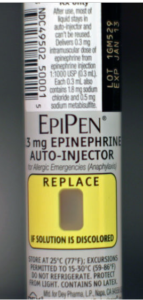
U.S. taxpayers may have overpaid for Mylan NV’s EpiPen shot by as much as $1.27 billion over the last decade, according to a U.S. government report...by classifying EpiPen as a generic drug rather than a brand-name product, shortchanged the Medicaid program...Under Medicaid, makers of brand-name drugs must provide deep discounts on their products. In October, Mylan said it reached a settlement with the U.S. to pay $465 million for misclassifying the drug as a generic product, which doesn’t require the same discounts...(Senator Charles Grassley)...has been critical of the...settlement, calling it too small...As part of bringing down drug costs, we have to make sure companies that take part in federal health care programs aren’t gaming the system...It’s Congress’s job...to ensure that taxpayers...don’t overpay for EpiPens or any other drugs in public health-care programs...Grassley has pushed for Mylan and the Centers for Medicare and Medicaid Services to explain why EpiPen was misclassified...
- FDA ad police smack Orexigen for leaving black-box risk out of Contrave TV ad (fiercepharma.com)
It’s taken five months, but the FDA has finally issued its first untitled letter of the year for promotional infractions. The agency's promotional watchdogs scolded Orexigen Therapeutics for alleged infractions in a TV commercial for weight loss drug Contrave...the Office of Prescription Drug Promotion says the television ad misleads viewers by touting Contrave's benefits and downplaying its risks. For instance, the letter says the spot omits important risk information—including potential neuropsychiatric reactions, such as suicidal thoughts, that are highlighted in a black-box label warning...By omitting serious risks associated with Contrave, the TV ad misleadingly suggests that Contrave is safer than has been demonstrated...Orexigen is currently addressing the OPDP guidance...
- Pharmacy Week in Review: May 26, 2017 (pharmacytimes.com)
Nicole Crisano, PTNN. This weekly video program provides our readers with an in-depth review of the latest news, product approvals, FDA rulings and more.
- Pharmacy Week in Review: June 2, 2017 (pharmacytimes.com)
Ned Milenkovich, PharmD, JD, PTNN. This weekly video program provides our readers with an in-depth review of the latest news, product approvals, FDA rulings and more.
- FDA Guidance on Biosimilar Substitution Needs Work, Commenters Say (bna.com)

The FDA needs to clarify its standards for showing a biosimilar drug is interchangeable with the original biologic and how the biosimilar should be named and labeled, commenters said in response to an agency draft guidance...The Food and Drug Administration draft...described how an applicant can establish that a biosimilar, a highly similar, less expensive version of an FDA-approved biologic drug, can be substituted for the biologic on which it is based without a physician’s approval…If you’re a biosimilar applicant, you’re happy the FDA has provided the guidance, but you think it’s asking for too much information...If you’re the owner of the patent for the original biologic, you strongly support the need for the switching studies the FDA requires in order to show that switching from the original biologic to the biosimilar is safe. If you’re an organization that represents patients, you want assurances the interchangeable biosimilar is safe and effective for each condition for which the original biologic is approved...
- Accelerated FDA approval and pricey drugs make a rotten combo, doctors argue (fiercepharma.com)

Should drugs that win FDA approval on an accelerated path—often without strong evidence of efficacy—command the same high prices as products that undergo the full menu of agency scrutiny?...Not necessarily, two doctors contend in a new journal article. And they have some ideas for bringing the costs of those drugs way down, at least until their makers can prove they really work...Accelerated approval is a problem because it forces Medicare and Medicaid to pay for drugs that can cost hundreds of thousands of dollars and yet may not work for many patients...private insurers may decline to cover those drugs, denying patients access to products that were supposed to get to them faster...The FDA requires drugmakers who gain accelerated approval to perform post-marketing studies to prove efficacy—and therein lies an opportunity for the healthcare system to save money...(authors) propose. They suggest drug manufacturers be required to discount products until confirmatory trials are complete, or that a portion of the full price they’re charging be held in escrow until the results of the trials are available...We see the value in getting products that qualify for accelerated approval to market for patients, but we believe the price paid by taxpayers should reflect the strength of the available evidence about the drug’s clinical impact...
- Suspected drug thefts persist at VA hospitals after ‘zero tolerance’ announced (abcnews.go.com)
Federal authorities are investigating dozens of new cases of possible opioid and other drug theft by employees at Veterans Affairs hospitals, a sign the problem isn't going away as more prescriptions disappear...Data...show 36 criminal investigations opened by the VA inspector general's office from Oct. 1 through May 19. It brings the total number of open criminal cases to 108 involving theft or unauthorized drug use. Most of those probes typically lead to criminal charges...Doctors, nurses or pharmacy staff in the VA's network of more than 160 medical centers and 1,000 clinics are suspected of siphoning away controlled substances for their own use or street sale — sometimes to the harm of patients — or drugs simply vanished without explanation...an IT specialist at the VA, says he's heard numerous employee complaints of faulty VA technical systems that track drug inventories, leading to errors and months of delays in identifying when drugs go missing. Prescription drug shipments aren't always fully inventoried when they arrive at a VA facility, he said, making it difficult to determine if a drug was missing upon arrival or stolen later...
- New FDA commissioner Gottlieb unveils price-fighting strategies (fiercepharma.com)

During the campaign and since the U.S. presidential election, President Donald Trump has pledged to bring down drug costs...his new FDA commissioner is laying out some approaches the agency will take to fight high prices...Importantly, the FDA can’t regulate drug prices, but it can implement measures aimed at deterring the types of price hikes that have made so many headlines...FDA commissioner Scott Gottlieb said his agency will publish and regularly update a list of medications that are off patent and have no competition, work to improve generic review times and seek to "curtail gaming" of regulations by the industry that allows companies to extend patent monopolies….a regularly updated list of off-patent meds could "entice competitors into the market" and ultimately lower costs...The FDA will work to "improve processes that enable generic versions of complex drugs to be approved for marketing," and simplify the overall generic review process, Gottlieb said. He wants the agency to achieve those goals while "completely eliminating" a backlog of generic medications waiting for a review...the FDA will seek to stop misuse of Risk Evaluation Mitigation Strategies that have hurt generic drug developers’ ability to get samples of branded medications needed to develop copycats...
- This Week in Managed Care: May 26, 2017 (ajmc.com)
Laura Joszt, assistant managing editor at The American Journal of Managed Care. Welcome to This Week in Managed Care from the Managed Markets News Network