
- California governor decries ‘predatory’ pricing as he signs law to make EpiPen available (statnews.com)
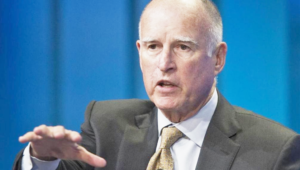
For all intents and purposes, California Governor Jerry Brown held his nose...as he signed a bill that allows state agencies and businesses to keep EpiPen devices on hand for emergencies...While Brown readily acknowledged that EpiPen is a lifesaver for people with allergic reactions, he simultaneously issued two letters — one to the California State Assembly and the other to US Senate and House leaders — to complain about “predatory pricing” by the manufacturer, Mylan Pharmaceuticals...“I cannot take this action without registering my strong objection to the bill sponsor’s recently reported pricing maneuvers,” he wrote in one of the letters in which he referred to a successful lobbying campaign by Mylan to urge states to make EpiPen widely available...
- This Week in Managed Care: September 17, 2016 (ajmc.com)
Justin Gallagher, associate publisher of The American Journal of Managed Care. Welcome to This Week in Managed Care, From the Managed Markets News Network.
- Mylan Agrees to Hand Over EpiPen Documents to Congress (fortune.com)

Mylan has been in the hot seat since reports of its extravagant price hikes for the EpiPen, a device which millions of Americans, including 1 in 13 children, rely on as a life-saving backstop, emerged last month...Now, the company has agreed to hand over documents to indignant lawmakers seeking to probe its pricing practices...Several members of Congress have been demanding more information from the generic drug giant about its pricing practices since the EpiPen scandal broke. Some, including Minnesota Sen. Amy Klobuchar, have even called for Federal Trade Commission investigations into the company...The U.S. House Committee on Oversight and Government Reform specifically asked for more detailed information about Mylan’s pricing habits, including discounts given to patients, at the end of August...That information is expected to reach lawmakers by the end of the week...
- Pharma suffers a setback in battle over Ohio drug pricing ballot measure (statnews.com)

An Ohio court has given a significant boost to a controversial ballot measure that is designed to lower the cost of medicines...In a ruling...the state Supreme Court decided that thousands of contested signatures on petitions submitted to the General Assembly were valid...The 4-to-3 decision capped months of procedural and legal skirmishes over the Ohio Drug Price Relief Act, which would require the state to pay no more for medicines than the US Department of Veterans Affairs...the ballot measure was opposed by the Pharmaceutical Research and Manufacturers of America...the Ohio Manufacturers Association, and the Ohio Chamber of Commerce. The groups contested the validity of signatures on a petition that had to be submitted to the general assembly as part of the state’s two-step process to place a measure on the ballot...Some statewide organizations and health care experts are concerned that the proposal, if enacted, is unworkable and will force a lengthy and complex litigation and bureaucratic quagmire...
- Did the FDA set ‘a dangerous precedent’ with its latest drug approval? (statnews.com)
The experimental drug (eteplirsen) that federal regulators approved Monday will only be used by a few thousand patients...But the approval may have set a precedent that could rocket through the health care system, opening the door for drug makers to get more medicines to market — even with scant evidence that they work...The...decision...elated families struggling with Duchenne muscular dystrophy, a rare and deadly disease....It also touched off a barbed debate between those who applauded the move as giving hope to desperate patients — and those who warned it would backfire since there is no clear evidence the drug works...The approval sets “a dangerous precedent,” said Diana Zuckerman, president of the National Center for Health Research. “A decade from now, will we look back at this approval as a turning point when the FDA ceased to function as a public health agency?”
- Pharmacy Week in Review: September 16, 2016 (pharmacytimes.com)
Kelly Walsh, PTNN. This weekly video program provides our readers with an in-depth review of the latest news, product approvals, FDA rulings and more.
- Big Pharma Spends Millions to Keep Prices High for California Agencies (thestreet.com)

California's attempt to curb drug prices, Proposition 61, could cause drug companies including Merck, Pfizer and Johnson & Johnson to raise prices, according to analysts, and the companies are already taken steps to block the bill's passage…According to analyst David Larsen...the major drug companies could choose to extend the prices they offer to the Department of Veterans Affairs to the state, while offsetting the discounts by raising the prices of other drugs...drug companies could risk a domino effect of having to discount other states...manufacturers could raise the prices they offer to the VA, which was threatened in 1992 when Congress considered doing something similar on a federal level...While drug companies stand to benefit politically from opposing this bill, they likely won't see an impact on their bottom lines if Proposition 61 passes - at least at first...Prop 61 addresses such a narrow portion of the California population - state agencies and non MCO Medi-Cal, the revenue and earnings exposure for the distributors and PBMs is minimal...likely that California's legislature will realize that companies can raise prices elsewhere, and will ultimately repeal the ballot measure.
- Behind the Sarepta drug approval was intense FDA bickering (statnews.com)
The run-up to Monday’s approval of a Sarepta Therapeutics drug to treat Duchenne muscular dystrophy was marked by unusual bickering inside the Food and Drug Administration, where debate over a key scientific question morphed into a formal dispute, and the head of the drug review division was accused of being too intensely involved in the process for evaluating the medicine...the decision to greenlight the drug fell to the FDA Commissioner, Dr. Robert Califf...he deferred to Dr. Janet Woodcock, the controversial head of the drug review division, who pushed hard to approve the Sarepta medication but clashed with other FDA officials along the way...This has been a highly charged issue and has transformed the Sarepta drug into a litmus test for agency approval of new medicines, notably for diseases with unmet medical needs. Seen through that prism...approving the drug would be detrimental to the FDA approval process on a long-term basis.
- Lawmakers ask HHS to probe the Medicaid drug rebate program (statnews.com)

In the wake of the controversy over EpiPen pricing, a group of lawmakers is demanding a probe into the Medicaid Drug Rebate Program, which requires drug makers to pay rebates in exchange for having their products covered...In a letter sent...to the Inspector General at the US Department of Health and Human Services, 15 House Republicans want to know the extent to which the Centers for Medicare and Medicaid Services is properly overseeing the program and how medicines are classified. The probe should include, "but not be limited to" EpiPen...Their interest was sparked by concerns that Mylan Pharmaceuticals...may not have paid all of the rebates to which Medicaid is entitled. This is an issue for taxpayers because the states and the federal government use the rebates from drug makers to offset the cost of covering medicines...The drug maker has denied shortchanging Medicaid, but the situation remains unclear...To what extent the EpiPen episode is an isolated incident is uncertain, but the lawmakers are not the only ones who are concerned that other companies owe rebates to Medicaid...
- ‘Extraordinary’ generics price hikes hit Medicare Part D amid big reduction overall (fiercepharma.com)
Generic drug prices in Medicare Part D decreased significantly in recent years, a new report from the U.S. Government Accountability Office says. So why the worry about price hikes? Hundreds of products saw “extraordinary price increases," that's why...For a group of 2,378 generic drugs--including those that entered or exited the market from 2010 to 2015--Medicare Part D prices fell overall by 59%...But “established generics"--the 1,441 drugs that stayed on the market the entire time--fell by just 22%. More than 300 cases of “extraordinary price increases” kept prices from falling further...Those extraordinary hikes amounted to at least 100%…The Generic Pharmaceutical Association is praising the newest GAO report. “At a time when everyone is looking for cost saving solutions, it is important to note that the GAO findings are consistent with the prevailing market trend--generic drug prices overall continue to decline year over year,”…