
- Aetna CEO Threatened Obamacare Pullout If Feds Opposed Humana Merger (huffingtonpost.com)

...Aetna...announced...it was dramatically scaling back participation in the Affordable Care Act ― thereby reducing insurer competition and forcing customers scattered across 11 states to find different sources of coverage next year...Aetna officials said the pullout was necessary because of Obamacare’s problems ― specifically, deep losses the insurer was incurring in the law’s health insurance exchanges...But the move also was directly related to a Department of Justice decision to block the insurer’s potentially lucrative merger with Humana, according to a letter from Aetna’s CEO obtained by The Huffington Post...Paired with some looming rate increases for next year’s health plans, the abrupt departure of Aetna has triggered new worries that Obamacare ― a subsidized public-private system of health insurance plans competing for beneficiaries ― is in serious trouble and may even be unsustainable...It is very likely that we would need to leave the public exchange business entirely and plan for additional business efficiencies should our deal ultimately be blocked. Aetna CEO Mark Bertolini to the Department of Justice, July 5...To Obamacare critics, Aetna’s retreat is proof the law is failing. To supporters, it shows the company was using its participation in Obama’s signature domestic policy initiative as a bargaining chip in order to secure approval of a controversial business deal...
- Valeant under criminal investigation over Philidor ties: WSJ (fiercepharma.com)

With Valeant’s management assuring investors that the company is well on its way to a turnaround, the drugmaker’s problems aren’t supposed to be growing larger. But now, Valeant is facing what could be its most serious investigation yet...Federal prosecutors are probing the...drugmaker’s relationship with specialty pharmacy Philidor...while that relationship has already garnered plenty of attention from investigators...this particular set of allegations...claim Valeant defrauded insurers by hiding its close Philidor ties--is new....The new probe could also be a bigger threat. Philidor managers and Valeant itself might face criminal charges...Prosecutors are looking into whether the specialty pharmacy made false statements to insurers about its link to the drugmaker. They’re trying to figure out whether insurers thought Philidor--which helped patients snag insurance coverage for pricey Valeant meds--was neutral, rather than in Valeant’s service...
- This Week in Managed Care: August 13, 2016 (ajmc.com)

Justin Gallagher, associate publisher of The American Journal of Managed Care. Welcome to This Week in Managed Care, From the Managed Markets News Network.
- EPA pharmaceutical waste rule examined (chaindrugreview.com)

The Environmental Protection Agency recently proposed steps to streamline the process surrounding the disposal and handling of hazardous pharmaceutical waste for all health care facilities that dispense pharmaceuticals as set forth by the Resource Conservation and Recovery Act...While the intent of the proposed rule is fundamentally solid, it raises several red flags with serious implications for the pharmaceutical supply chain and the patients it serves that must be addressed before EPA finalizes the rule...many organizations indicated during the comment period...the rule potentially may lead to unintended and extreme consequences for pharmacies, such as increasing costs, limiting inventories, possible product shortages and the need for pharmacists to take on additional back-office services...What are the red flags?
First...Excluding wholesale distributors from the requirements...means that distributors will no longer be allowed to send pharmaceuticals to reverse distributors to determine whether they are eligible for a credit from the product's manufacturer. Second...EPA has introduced a new provision that all pharmaceuticals including unopened, unused and those that have not yet expired will now be considered waste when sent to a reverse distributor.
- Biosimilar names may affect pharmacist dispensing habits (statnews.com)

A newly released survey suggests variations in how biosimilars are named may affect the willingness of pharmacists to substitute a so-called interchangeable biosimilar for a more expensive biologic. While a biosimilar is supposed to be highly similar to a biologic, interchangeability confers a higher threshold — it’s a distinct regulatory description for a biosimilar producing the very same clinical result as a biologic...So far, the US Food and Drug Administration has approved just two biosimilars, although neither is deemed interchangeable with a brand-name biologic. There is ongoing debate, meanwhile, about the extent to which the names given to any and all biosimilars will make it harder to track side effects, or confuse doctors and pharmacists, some of whom may regard these new drugs with skepticism...nearly 20 states have so far passed laws that allow pharmacists to substitute an interchangeable biosimilar for a brand-name biologic without the prescribing physician intervening..."Pharmacists are a last line of defense — they either recommend a product or discourage its use," said Daniel Tomaszewski, the study author, who is a pharmacist..."If pharmacists are less confident or uncomfortable, it could reduce the use or uptake of a product, because they can affect the view the general public has toward a product."
- India’s drug regulator allows concurrent applications for genetic-related trials (fiercepharma.com)

Applications for clinical trials on genetic candidates in India can be sent at the same time to the Drug Controller General of India and the Review Committee on Genetic Manipulation under the Department of Biotechnology as part of an effort to streamline the process...It was decided in the meeting that the applicant may submit parallel application to RCGM and DCGI seeking approval to conduct (a) clinical trial...The RCGM is charged under law with reviewing the safety and ethics of recombinant DNA projects and activities in India that involve genetically engineered organisms, as well as setting guidelines, and previously had the first look at any applications...the change could shorten the path to clinical trial regulatory clearances for insulin or monoclonal antibody candidates...In July, the DCGI tweaked biosimilar approval guidelines and narrowed the scope to issue waivers required to run Phase III trials and rely on clinical references to biologic drugs not marketed yet in the country as part of an effort to get a better handle on data used to support such work.
- Pharmacy Week in Review: August 12, 2016 (pharmacytimes.com)

Cate Douglass, PTNN. This weekly video program provides our readers with an in-depth review of the latest news, product approvals, FDA rulings and more.
- Nevada is out of the execution business, at least for now (reviewjournal.com)

Dozens of killers are on the state’s death row, but should any of their appeals bottom out, it would be impossible to do away with any of them...One of the two drugs needed to administer an execution by lethal injection in Nevada has expired and the drug manufacturer has refused to provide any further supplies, state officials were told Tuesday...the medication provided by the drug company Pfizer....Without the drug, the state has no way to administer an execution...The department ( Nevada Department of Corrections) is moving forward with a national request for proposals to find the drug or an equivalent...the agency would use the drugs midazolam and hydromorphone to administer a lethal injection...Both of these drugs are manufactured by Pfizer..."Pfizer makes its products to enhance and save the lives of the patients we serve," the company said in a statement issued earlier this year. "Consistent with these values, Pfizer strongly objects to the use of its products as lethal injections for capital punishment."
- Why the DEA just said ‘no’ to loosening marijuana restrictions
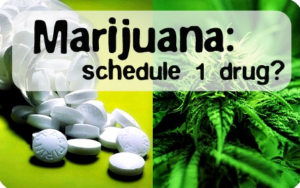
For the fourth consecutive time, the Drug Enforcement Administration has denied a petition to lessen federal restrictions on the use of marijuana...While recreational marijuana use is legal in four states and D.C., and medical applications of the drug have been approved in many more, under federal law, it remains a Schedule 1 controlled substance, which means it's considered to have "no currently accepted medical use" and a "high potential for abuse."...Just this week, the National Conference of State Legislatures, a group representing state lawmakers, called on the federal government to move marijuana from Schedule 1 to Schedule 2. The group criticized federal law for imposing "substantial administrative and operational burdens, compliance risk and regulatory risk that serve as a barrier to banks and credit unions providing banking services to businesses and individuals involved in the cannabis industry."...Despite this, the DEA says it cannot change the legal status of marijuana unless the FDA determines it has a medical use. The FDA cannot determine it has a medical use in part because of the highly restrictive legal status of the drug. It's a classic bureaucratic Catch-22...The only body that can truly resolve this conflict, now, is Congress — by amending the Controlled Substances Act to treat marijuana differently. Most federal lawmakers seem to agree that this needs to happen, but there's disagreement on how to do it...
- Marijuana Petition Denied as U.S. Restrictions on Use Remain (bloomberg.com)

Denying a petition to loosen marijuana restrictions, U.S. officials said regulations on the drug’s use will remain in place, although more of it may be available for research into potential medical therapies...The Drug Enforcement Administration will maintain marijuana’s status as a schedule 1 drug, the most restrictive of five agency classifications, which means it’s considered highly addictive and without medical benefit. However, the agency will permit new suppliers to boost the quantity of marijuana available for study. Currently, researchers can only study marijuana overseen by the National Institute on Drug Abuse, which contracts with the University of Mississippi to grow supplies..."Not everyone agrees marijuana should be legal, but few will deny that it is less harmful than alcohol and many prescription drugs," Mason Tvert, a spokesman for the Marijuana Policy Project, said in a statement. "Removing barriers to research is a step forward, but the decision does not go nearly far enough. Marijuana should be completely removed from the CSA drug schedules and regulated similarly to alcohol."